
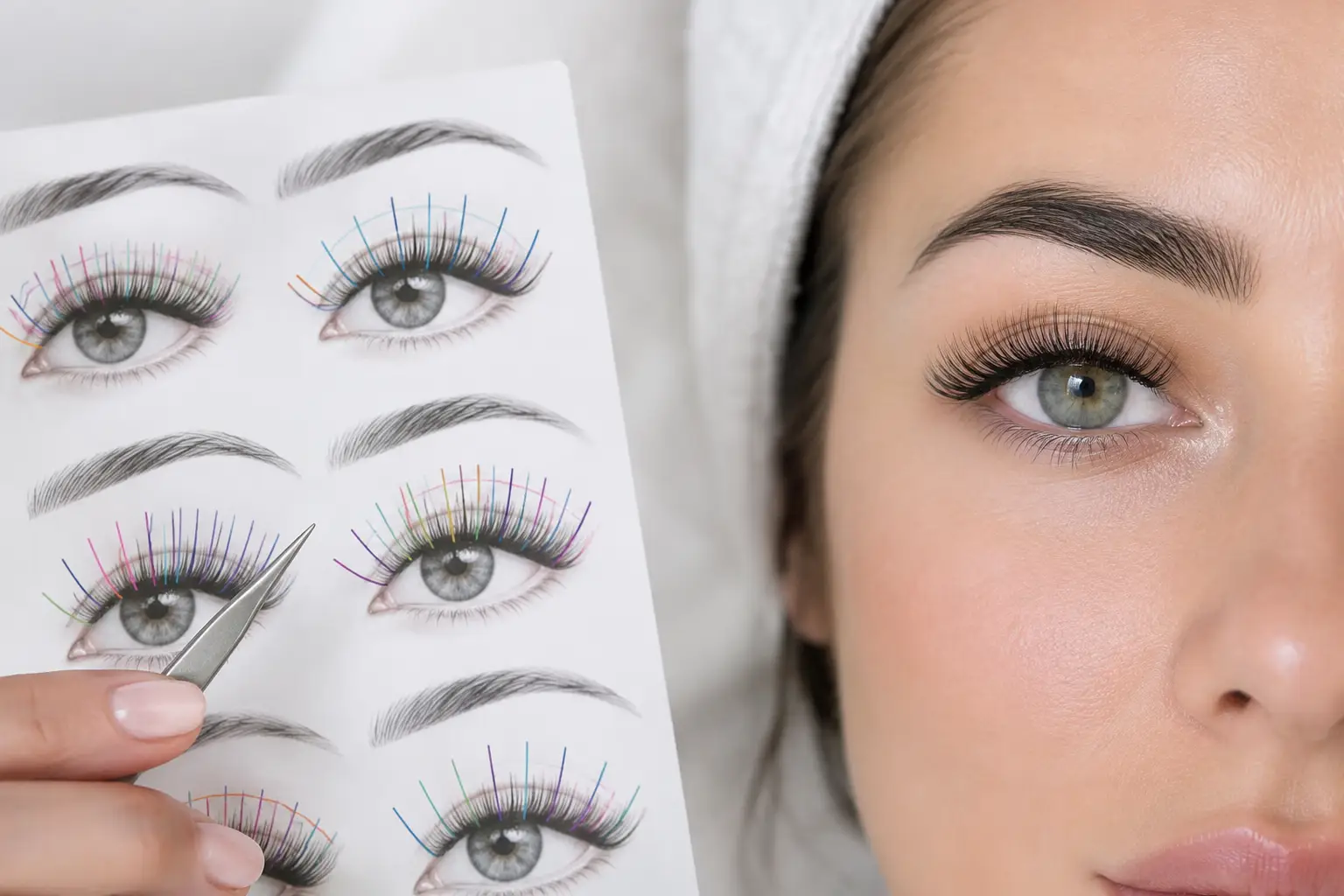
How to Choose the Right Lash Map for Your Eyes
A lash set can be technically clean, full, and beautifully dark, yet still feel wrong if the design does not work with the client’s eyes. That is why learning how to choose the right lash map matters more than copying a trending style from a photo. The right map creates balance, opens the eye area, and respects the health and strength of the natural lashes underneath.
At Vintage Lashes and Beauty Services, lash design begins with an assessment, not a preset menu choice. Eye shape, lid space, natural lash direction, facial proportions, and the client’s desired level of drama all affect the final result. A customized map gives a polished look that wears well between fills instead of a one-size-fits-all set that only looks good from one angle.
What a Lash Map Actually Controls
A lash map is the placement plan for an extension set. It determines the lengths used across the lash line, where the longest lengths sit, how quickly the lengths transition, and how much density or texture is created. It is the architectural plan behind classic, hybrid, and volume lash extensions.
Length is only one part of the decision. Curl, diameter, fan width, direction, and attachment quality matter just as much. A dramatic map with a strong curl may be flattering on one client and overwhelming on another. The best set is not necessarily the longest or fullest. It is the one that enhances the eye while maintaining a safe, precise application.
A skilled lash artist also considers how the design will look when the client is talking, smiling, looking down at a phone, or wearing glasses. Lashes should complement everyday life, not create discomfort, shadows, or an overly heavy appearance.
Start With Eye Shape and Lid Structure
Eye shape provides the first direction, but it should never be treated as the only factor. Two clients may both have almond-shaped eyes, for example, while one has deep-set eyes and the other has a low brow bone. Their lash maps may need to be very different.
Almond Eyes
Almond eyes are generally balanced and can support many lash designs. A soft squirrel or kitten-style map can emphasize the natural lift, while a rounded map can create a more open, youthful effect. Because almond eyes are versatile, the focus is often on the client’s desired finish: natural and polished, softly glamorous, or noticeably voluminous.
The trade-off is that versatility can tempt clients to go too long too quickly. Excessive length can hide the eye shape that makes almond eyes so flattering in the first place. A refined progression of lengths usually gives a better result than a sudden jump to long outer corners.
Round Eyes
Round eyes often benefit from a map that adds visual length through the center and outer third of the lash line. A kitten or subtle cat-eye effect can create a more elongated appearance without making the eyes look overly wide.
The longest lengths should be placed thoughtfully. If they extend too far toward the outermost corner, the design can pull the eye down. A trained artist may place the peak just before the outer edge, then taper down slightly to preserve lift.
Hooded or Mature Lids
With hooded eyes, the lash line can be partially concealed when the eyes are open. Curl selection and strategic placement are especially important. A properly chosen curl can help bring the lashes forward and make the eyes appear more open without relying on excessive extension length.
For mature clients, a soft, lifted design often creates the most elegant result. Heavy density, extreme curls, or very long outer corners can cast shadows and make the eye area appear weighed down. This does not mean mature clients must wear minimal lashes. It means the map should be tailored to create brightness and lift with comfort in mind.
Downturned Eyes
A downturned eye shape benefits from designs that shift the visual focus upward. A squirrel-style map, with its longest point placed around the outer-middle section rather than at the corner, can create a lifted effect. The outer edge is then tapered so it does not exaggerate the downward angle.
A traditional, dramatic cat eye is not always the best choice here. It may look striking in a reference photo, but if the longest lengths sit at the lowest point of the outer corner, the result can make the eyes appear more downturned. Precision matters more than following a trend.
Close-Set or Wide-Set Eyes
For close-set eyes, a map that gives a little more emphasis toward the outer half can create the appearance of more space between the eyes. For wide-set eyes, keeping controlled length and fullness through the center can bring balance back toward the middle of the face.
These adjustments are subtle. The goal is never to make the client’s natural features look altered or artificial. Good lash artistry refines proportion while still allowing the client to look like herself.
Natural Lash Health Sets the Limits
The most flattering map is always limited by what the natural lashes can safely support. Fine, short, sparse, or fragile lashes may not be able to carry the same length, diameter, or fan weight as dense, healthy natural lashes. Applying extensions that are too heavy can lead to premature shedding, twisting, discomfort, and damage over time.
This is where professional judgment matters. A client may request long, dense volume lashes, but the safer recommendation might be a lighter 2D-6D Russian volume design with a carefully controlled diameter and shorter lengths. With the right application, lighter fans can still create impressive fullness while protecting the natural lash line.
Natural lash direction also affects the map. Lashes that grow downward, cross over one another, or grow unevenly require individual correction during application. A set should be designed for the lashes that are actually present, not for an idealized lash line.
Choose a Style That Fits Your Routine
Your lifestyle should influence how you choose the right lash map. A soft classic or light volume set may suit someone who wants polished eyes for work, fitness, travel, and low-maintenance morning routines. A fuller volume set may be the right fit for someone who enjoys visible glamour, photographs often, or prefers to wear little to no eye makeup.
Consider how you normally present yourself. If your wardrobe, makeup, and personal style are understated, an extreme strip-lash effect may feel disconnected from the rest of your appearance. On the other hand, a client who regularly wears bold liner and contour may feel underwhelmed by a very natural set.
Maintenance is part of the choice as well. Lash extensions shed with the natural lash cycle, so fills are generally needed regularly to maintain shape and density. Clients who want consistently full lashes must be prepared to follow an appropriate fill schedule and aftercare routine. Waiting too long between appointments can mean fewer extensions remain and more time is needed to rebuild the set.
Bring Inspiration, But Expect Customization
Reference photos are useful because they help communicate whether you prefer wispy texture, a dark lash line, a soft natural finish, or a lifted outer shape. They should be treated as inspiration, not a guarantee. The model in the image may have a different eye shape, stronger natural lashes, more lid space, or a different brow-to-eye proportion.
A professional consultation translates the feeling of the photo into a design that works for you. It may mean using a similar texture but a different curl, reducing the longest lengths, moving the peak inward, or choosing a lighter density. These are not compromises in quality. They are the adjustments that make a set look intentional instead of copied.
Questions Your Lash Artist Should Be Asking
Before an application, a thorough consultation should cover more than your preferred style. Your artist should ask about your previous extension experience, sensitivity history, daily makeup habits, contact lens use, sleep position, upcoming travel, and the level of maintenance you can realistically commit to.
They should also examine your natural lash condition and explain what is safely achievable. This conversation protects your investment and establishes realistic expectations before adhesive is ever applied. A confident artist will not promise the same result for every client because safe, lasting work is always customized.
Let Your Lash Map Evolve
Your first set does not have to be your forever map. Many clients begin with a conservative design, then adjust after seeing how they feel with extensions in daily life. You may discover that you prefer more lift, a softer outer corner, a darker lash line, or less length than expected.
Seasonal changes can also affect your preference. A lighter, airy set may feel perfect during a Southwest Florida summer, while a fuller, textured volume set may suit holiday events and evening occasions. Changes in natural lash health, skincare routines, or overall aesthetic goals can also justify updating the map.
The most beautiful lash design is one that looks effortless, feels comfortable, and supports healthy natural lashes. Choose an artist who evaluates your eyes closely, explains the reasoning behind the design, and is willing to refine the map as your preferences evolve.