
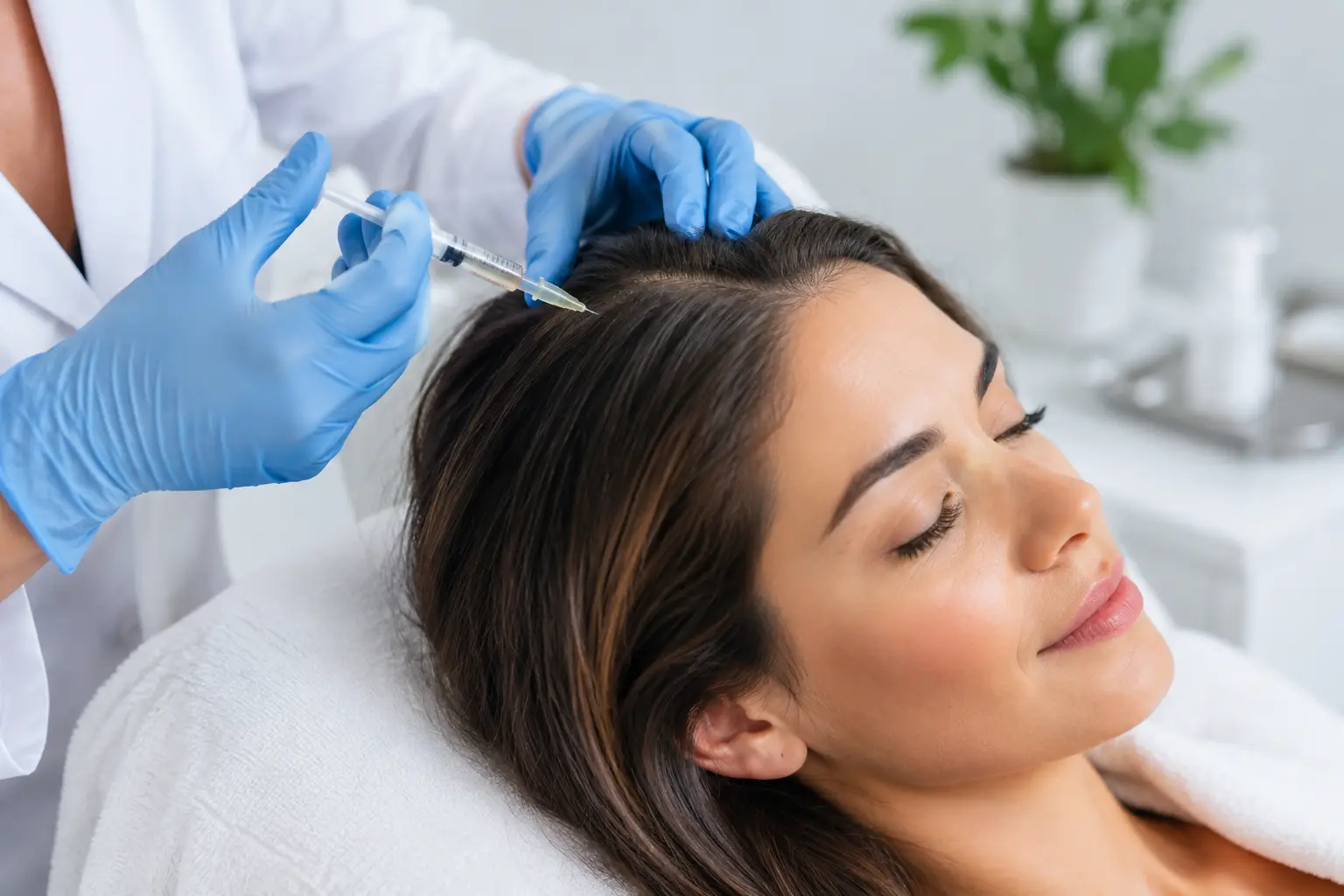
Guide to Exosome Hair Therapy and Results
Hair thinning rarely has one simple cause. Genetics, hormones, stress, inflammation, nutritional status, medications, and styling damage can all affect density and shedding. This guide to exosome hair therapy explains what the treatment is claimed to do, where the evidence stands, and the questions every client should ask before placing their scalp in anyone’s hands.
What Is Exosome Hair Therapy?
Exosomes are tiny, cell-derived particles that carry proteins, lipids, and genetic signaling material between cells. In regenerative medicine research, they are being studied for the way they may influence inflammation, tissue repair, and cellular communication.
For hair concerns, exosome therapy generally refers to applying or injecting a commercially prepared exosome product into the scalp, often through injections, microneedling, or a combination approach. The goal is to support the environment around weakened hair follicles, potentially helping reduce inflammation and encourage healthier growth activity.
That is the theory. The practical reality requires more caution. Exosome products, sources, concentrations, preparation methods, and delivery techniques vary widely between providers. A treatment called “exosome hair restoration” may not be the same treatment from one practice to the next.
The Most Important Safety Point
Exosome treatments for hair loss are not FDA-approved in the United States. That does not automatically mean every discussion around exosomes lacks merit, but it does mean clients should not treat the procedure as a proven, standardized medical solution.
Marketing can make emerging treatments sound more settled than they are. Before agreeing to treatment, ask what product is being used, how it is sourced and stored, whether it is intended for the proposed use, and what evidence supports the provider’s protocol. A qualified provider should answer directly without relying on vague claims about “stem cells,” “growth factors,” or guaranteed regrowth.
Clean technique matters just as much as the product. Any scalp procedure that involves injections or microneedling carries a risk of infection, irritation, bruising, swelling, and discomfort. A medically informed environment, proper sanitation, appropriate screening, and clear aftercare are baseline expectations, not premium add-ons.
Who May Be a Candidate?
The best candidate is not simply someone who wants thicker hair. Candidacy begins with understanding why the hair is thinning.
People with early androgenetic hair loss, often called male-pattern or female-pattern hair loss, may be researching options because they still have miniaturized but active follicles. Those with diffuse shedding may need a different conversation, especially if shedding began after illness, a major stressor, rapid weight change, surgery, hormonal shifts, or a new medication.
A careful consultation should also account for scalp health. Active infection, significant irritation, open lesions, uncontrolled inflammatory scalp conditions, or unexplained patches of hair loss should be evaluated before any cosmetic hair procedure. Scarring forms of hair loss need prompt medical assessment because the priority is preserving follicles that remain.
Clients who are pregnant, breastfeeding, immunocompromised, taking blood-thinning medication, or managing a complex medical condition should receive individualized guidance from an appropriate licensed medical professional. This is not a treatment to select based on before-and-after photos alone.
What a Responsible Consultation Should Cover
A good consultation does more than identify where hair looks thin. It reviews your shedding pattern, family history, medications, health history, current hair routine, and prior treatments. Your provider should examine the scalp and discuss whether the pattern suggests a condition that needs medical diagnosis or laboratory testing.
Photography is also valuable. Consistent, well-lit baseline photos make it easier to judge change over time. Hair density can look dramatically different based on part placement, wet versus dry hair, lighting, length, and styling products. Without standardized images, it is easy to mistake a good styling day for a treatment result.
You should leave knowing the full plan: how the treatment would be delivered, how many sessions are recommended, the anticipated cost, possible side effects, and what maintenance may involve. If the answer is simply “one treatment fixes everything,” that is a reason to pause.
What Happens During an Exosome Scalp Treatment?
Protocols differ, but most appointments begin with a scalp assessment and cleansing. A topical numbing product may be used if injections or deeper microneedling are planned. The provider then delivers the selected product across areas of thinning, usually along the hairline, part, crown, or other areas of concern.
Injection-based approaches place material into the scalp with a series of small needle entries. Microneedling-based approaches create controlled microchannels and may be paired with topical application. Neither approach is automatically superior in every case. The right method depends on the provider’s training, the product instructions, scalp condition, and the client’s tolerance for downtime.
A session is typically brief, but the outcome is not immediate. Some redness, tenderness, pinpoint bleeding, tightness, or swelling can occur after a needling or injection procedure. Your provider should give written aftercare rather than relying on memory at checkout.
Aftercare Protects the Investment
The specific instructions should come from the clinician performing your treatment, because they depend on the method and products used. In general, clients are often asked to keep the scalp clean, avoid touching the area unnecessarily, and hold off on heavy sweating, swimming, direct sun exposure, and irritating hair products for the recommended period.
Avoid booking a scalp procedure immediately before a beach weekend, a major event, or a color appointment unless your provider confirms the timing is appropriate. In Southwest Florida, sun, humidity, pool water, and perspiration can make aftercare planning especially relevant.
Call the provider promptly if you develop increasing pain, heat, spreading redness, drainage, fever, or any reaction that feels out of proportion to the expected recovery. Do not attempt to cover a concerning scalp reaction with dry shampoo, hair fibers, or styling products.
When Will You See Results?
Hair grows slowly. Even with established hair-restoration approaches, meaningful assessment usually takes months, not days or weeks. A client may first notice less shedding, easier styling, or finer new growth before seeing a visible improvement in coverage. Results, if they occur, depend on the underlying cause of thinning, follicle viability, age, health factors, consistency, and the complete treatment plan.
Be skeptical of dramatic promises. No ethical provider can guarantee a particular density, hairline, or timeline. Advanced hair loss with long-inactive follicles may respond differently than early thinning. Some people may be better served by medical evaluation, proven prescription options, PRP hair restoration, scalp micropigmentation, or a combination strategy rather than exosome therapy alone.
PRP and exosome therapy are often discussed together, but they are not interchangeable. PRP uses a concentration of platelets prepared from your own blood, while exosome products are externally sourced and have a different regulatory and evidence profile. The right option depends on your diagnosis, risk tolerance, budget, and provider’s clinical judgment.
Questions to Ask Before You Book
Ask your provider: What is causing my hair loss, or do I need a medical diagnosis first? What exact product and delivery method will be used? Is this treatment FDA-approved for hair loss? What are the known risks, expected downtime, and realistic outcomes for someone with my pattern of thinning?
Also ask how results will be measured and what happens if you do not respond. A responsible plan includes a follow-up schedule, consistent photography, and a clear conversation about alternatives. It should never pressure you to purchase a package before you understand the protocol.
For clients seeking hair restoration support in Naples, Vintage Lashes and Beauty Services believes that precision, sanitation, and candid education should guide every scalp-focused decision. Hair restoration is a long-term commitment, and the right provider will protect that commitment with honest screening and a plan built around your actual needs, not the newest trend.