
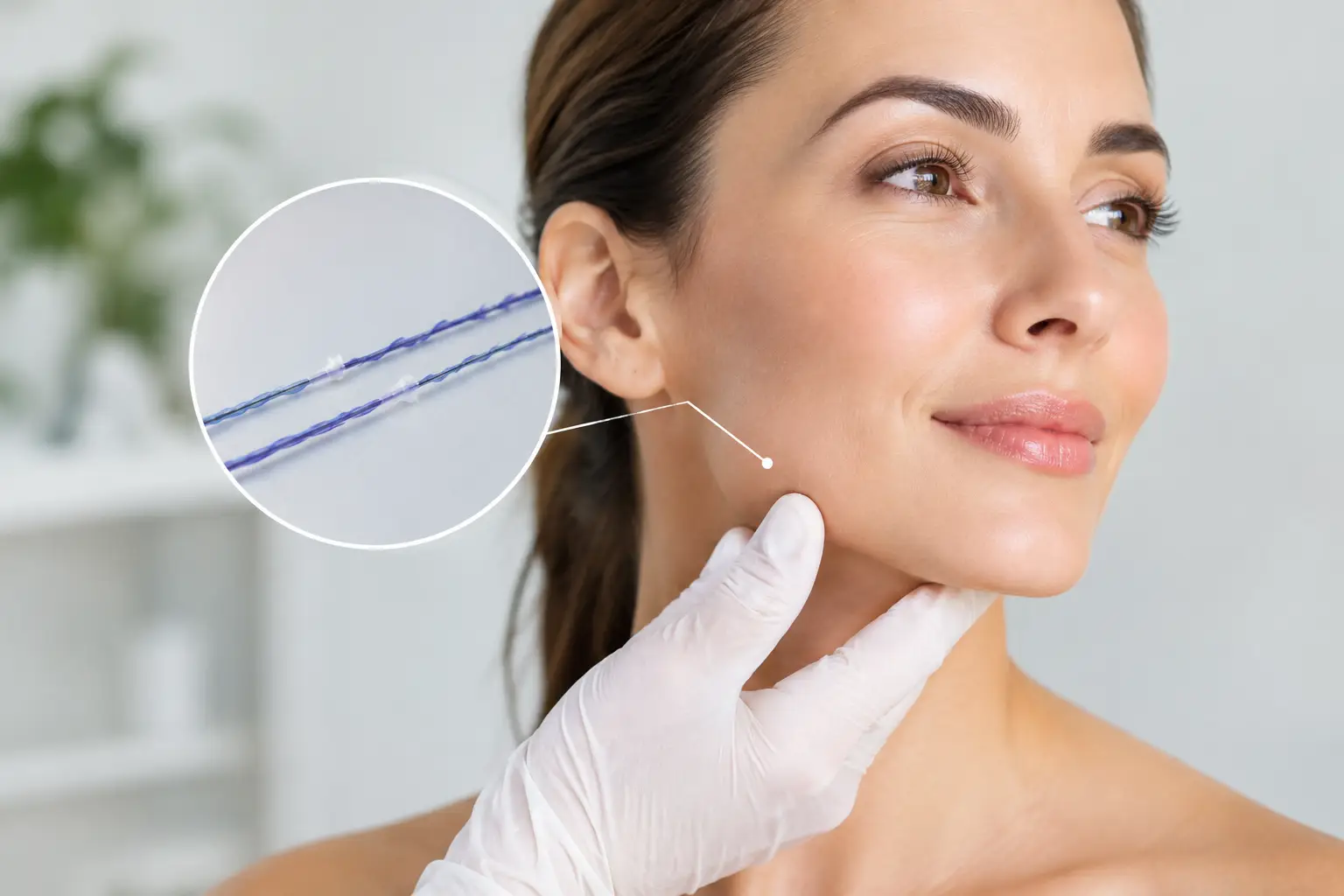
How to Maintain PDO Thread Results Longer
PDO threads are an investment in a more refined, supported facial appearance, not a one-day cosmetic fix. To maintain PDO thread results, your choices in the days after treatment and the months that follow matter just as much as proper thread placement. The goal is to protect the initial lift, support collagen production, and avoid putting unnecessary stress on treated tissue while it heals.
A skilled PDO thread treatment can improve the look of mild to moderate laxity in areas such as the cheeks, jawline, lower face, neck, and brows. Results develop in phases. There may be an immediate change from repositioning the tissue, followed by gradual improvement as the body responds to the threads and builds new collagen around them. Understanding that timeline helps clients make better decisions about aftercare and maintenance.
What PDO Threads Can and Cannot Maintain
PDO threads are absorbable sutures placed beneath the skin to provide structural support and trigger collagen remodeling. Depending on the thread type and treatment area, the threads themselves gradually dissolve, while the collagen response can help preserve a firmer, more supported look beyond that point.
No thread treatment stops facial movement, natural aging, sun exposure, weight changes, or loss of collagen. Results vary according to skin quality, degree of laxity, facial anatomy, metabolism, lifestyle, and the number and type of threads used. A client with early skin laxity and good skin quality may enjoy a more visible, longer-lasting result than someone with significant sagging or very thin, sun-damaged skin.
This is why an honest consultation matters. PDO threads can be an excellent option for clients seeking a nonsurgical lift and improved skin support. They are not a substitute for surgery when substantial tissue repositioning is needed. Realistic expectations are part of protecting your investment.
The First Two Weeks Protect Your Placement
The early healing period is when clients have the most influence over how comfortably and predictably their result settles. Your provider will give instructions specific to the areas treated and the techniques used. Follow those directions over general advice from social media.
For the first several days, avoid pressing, rubbing, massaging, or aggressively cleansing treated areas. Sleep on your back with your head elevated if instructed to do so. This reduces prolonged pressure and helps manage swelling. Avoid facials, gua sha, facial massage devices, and treatments that create strong suction, heat, or mechanical manipulation until your provider clears you.
Limit exaggerated facial movements during early recovery, particularly after treatment around the lower face. Large bites, prolonged chewing, forceful yawning, and wide dental work can be uncomfortable and may put tension on freshly treated tissue. Choose softer foods for a short period if recommended.
Strenuous workouts, saunas, hot yoga, steam rooms, and heavy alcohol intake can increase swelling and bruising. They are typically best postponed during the initial recovery window. Avoid scheduling a thread treatment immediately before a major event, photoshoot, or vacation. Even when downtime is modest, bruising, tenderness, swelling, or temporary skin irregularities can occur.
Maintain PDO Thread Results With Skin Protection
Threads work within the skin, but the surface of the skin still determines much of how fresh, smooth, and lifted the face appears. Daily sun protection is one of the most practical ways to maintain PDO thread results. UV exposure accelerates collagen breakdown and contributes to uneven tone, creasing, and laxity. Use broad-spectrum SPF 30 or higher every morning, then reapply when you are outdoors for extended periods.
A consistent, provider-approved skincare routine also supports the quality of your result. Hydrating ingredients can improve the look of fine lines caused by dehydration, while antioxidants and carefully introduced retinoids may support long-term skin renewal. The timing matters. Do not restart active products, exfoliants, or prescription-strength skincare over irritated or healing skin without guidance from your provider.
Professional skin treatments can complement PDO threads, but they must be timed correctly. Treatments such as microneedling, radiofrequency microneedling, chemical peels, dermabrasion facials, or laser services may be appropriate later in a treatment plan, depending on the area and your healing progress. The wrong treatment too soon can create avoidable irritation or interfere with recovery. A coordinated plan is safer than stacking procedures based on a calendar alone.
Support Collagen From the Inside Out
Collagen remodeling is not instant. Your body needs time and basic nutritional support to heal well. Prioritize adequate hydration, regular sleep, and protein-rich meals during recovery and beyond. Nutrients such as vitamin C are involved in collagen formation, but supplements are not a replacement for a balanced diet or qualified medical advice.
Smoking and nicotine use deserve special attention. Nicotine constricts blood vessels and can compromise skin health and healing. Frequent smoking also contributes to collagen breakdown over time. If you want your aesthetic treatments to perform at their best, reducing or eliminating nicotine exposure is one of the most meaningful steps you can take.
Stable weight also helps preserve facial balance. Significant weight loss or gain can change the volume and support of the face, which may alter how a thread result appears. This does not mean a client must maintain a perfect number on the scale. It means major body-composition changes should be part of the conversation when planning facial rejuvenation.
Know Which Habits Can Shorten the Look of Results
The habits that age skin are rarely dramatic on one day. They work cumulatively. Repeated sun exposure without protection, tanning, smoking, poor sleep, dehydration, unmanaged stress, and inconsistent skincare all place pressure on collagen health.
Be equally cautious with at-home devices and trendy treatments. A strong facial massage tool, aggressive microcurrent setting, heat device, or peel may be appropriate for someone else but not for your treatment stage or skin condition. Ask before adding anything new. This is especially true when combining threads with injectable treatments or energy-based services.
Your provider should also know about any upcoming dental work, facial surgery, or medical procedures. Timing may need adjustment based on the treatment area and the amount of pressure or movement involved. Transparency allows your provider to give you recommendations that protect both comfort and outcome.
Plan Maintenance Before Results Fully Fade
PDO thread maintenance is not necessarily a matter of repeating the exact same procedure on a fixed schedule. Some clients benefit from a touch-up or additional collagen-supporting threads as results soften. Others may do better with a customized plan that combines skincare, neuromodulators, dermal fillers, biostimulators, or regenerative treatments to address the different causes of facial aging.
Threads address tissue support. Fillers can replace selected volume loss. Neuromodulators can soften movement-related lines. Skin rejuvenation services can improve texture and tone. These treatments have different roles, and using them strategically can create a more balanced result than relying on any single procedure.
At Vintage Lashes and Beauty Services, treatment planning is based on your anatomy, skin condition, lifestyle, and desired level of correction. A polished outcome is often built over time with careful timing, conservative decisions, and consistent follow-up rather than an overly aggressive approach in one appointment.
When to Contact Your Provider
Mild tenderness, tightness, swelling, bruising, or temporary unevenness can be part of normal recovery. However, contact your treating provider promptly if you have increasing pain, significant redness or warmth, drainage, fever, skin color changes, thread exposure, or a concern that feels outside the instructions you were given. Do not attempt to manipulate a visible or palpable thread at home.
A scheduled follow-up is the right place to discuss subtle asymmetry, persistent puckering, questions about skincare, or the timing of your next aesthetic service. Photographs taken in consistent lighting can also help you and your provider evaluate progress fairly, since swelling and day-to-day facial changes can make early results difficult to judge.
The most effective way to extend a PDO thread result is simple: treat the healing period seriously, protect your collagen every day, and return for professional guidance before you feel you are starting over. Thoughtful maintenance keeps the focus where it belongs – on a result that looks refined, natural, and appropriate for you.