
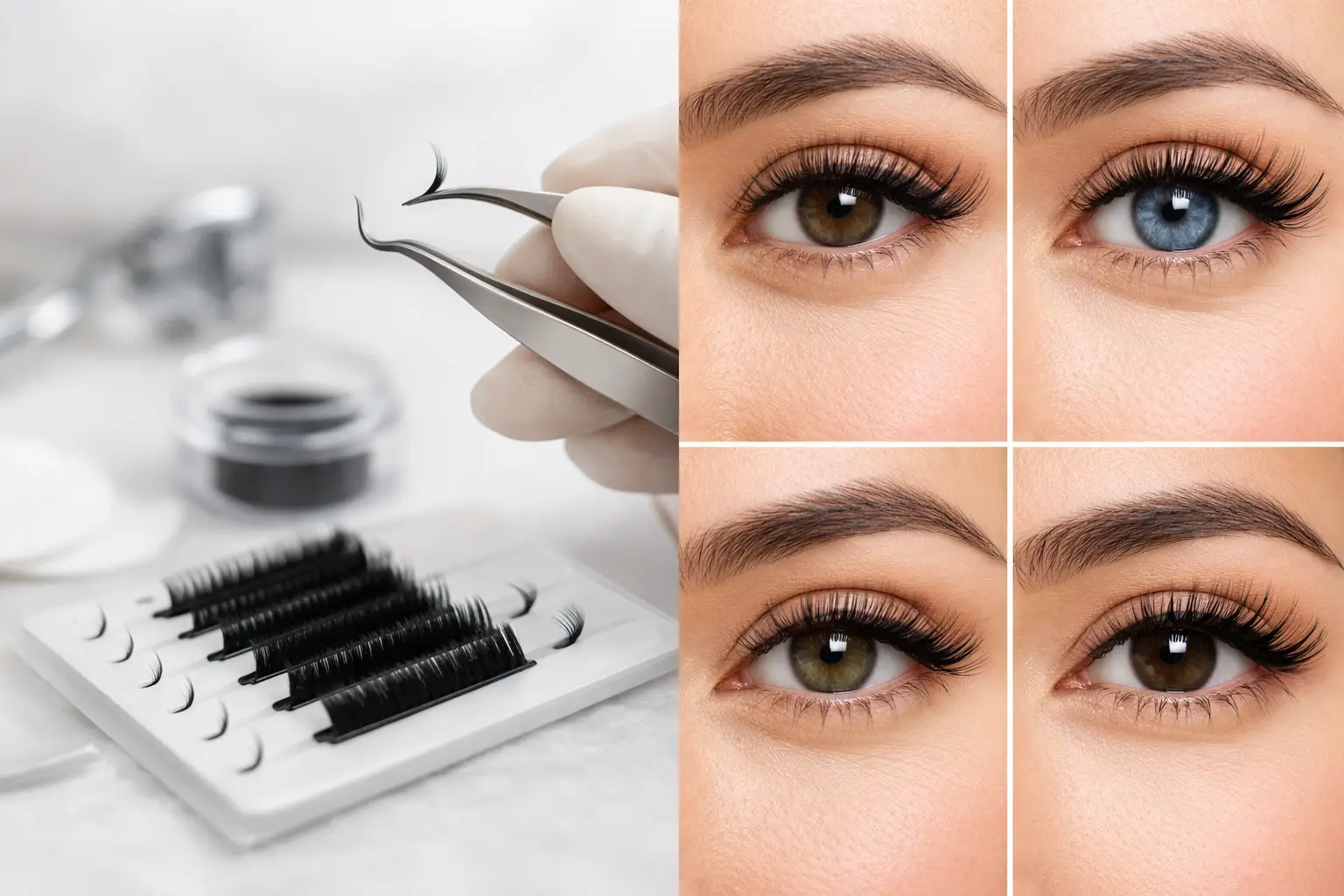
How to Choose Eyelash Extension Curl by Eye Shape
A lash set can be beautifully full, perfectly dark, and still feel slightly wrong if the curl does not suit the eyes beneath it. When you choose eyelash extension curl, you are deciding how open, lifted, soft, or dramatic the finished look will appear. The right choice is never just about following a trend. It comes from evaluating eye shape, lid space, natural lash direction, lash health, and the level of polish you want to maintain between fills.
At Vintage Lashes and Beauty Services, curl selection is part of a precise, customized application process. A certified lash artist assesses the entire eye area before placement, then selects curls that create balance while respecting the strength and condition of each natural lash.
Why Eyelash Extension Curl Matters
Curl affects the visible architecture of the lash line. It determines whether extensions create a subtle enhancement, a wide-eyed effect, a lifted outer corner, or a more glamorous finish. Length and volume get much of the attention, but curl often has the greatest influence on how the eye shape reads from a normal conversational distance.
A curl that is too soft may disappear against straight natural lashes or heavy lids. A curl that is too dramatic can look disconnected from the natural lash, crowd the brow area, or make the set feel overly styled for a client’s features. The goal is not always the strongest lift. The goal is an intentional result that looks flattering from every angle and wears well through the lash growth cycle.
Curl also affects retention. Extensions are applied with careful alignment to the natural lash. When a very lifted curl is forced onto a lash that grows downward or has limited attachment space, the bond may be less stable than it would be with a more suitable option. Proper curl selection supports both appearance and long-term lash health.
How to Choose Eyelash Extension Curl for Your Features
The most successful lash design begins with a consultation, not a curl chart. Your artist should look at your eyes while they are open, relaxed, and expressive. A design that looks ideal when the eyes are closed may create a different effect once the lid folds, brows, and natural lash direction are visible.
Start With Your Natural Lash Direction
Natural lashes may point upward, straight forward, downward, or in several directions across the lash line. Clients with naturally lifted lashes can often wear softer curls while still seeing definition. Clients with straight or downward-growing lashes may benefit from a more pronounced curl to make the extensions visible and create the appearance of lift.
However, more curl is not automatically better. Strongly curled extensions have a different contact point against the natural lash. If the natural lashes are very straight, fine, or fragile, the artist may balance curl with a conservative length and appropriate diameter to protect the natural lash. This is especially relevant in volume applications, where proper fan weight and attachment are essential.
Consider Eye Shape and Lid Structure
Eye shape provides direction, but it should not become a rigid rule. Most people have subtle asymmetries between the two eyes, and a skilled artist designs for the individual rather than applying the same map to every client.
For almond-shaped eyes, many curl families can work well. A C or CC curl often creates a refined, feminine lift without changing the eye’s natural balance too aggressively. Clients who prefer more visible glamour may choose a stronger curl in selected areas rather than across the entire lash line.
For round eyes, a softer curl through the center with a controlled lift toward the outer third can help create a more elongated appearance. Excessive curl at the center can make already round eyes appear even more open and circular, which may or may not be the desired effect.
For hooded eyes or eyes with limited visible lid space, curl placement becomes especially important. A stronger curl can help bring the lash line forward so it remains visible beneath the lid. Yet an overly dramatic curl may touch the brow bone or disappear into the hood when the eyes are open. Often, a thoughtful combination of curls and lengths creates better lift than choosing the strongest curl available.
For downturned eyes, the outer corner should be handled with care. Adding the longest, heaviest, or most curled extensions at the very edge can pull the eye downward visually. A tailored design may peak just before the outer corner, then taper gently to create a more lifted impression.
For deep-set eyes, curls with noticeable lift can help bring the lashes forward and prevent the set from looking shadowed. For prominent eyes, a softer curl may offer elegant definition without making the lashes appear too projected. These are starting points, not fixed prescriptions. Your artist should adjust the design based on your facial proportions, daily style, and natural lash condition.
Match the Curl to the Look You Want
Lash curl names vary slightly by brand, but the basic categories are widely recognized. J curl is very subtle and typically best for clients seeking a nearly natural enhancement. B curl offers a gentle lift that works well for understated classic sets. C curl is a versatile favorite because it creates visible curl while remaining polished and wearable.
CC curl provides more lift and is often chosen for clients who want a brighter, more defined appearance. D curl delivers a stronger, glamorous effect and can be beautiful when used strategically on healthy lashes with adequate lid space. L and L+ curls have a flatter base before lifting sharply, which can be useful for certain straight or downward-growing natural lashes, particularly when a standard curl would be hidden by the eyelid.
The curl should suit your lifestyle as much as your aesthetic preference. A client who wears minimal makeup, works in a conservative professional setting, or wants low-key everyday elegance may feel most comfortable with B or C curls. A client who enjoys a more finished look without needing mascara or a lash curler may prefer CC or D curls. Neither choice is better. The right curl is the one that gives you confidence without feeling out of character.
Curl Should Be Balanced With Length and Volume
A dramatic curl paired with excessive length can make extensions appear heavy or artificial, particularly on fine natural lashes. Conversely, a modest curl with a carefully selected length can create a surprisingly lifted result. This is why professional lash styling considers every component together rather than selecting one feature in isolation.
Classic extensions generally create a clean, mascara-like enhancement, so curl selection is highly visible. Volume lashes can create softness, density, and texture through properly made lightweight fans, but they still require thoughtful curl placement. A 2D to 6D Russian volume set should never use volume as a substitute for sound design. The fans must be safely weighted, precisely attached, and appropriate for the natural lashes supporting them.
Mixed curls can also be valuable. An artist may use a softer curl where the natural lashes already lift well and add a stronger curl in areas that need more visibility. This type of customization can make the set look more natural than applying one curl uniformly across the entire eye.
When Your First Choice May Not Be the Best Choice
Bringing inspiration photos is helpful, but the photo may feature a different eye shape, brow position, natural lash density, or curl pattern than your own. The most realistic way to approach inspiration is to identify what you like about the look: the openness, the outer-corner lift, the darkness, or the soft texture. Your artist can then recreate that feeling with a design suited to your eyes.
There are also practical reasons to modify a requested curl. If your natural lashes are recovering from damage, shedding more than usual, or too fine for a dramatic style, a responsible artist may recommend a lighter, shorter, or softer approach. This protects your natural lashes and gives you a better foundation for consistent fills.
Do not judge a new curl only in the first hour after your appointment. Extensions can feel more noticeable when you are accustomed to another style, and the finished look may settle into your routine after a day or two. If you still want a change, mention it at your next fill. Small adjustments to curl, length, mapping, or density can refine the result without compromising healthy application standards.
Maintain the Curl and Your Lash Investment
Extension curl is manufactured into the fiber, so it should not be curled with a mechanical eyelash curler. Curlers can bend, crimp, or loosen extensions and may damage the natural lashes underneath. Avoid pulling at the lash line, sleeping face-down when possible, and using oil-based products around the eyes if they interfere with adhesive performance.
Clean lashes are essential. Use an extension-safe cleanser as directed, rinse thoroughly, and gently brush dry lashes with a clean spoolie. Regular fills, typically scheduled according to your natural shedding cycle and the fullness you prefer, help maintain a balanced shape. Waiting until most extensions have shed can turn a maintenance appointment into a much longer corrective service.
The best curl is one that works with your eyes, your natural lashes, and the way you want to show up each day. Let your artist evaluate the details, communicate the result you want, and choose a design that makes your eyes look polished without asking your natural lashes to do more than they safely can.