
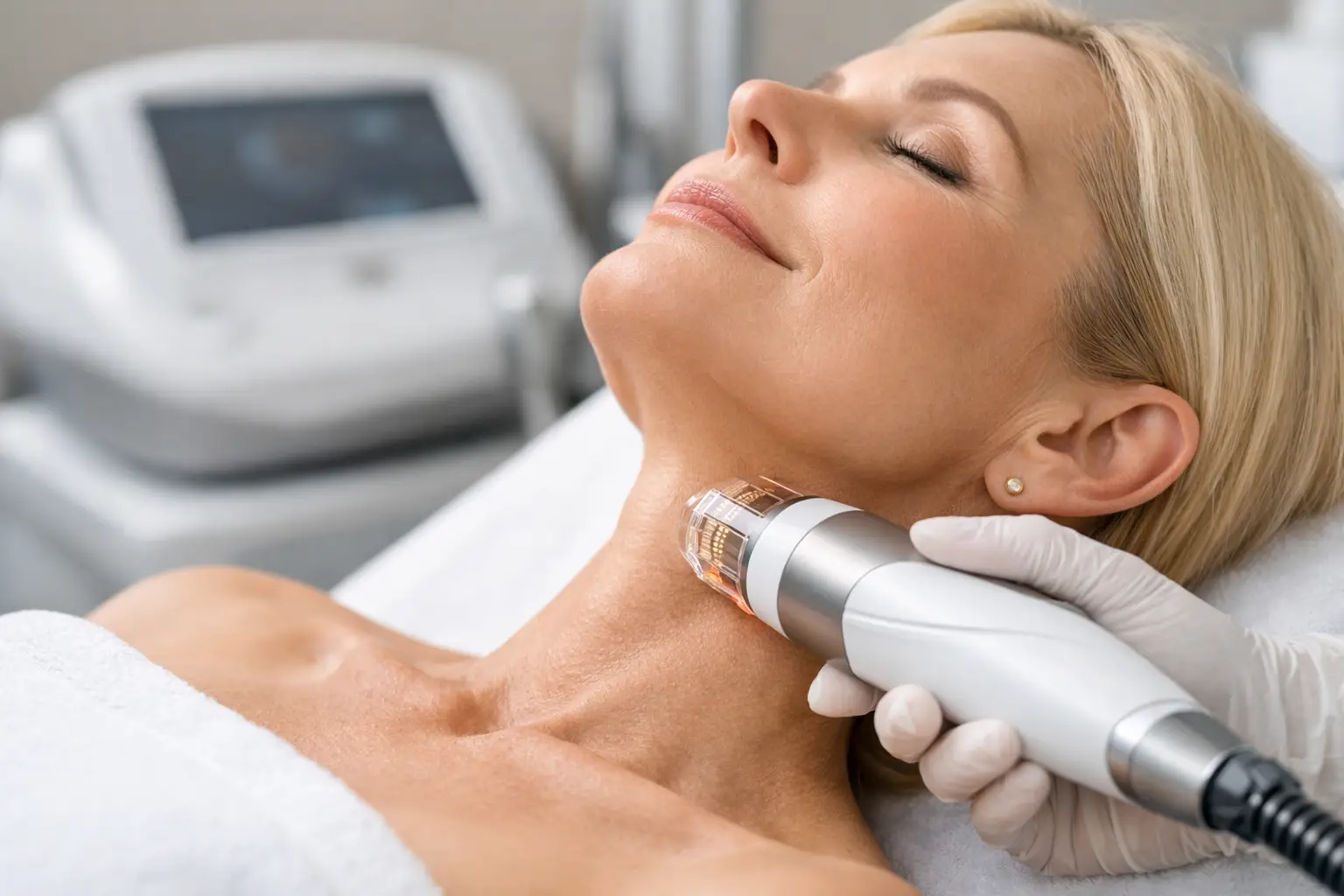
Can RF Microneedling Tighten Neck Skin Safely?
The neck often shows skin laxity before the face does. Fine horizontal lines, crepey texture, sun damage, and a less-defined jawline can make even a well-maintained complexion feel incomplete. So, can RF microneedling tighten neck skin? For the right candidate, it can improve mild to moderate laxity, texture, and crepiness by stimulating new collagen and elastin within the skin.
It is not a surgical neck lift, and it cannot erase significant loose skin or a heavy banded neck. But when treatment settings, needle depth, and aftercare are handled precisely, RF microneedling can be an effective option for clients who want a firmer, smoother-looking neck without surgery.
How RF Microneedling Tightens the Neck
RF microneedling combines two forms of controlled collagen stimulation. First, very fine sterile needles create microchannels at a selected depth in the skin. Radiofrequency energy is then delivered beneath the surface, creating controlled heat in targeted layers of tissue.
That heat matters because collagen fibers respond to it in two ways. There can be a temporary tightening effect from collagen contraction, followed by a slower remodeling process as the body produces and organizes new collagen and elastin. The visible result is typically skin that looks smoother, denser, and more refined over time.
The neck requires a different approach than the cheeks or forehead. Its skin can be thinner, more delicate, and more prone to irritation. A skilled provider must tailor needle depth, energy level, treatment passes, and spacing to the area rather than using a one-size-fits-all protocol. Precision is especially important around the jawline, under the chin, and the center of the neck.
What Results Can You Realistically Expect?
RF microneedling is best for early to moderate signs of skin aging. Clients may notice improved texture, softened fine lines, a reduction in crepey appearance, and a subtle increase in firmness. It can also support a more polished transition from the jawline to the neck, particularly when laxity is mild.
The word “subtle” is worth emphasizing. A quality RF microneedling treatment is designed to build collagen gradually, not produce an overnight transformation. Some clients see an early glow or mild temporary tightness after healing, but meaningful collagen remodeling generally develops over several weeks. Results may continue improving for two to three months after a treatment series.
A typical plan often includes three sessions spaced about four to six weeks apart, although treatment plans should be based on skin quality, degree of laxity, age, sun exposure, and prior aesthetic treatments. Maintenance may be recommended once or twice a year depending on how the skin responds and how quickly collagen loss progresses.
When RF Microneedling Is a Good Fit for Neck Laxity
The strongest candidates are usually people who have good skin health but are beginning to see changes they do not want to ignore. This may include fine lines across the neck, crepey skin below the chin, mild looseness along the jawline, acne scarring, or uneven texture from years of Florida sun exposure.
RF microneedling can also be a practical choice for clients who prefer a procedure with limited downtime. Most people experience redness, warmth, and mild swelling similar to a sunburn for one to three days. The neck can remain slightly sensitive or feel tight during early healing. Tiny pinpoint marks may be visible initially, but they generally fade as the skin recovers.
It may not be the right standalone choice if there is substantial skin redundancy, pronounced platysmal banding, or a significant amount of fullness beneath the chin. In those cases, collagen stimulation can improve the skin’s quality, but it will not replace the degree of correction available through more advanced medical or surgical options.
RF Microneedling vs. Other Neck Tightening Treatments
The most effective treatment is not always the most aggressive one. It is the one that addresses the actual cause of the concern.
If the primary issue is skin texture and crepiness, RF microneedling may be an excellent foundation treatment. If volume loss is contributing to a less-supported jawline, a provider may discuss biostimulators or other injectable options that encourage collagen production. If the concern is more about structural laxity or neck bands, PDO threading, neuromodulator treatment, or a surgical consultation may be more appropriate depending on the anatomy and desired level of correction.
Some clients benefit from a combination plan. For example, RF microneedling may improve the skin’s surface and density while another treatment addresses contour or support. Combining treatments should never mean stacking procedures without a strategy. Each service needs appropriate timing, a clear purpose, and a provider who understands how the tissues heal.
Safety Matters More on the Neck
RF microneedling is a technique-driven treatment. The device is only one part of the equation. Appropriate settings, proper skin preparation, sterile protocols, and knowledgeable post-treatment guidance all affect both safety and results.
Before treatment, your provider should review your health history, medications, skincare routine, history of pigmentation changes, tendency toward scarring, and any active skin conditions. Treatment may need to be postponed if you have an active rash, infection, open skin, or a cold sore outbreak near the treatment area. Clients who are pregnant, have certain implanted electronic devices, or use particular medications may not be candidates for RF-based procedures.
Pigment risk should also be discussed openly, especially for clients with a history of post-inflammatory hyperpigmentation or melasma. RF microneedling can be performed on many skin tones, but treatment parameters and pre- and post-care must be selected carefully.
What to Do Before and After Your Appointment
Preparation helps reduce unnecessary irritation. In the days leading up to treatment, your provider may ask you to pause retinoids, exfoliating acids, and other potentially irritating active products. Avoid arriving with sunburned or heavily tanned skin. If you have a special event, schedule thoughtfully. While downtime is usually manageable, your skin deserves time to settle.
After treatment, keep the area clean and use only the products approved for your recovery. Avoid direct sun, heat exposure, intense workouts, swimming pools, and steam rooms for the period recommended by your provider. Do not pick, scrub, or exfoliate healing skin. Consistent sunscreen use is not optional if your goal is collagen preservation and an even result.
A polished outcome also depends on staying realistic about lifestyle. Smoking, frequent unprotected sun exposure, major weight fluctuations, and inconsistent skincare can all work against the collagen you are trying to build.
Choosing a Provider for Neck RF Microneedling
The neck is not an area to treat casually. Ask who performs the procedure, what experience they have treating neck laxity, how they customize settings, and what aftercare support is available if you have questions during healing. You should feel informed about the expected benefits, limits, downtime, and alternatives before you begin.
At Vintage Lashes and Beauty Services, treatment planning is approached with the same attention to technical detail, sanitation, and client care that has guided our Naples practice since 2011. A proper consultation is where we determine whether RF microneedling is the best match for your neck concerns or whether another approach would better protect your investment.
If your goal is smoother, firmer-looking neck skin without surgery, RF microneedling may be a worthwhile option. Start with an honest assessment, commit to the treatment schedule and aftercare, and give collagen the time it needs to do its work.