
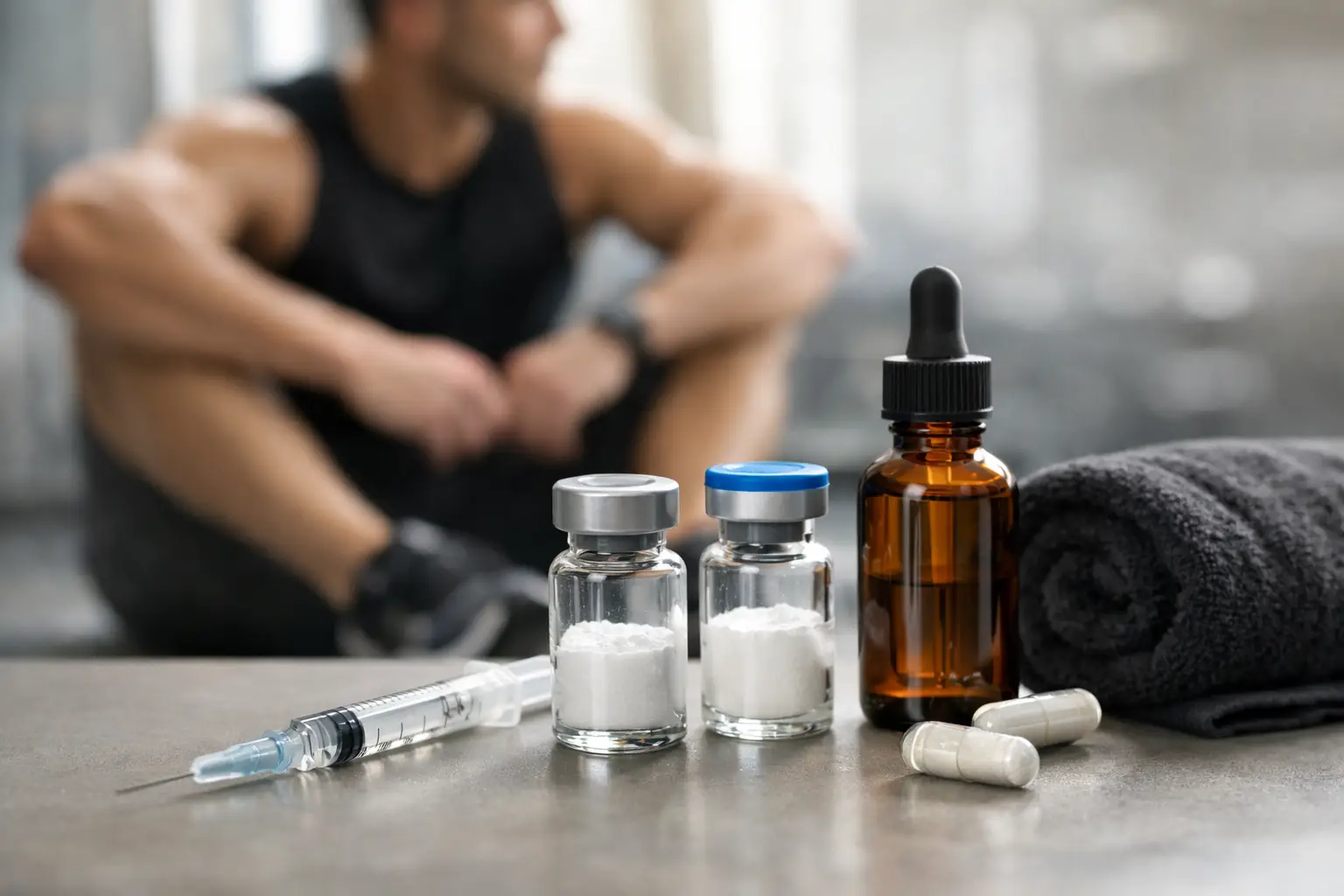
Best Peptides for Recovery and What to Know
A hard training block, a lingering tendon issue, poor sleep, and the desire to look and feel your best can all lead people to ask about the best peptides for recovery. The honest answer is not a single vial or protocol. Recovery peptides require a careful conversation about your goals, health history, current medications, lab work, and the difference between promising early research and established medical treatment.
For clients who value expert-led wellness care, that distinction matters. A polished appearance and an active lifestyle are supported by consistency, not shortcuts. Peptide therapy may be considered as part of a personalized medical plan, but it should never replace an accurate diagnosis, proper nutrition, sleep, physical therapy when needed, or medically appropriate treatment.
What “recovery” actually means
Recovery is often used as a catchall term, but the goal changes the conversation. Someone returning to strength training after a strenuous season has different needs than someone dealing with a diagnosed orthopedic injury, reduced energy during hormone changes, or recovery after an aesthetic procedure.
Before discussing peptides, a qualified provider should clarify whether the concern is muscle soreness, exercise tolerance, tendon or joint discomfort, sleep quality, body composition, skin healing, or general fatigue. Pain that is sharp, worsening, associated with swelling or weakness, or follows an acute injury deserves medical evaluation first. Peptides are not a substitute for imaging, rehabilitation, or specialist care when those are indicated.
Best peptides for recovery: the options people ask about
There is no FDA-approved peptide specifically designated as the “best” option for sports recovery, muscle repair, or injury healing. Many peptides discussed online are investigational, unapproved for these uses, or sold in markets with inconsistent quality controls. That does not mean every conversation about peptide therapy is inappropriate. It means the recommendation must be individualized, conservative, and medically supervised.
BPC-157
BPC-157 is perhaps the peptide most frequently mentioned in connection with soft-tissue recovery. Interest centers on laboratory and animal research involving tissue repair and inflammation pathways. However, high-quality human clinical evidence remains limited, and BPC-157 is not FDA-approved to treat tendon injuries, muscle strains, joint pain, or other recovery conditions.
For a person with a persistent injury, the practical priority is identifying the actual source of the problem. A tendon tear, nerve irritation, arthritis flare, and overtraining pattern can feel similar at first, yet require very different care. Anyone considering BPC-157 should understand the evidence limitations, potential risks, sourcing concerns, and the need for provider oversight.
Thymosin beta-4 and TB-500
Thymosin beta-4 is a naturally occurring peptide studied for its role in cell movement and tissue repair. TB-500 is commonly marketed as a related recovery compound, particularly in fitness circles. The marketing is often much stronger than the human evidence.
Research has created interest in wound healing and tissue repair pathways, but that is not the same as proof that a product will safely heal a sports injury or speed recovery in everyday clinical use. These compounds are not FDA-approved for workout recovery or orthopedic healing. A responsible provider should be direct about that uncertainty rather than presenting them as a guaranteed solution.
Growth hormone secretagogues
Peptides such as CJC-1295 and ipamorelin are often discussed for sleep, body composition, training recovery, and healthy aging because they may influence growth hormone signaling. Their effects, if appropriate for a given patient, are not interchangeable with a lifestyle plan or medically indicated hormone treatment.
This category deserves extra caution. Growth hormone pathways can affect blood sugar regulation, fluid retention, headaches, appetite, and other systems. People with certain health histories, including active or prior hormone-sensitive concerns, metabolic conditions, or cancer-related risk factors, may need a different approach or may not be candidates at all. Lab monitoring and periodic reassessment are part of responsible care.
GHK-Cu for skin-focused recovery
GHK-Cu is a copper peptide that is more relevant to skin quality than muscle or tendon recovery. It is often discussed in topical skincare and regenerative aesthetics because of its relationship to collagen-supporting processes and skin renewal. Its role is different from a systemic recovery protocol.
For those focused on complexion, texture, or the recovery period around professional skin treatments, a well-designed aftercare plan typically matters more than chasing a trending peptide. Sun protection, appropriate skincare, hydration, and following precise treatment instructions protect both healing and results.
Evidence, safety, and sourcing are not minor details
The peptide space moves quickly, and social media can make a protocol sound more proven than it is. A before-and-after story or a trainer’s recommendation cannot tell you whether a product was accurately labeled, properly stored, suitable for your health profile, or responsible for the result.
Some peptides are available only through compounding pathways under specific clinical circumstances. Compounded medications are not FDA-approved in the same way as commercially approved drugs, and they should not be treated as risk-free simply because they are prescribed. Products marketed as “research use only” are not intended for human use. Online sellers may offer limited quality assurance, uncertain sterility, or misleading dosing information.
A clinically sound evaluation should cover four areas:
- Your specific recovery goal and whether another diagnosis or treatment should come first.
- Your full medication list, supplements, allergies, medical history, and relevant family history.
- Baseline and follow-up labs when a therapy could affect hormones, glucose, or other measurable markers.
- Clear instructions on dosing, storage, administration, expected follow-up, and symptoms that require prompt medical attention.
This is especially important for clients who use blood thinners, have diabetes or insulin resistance, are pregnant or breastfeeding, have a history of cancer, or are managing chronic cardiovascular, kidney, liver, or endocrine conditions. Competitive athletes should also verify the status of any substance with their governing organization. “Natural” and “peptide-based” do not automatically mean permitted or safe.
A better recovery plan starts with the fundamentals
The most effective recovery plans are rarely built around one intervention. Protein intake matched to activity level, adequate calories, hydration, resistance training that progresses at the right pace, mobility work, and consistent sleep all influence how the body responds to stress. If fatigue is the primary concern, a medical evaluation may reveal issues such as iron deficiency, thyroid dysfunction, vitamin deficiencies, sleep disruption, medication effects, or hormone changes that deserve targeted care.
For an injury, the best plan may include a proper diagnosis, physical therapy, load management, and patience. For a demanding aesthetic treatment schedule, it may mean scheduling wisely, avoiding unnecessary inflammation, and following aftercare exactly. The goal is not to do more at once. It is to choose interventions that support a clear outcome without creating preventable risk.
How to have a productive peptide therapy consultation
Come prepared to explain what you want to recover from, how long it has been affecting you, and what you have already tried. Bring your current medications and supplements, recent lab results if available, and details about any past reactions to injections or medications. Be candid about alcohol use, nicotine, sleep, training volume, and stress. Those details can materially change a recommendation.
A trustworthy clinician should be comfortable saying no, referring you for additional evaluation, or recommending foundational changes before adding therapy. You should leave understanding what is known, what is uncertain, what the expected monitoring looks like, and when to contact the office. Pressure to purchase immediately, vague dosing instructions, or claims of guaranteed healing are reasons to pause.
For Naples-area clients seeking a medically informed wellness strategy, Vintage Lashes and Beauty Services approaches advanced services with the same standards that guide every treatment: precision, clear expectations, safety, and a plan built around the individual. The right recovery decision is the one that respects your health history and supports results you can maintain.