
Plasma Fibroblast Treatment Guide for Skin Tightening
Fine lines around the eyes, crepey skin, and early laxity can make the face look more tired than it feels. This plasma fibroblast treatment guide explains what the treatment can realistically address, who may be a candidate, and why careful technique and disciplined aftercare matter just as much as the appointment itself.
Plasma fibroblast is not a substitute for surgical lifting, nor is it a one-size-fits-all skin treatment. For the right client, it can be a targeted option for improving the appearance of localized skin laxity and texture. The best results begin with an honest consultation, a qualified provider, and a willingness to protect the healing skin.
What Is Plasma Fibroblast Treatment?
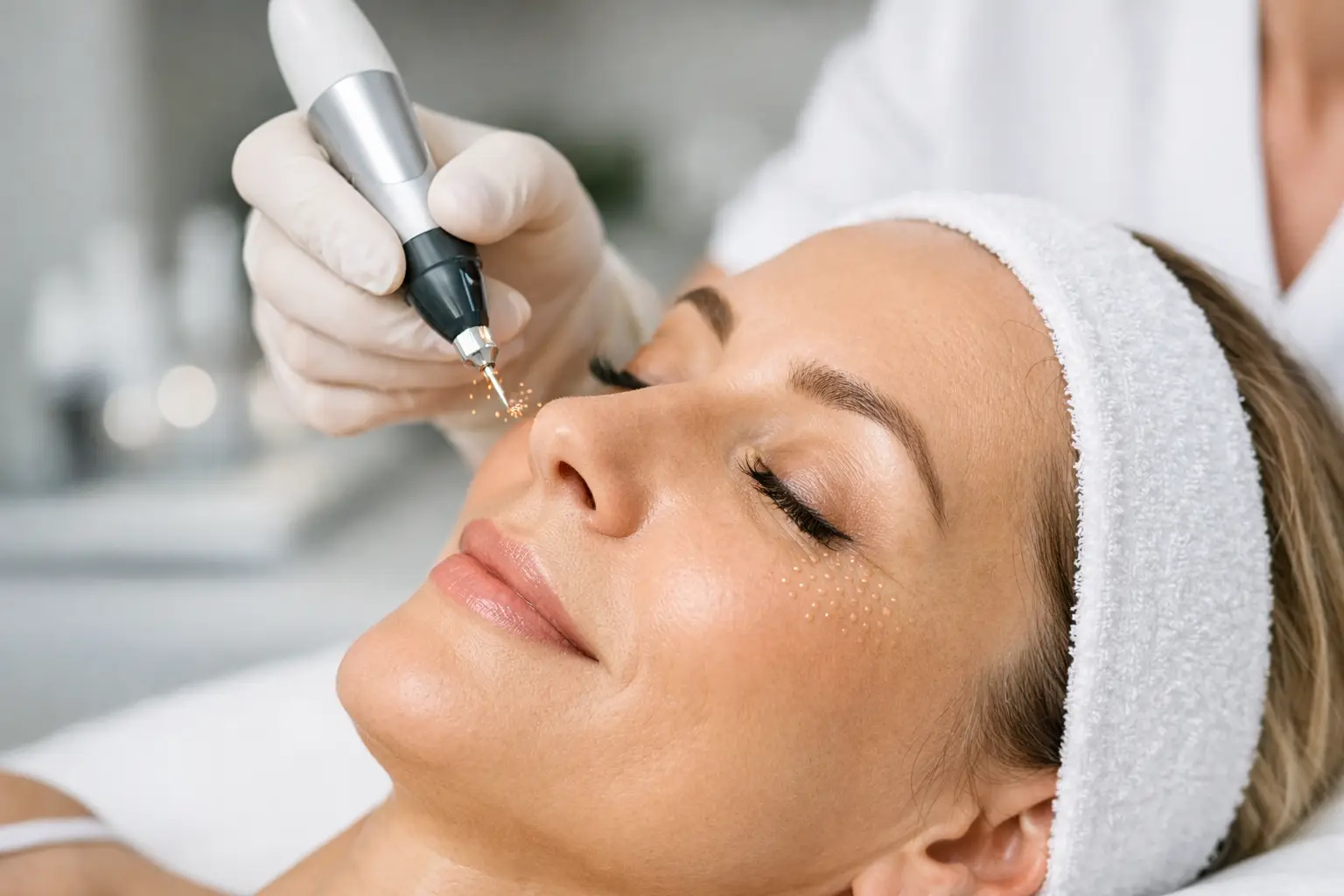
Plasma fibroblast treatment is a non-surgical skin-tightening procedure that uses a specialized device to create tiny, controlled points of plasma energy on the surface of the skin. The device does not directly touch the skin. Instead, it creates a small electrical arc between the tip and the skin, producing a controlled micro-injury.
Those precise treatment points trigger the body’s wound-healing response. As the skin repairs itself, it may produce collagen and elastin, the proteins that help support firmness and resilience. The immediate effect can include temporary tightening from the treatment process, while collagen remodeling develops more gradually over the following weeks and months.
Treatment is often considered for smaller, detail-focused areas where early laxity is noticeable. Depending on the individual evaluation, this may include the upper or lower eye area, fine lines around the mouth, forehead lines, neck texture, or selected areas of the body. The approach, energy settings, point spacing, and number of sessions should always be customized to the skin and treatment zone.
Who Is a Good Candidate for Plasma Fibroblast?
A strong candidate generally has mild to moderate laxity, realistic expectations, and enough time to heal without rushing back into sun exposure, social events, or a demanding travel schedule. Clients often choose plasma fibroblast because they want visible skin refinement without surgery, but they also understand that the recovery is more involved than a standard facial.
Skin tone is a major consideration. Clients with a history of post-inflammatory hyperpigmentation, melasma, keloid scarring, poor wound healing, or darker skin tones may face a higher risk of pigment changes after plasma treatment. That does not automatically mean treatment is impossible, but it does mean the consultation must be especially thorough. In some cases, RF microneedling, microneedling with PRP, a chemical peel, or another treatment plan may be the more appropriate choice.
Plasma fibroblast may also need to be postponed for active acne, open skin, cold sores in the proposed treatment area, certain autoimmune conditions, pregnancy or breastfeeding, recent isotretinoin use, or medications that affect healing. A provider should review your health history, skincare routine, prior procedures, and any tendency toward scarring before scheduling.
Realistic expectations matter
The goal is improvement, not a guarantee of surgical-level lifting. Results vary with age, degree of laxity, skin quality, lifestyle, sun exposure, smoking history, and adherence to aftercare. Some clients see meaningful refinement after one session, while others need additional treatment or benefit more from a combined plan that addresses collagen, volume loss, and surface texture separately.
What Happens During the Appointment?
Your appointment should begin with a detailed assessment of the area being treated. The provider will discuss your goals, examine skin quality, review contraindications, and explain the expected healing process. Before-and-after photos may be taken to document progress accurately.
The skin is thoroughly cleansed, and a topical numbing cream is typically applied for an appropriate period before treatment begins. Once the skin is prepared, the provider places a controlled pattern of tiny treatment points across the selected area. The sensation is commonly described as heat, pinpricks, or brief snapping. Comfort varies by area, especially around delicate zones such as the eyes.
The length of the appointment depends on the size and complexity of the area. After treatment, the skin will appear red and swollen, with small dark carbon crusts at each treatment point. These crusts are expected. They are part of the healing process and should never be picked, scrubbed, or prematurely removed.
Healing Timeline and Plasma Fibroblast Aftercare
Recovery is where many clients either protect their result or create avoidable complications. Swelling is common, particularly in treatments around the eyes. It may be most noticeable during the first 24 to 72 hours. Redness, tenderness, dryness, and a warm sensation can also occur.
The tiny crusts usually remain visible for several days, often around five to 10 days depending on the area and the individual healing response. Once they shed naturally, the newer skin beneath may look pink or feel sensitive. Collagen remodeling continues well beyond the visible healing phase, so the final result should not be judged too early.
For best healing, follow the specific instructions provided by your treatment professional. In general, clients should avoid touching the area with unwashed hands, picking crusts, applying makeup before approval, intense workouts, saunas, swimming, and direct sun exposure during the initial recovery period. Broad-spectrum sun protection becomes essential once the skin has healed enough for it to be applied. Sun exposure on newly treated skin can increase the risk of unwanted pigmentation.
Plan your calendar accordingly. Do not schedule plasma fibroblast immediately before a wedding, professional photo shoot, vacation, or other event where visible crusting and swelling would be difficult to manage. For many clients, allowing at least two weeks of social downtime is the more comfortable choice, though residual pinkness can last longer.
Risks to Understand Before You Book
Plasma fibroblast is an aesthetic procedure, and it carries real risks. Temporary redness, swelling, itching, crusting, and sensitivity are expected parts of healing. Less common but more serious concerns include prolonged redness, infection, scarring, uneven results, hypopigmentation, or hyperpigmentation.
Risk management starts with proper client selection and does not end when the appointment is over. A clean, professionally maintained treatment environment, appropriate sanitation, conservative settings, and clear aftercare instructions are not optional details. They are central to responsible treatment.
Be cautious of anyone promising dramatic lifting with no downtime or offering treatment without reviewing your medical and skin history. A skilled provider will explain both the potential benefits and limitations. They should also tell you what signs require prompt follow-up, such as increasing pain, spreading redness, drainage, blistering, fever, or any healing pattern that seems unusual.
How it compares with other skin treatments
Plasma fibroblast focuses on controlled surface-level treatment points and is often selected for localized tightening concerns. RF microneedling delivers energy through tiny needles to support collagen remodeling at different depths, often with a more predictable treatment path for broader facial texture and firmness concerns. Microneedling with PRP may be appropriate for clients focused on texture, glow, and gradual collagen support with a different recovery profile.
The right choice depends on your skin tone, degree of laxity, downtime tolerance, and desired outcome. A client with fine crepey texture near the eyes may need a different plan than someone whose primary concern is deeper folds, volume loss, acne scarring, or significant sun damage. Layering treatments over time can be more effective than expecting one procedure to solve every concern.
Preparing for a Better Treatment Experience
Give your provider a complete and accurate health history, including medications, supplements, prior cosmetic procedures, allergies, and any past pigment or scarring concerns. Arrive with clean skin and avoid introducing new active skincare products before treatment. If you are prone to cold sores and treating near the mouth, discuss preventive options during your consultation.
It is also wise to arrange a low-key recovery period. Keep your post-treatment skincare simple, avoid heat and sun, and follow every aftercare instruction exactly as given. At Vintage Lashes and Beauty Services, treatment planning is approached with the same attention to precision, sanitation, and long-term skin care that clients expect from an established aesthetic provider.
Plasma fibroblast can be a thoughtful option when the concern is specific, the expectations are realistic, and the recovery period is respected. The most valuable next step is not rushing to book a trend-driven procedure. It is scheduling a professional consultation that evaluates your skin honestly and builds a plan around the result you want to maintain.