
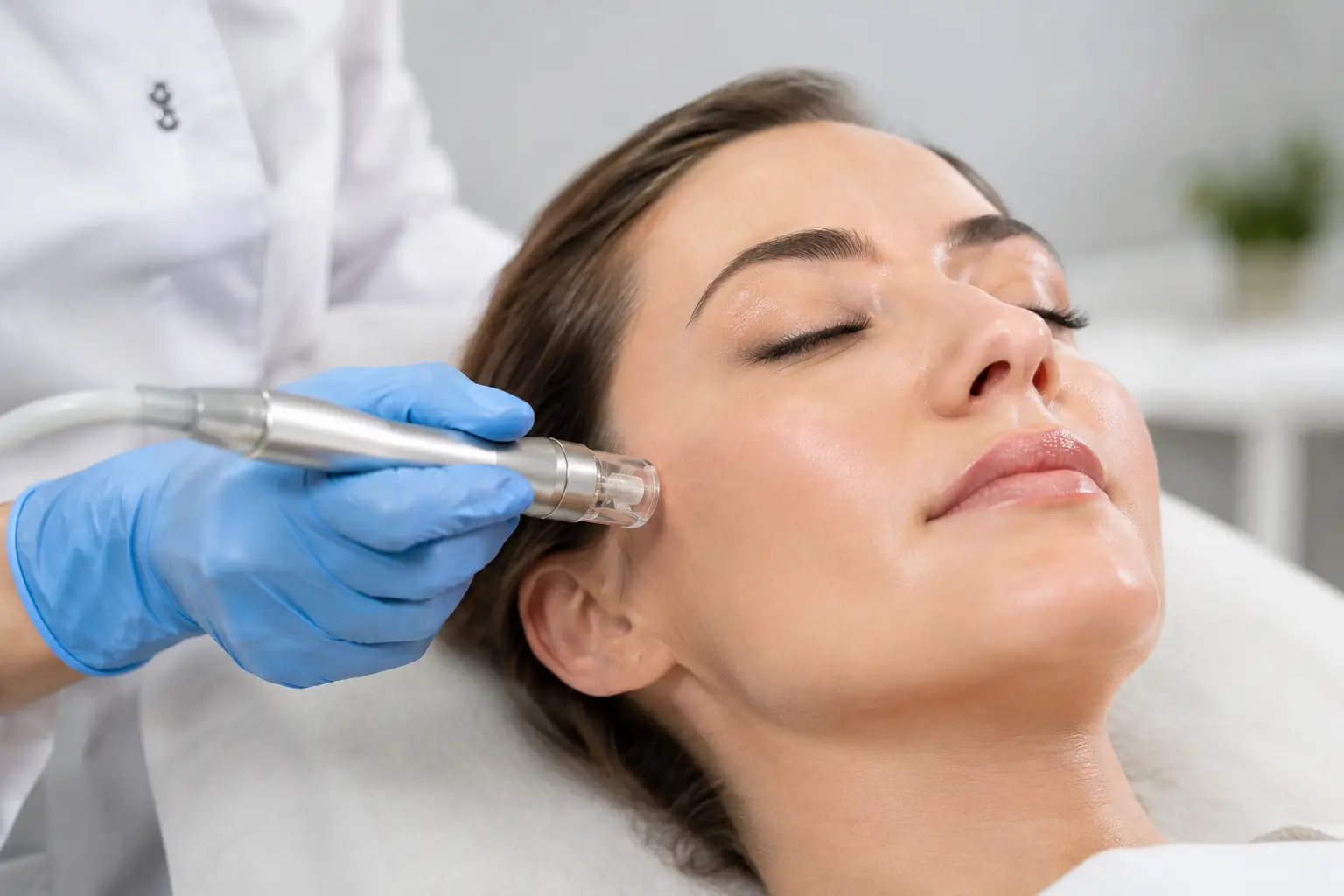
An Exosome Skin Example: What Treatment Looks Like
A credible exosome skin example does not begin with a trendy vial or a social media before-and-after. It begins with an honest skin assessment: your pigment history, acne activity, barrier health, healing tendencies, medications, and the treatment you are pairing it with. For clients who invest in advanced skin care, that level of screening is what separates an informed aesthetic plan from an expensive experiment.
Exosomes are often presented as the next step after microneedling, radiofrequency microneedling, or laser-based rejuvenation. The interest is understandable. They are associated with cell-to-cell signaling and are marketed to support the appearance of calmer, healthier-looking skin during recovery. But the details matter. Product sourcing, sterility, delivery method, and provider judgment should never be treated as an afterthought.
What Is an Exosome Skin Example?
An exosome skin treatment generally refers to applying a topical exosome-containing product after a controlled skin procedure, most commonly microneedling. Exosomes are tiny vesicles involved in cellular communication. In aesthetic marketing, they are often described as messengers that may help support the skin’s recovery environment.
The important distinction is that exosome products are not interchangeable with proven medical treatments, and the claims surrounding them can outpace the available clinical evidence. A responsible provider should avoid promising that exosomes will regenerate tissue, erase scars, or reverse aging. Results depend on the patient’s skin, the procedure performed, home care, sun exposure, and the quality and handling of the product.
For many clients, the more useful question is not, “Do exosomes work?” It is, “Would this add meaningful value to my treatment plan compared with established options such as PRP, professional microneedling, RF microneedling, peels, or a barrier-focused recovery protocol?” The answer may be yes for some people, but it is never automatic.
A Realistic Exosome Skin Treatment Scenario
Consider a client in her late 40s with sun-related texture changes, fine lines around the mouth, and a dull complexion. She has maintained her skin with professional facials and medical-grade home care but wants a more noticeable improvement in texture without significant downtime. She has no active acne, no current skin infection, and no history suggesting poor wound healing.
At her consultation, the provider first determines whether her skin barrier is stable. If she is overusing retinoids, exfoliating acids, or scrubs, the correct first step may be calming the skin for several weeks, not moving straight into a procedure. If she has melasma or a tendency toward post-inflammatory hyperpigmentation, treatment settings and pre-treatment preparation become especially important.
Once she is an appropriate candidate, the provider may recommend a series of microneedling or RF microneedling appointments spaced several weeks apart. The procedure creates controlled microchannels or uses radiofrequency energy at selected depths to encourage collagen remodeling. Immediately after the procedure, an approved-for-use topical recovery product may be applied. If exosomes are being considered, the provider should explain exactly what the product is, how it is sourced, how it is stored, and why it is being used.
The client may experience redness, warmth, swelling, tightness, or a sandpaper-like texture for several days. Those effects are usually related to the primary procedure, not proof that the exosome product is working. Her visible improvement in glow may appear first, while texture and firmness changes from collagen remodeling develop more gradually over weeks to months.
This is a useful exosome skin example because it keeps the focus where it belongs: a precisely selected procedure, conservative technique, careful recovery, and realistic expectations.
Where Exosomes May Fit in a Treatment Plan
Exosome products are most often discussed as an add-on to a procedure rather than a stand-alone facial. In a well-designed plan, they may be positioned as part of post-treatment support after microneedling or another provider-directed rejuvenation service.
They are not a replacement for sunscreen, pigment management, acne control, retinoid guidance, or consistent professional treatment. A patient with active breakouts may need acne stabilization first. Someone with pronounced volume loss may be better served by discussing biostimulators or other facial rejuvenation options. A client with significant laxity may need a different modality altogether.
At Vintage Lashes and Beauty Services, advanced skin care should be approached with the same standards applied to every precision service: appropriate candidacy, sanitation, clear aftercare, and a plan that respects both skin biology and your investment.
Questions to Ask Before an Exosome Treatment
The quality of the consultation matters more than persuasive packaging. Ask whether the product is intended for topical cosmetic use and whether it will be applied to intact skin or skin that has just undergone a procedure. Ask about the source of the product, manufacturing controls, storage requirements, expiration dates, and how the provider confirms sterility.
You should also ask what evidence supports the recommended use for your specific concern. “Skin rejuvenation” is broad. Fine lines, acne scars, redness, enlarged pores, pigment irregularities, and laxity do not respond in the same way or on the same timeline.
Regulatory status deserves a direct conversation as well. The FDA has issued safety communications regarding unapproved exosome products and has warned consumers about unsubstantiated claims and potential risks. A reputable provider will not minimize that discussion, imply FDA approval where it does not exist, or use vague language to avoid explaining what is being placed on your skin.
If a practitioner cannot clearly answer basic questions about the product, its handling, expected downtime, or alternatives, pause before booking. Premium treatment should come with premium transparency.
Safety, Sanitation, and Who Should Wait
Any procedure that disrupts the skin barrier carries risks. These can include irritation, prolonged redness, breakouts, infection, pigment changes, allergic reaction, or delayed healing. Adding a topical product after a procedure introduces additional considerations, particularly if a product’s sourcing, sterility, or intended use is unclear.
You may need to postpone treatment if you have an active cold sore, rash, skin infection, uncontrolled acne flare, open wound, recent sunburn, or a compromised barrier. Pregnancy, breastfeeding, autoimmune conditions, immune suppression, blood-thinning medication, isotretinoin use, and a history of abnormal scarring all require individualized guidance from an appropriately qualified medical professional.
Aftercare is not optional. Most patients should avoid makeup, heat exposure, intense workouts, swimming, exfoliants, retinoids, and picking during the initial recovery period specified by their provider. Daily broad-spectrum sunscreen is essential, especially in Southwest Florida, where sun exposure can quickly undermine a skin-rejuvenation investment.
What Results Can You Reasonably Expect?
A polished post-treatment glow can be appealing, but it should not be confused with long-term structural change. The initial result often reflects hydration, temporary swelling, and the soothing effect of a carefully managed recovery routine. Longer-term improvement in texture and fine lines, when it occurs, is more closely tied to the collagen-stimulating procedure, treatment series, and consistent home care.
Before-and-after images require context. Were the photographs taken in identical lighting? Was there makeup, tanning, weight change, injectable treatment, or a concurrent skincare program? How many sessions were performed, and how long after treatment was the final image taken? These details protect you from making a decision based on a result that cannot realistically be repeated.
The best aesthetic plans are not built around the newest label. They are built around clean technique, appropriate treatment selection, disciplined aftercare, and a provider who is willing to tell you when a promising add-on is not the right next step for your skin.