
Botox for Forehead Lines: What to Expect
Forehead lines usually show up long before most people feel ready for them. You notice them in bright bathroom lighting, on video calls, or in photos where your expression looks more tired or tense than you intended. That is why botox for forehead lines remains one of the most requested aesthetic treatments – it addresses a common concern quickly, predictably, and with minimal interruption to your schedule.
For many clients, the goal is not to erase every sign of expression. It is to soften lines that have started to linger at rest, reduce that constantly stressed look, and maintain a smoother upper face without looking frozen. The best results come from precise dosing, a strong understanding of facial anatomy, and a treatment plan based on how your muscles actually move rather than a one-size-fits-all approach.
How botox for forehead lines works
Forehead lines form because the frontalis muscle lifts the brows and creates horizontal creases across the forehead. Over time, repeated movement, skin thinning, sun exposure, and collagen loss can make those temporary lines become etched in even when your face is relaxed.
Botox works by temporarily reducing the muscle activity that causes those lines to fold into the skin. When the muscle relaxes, the forehead appears smoother and the skin gets a break from constant creasing. This does not improve skin texture in the same way a resurfacing treatment would, and it does not fill deeper static lines the way a dermal filler might in another area. Its job is muscle control, and that distinction matters.
A skilled injector also looks beyond the forehead itself. The forehead does not move in isolation. Brow position, frown muscle strength, eyelid anatomy, and overall facial balance all affect how treatment should be planned. Treating the forehead without accounting for surrounding muscle activity can lead to results that look heavy, uneven, or simply not refined.
Who is a good candidate
The right candidate is usually someone with visible horizontal forehead lines caused by expression, whether those lines appear only when raising the brows or have started to remain visible at rest. Many people begin treatment preventively in their late twenties or thirties, while others start later once the lines become more established.
Good candidates also have realistic expectations. Botox can soften forehead lines very effectively, but it may not completely remove deep, long-standing creases in a single session. In those cases, the muscle can be relaxed while the skin gradually improves over time, sometimes with support from complementary skin treatments.
You may need a more customized plan if you have naturally heavy lids, very strong forehead movement, asymmetry, or a habit of constantly lifting your brows. These are not reasons to avoid treatment. They are reasons to choose an experienced provider who understands how to preserve a natural, balanced look.
What happens during treatment
The appointment itself is typically straightforward. After reviewing your medical history, facial movement patterns, and aesthetic goals, your provider will assess how your forehead behaves at rest and in motion. This step is essential because two people with similar lines on the surface can require very different injection patterns.
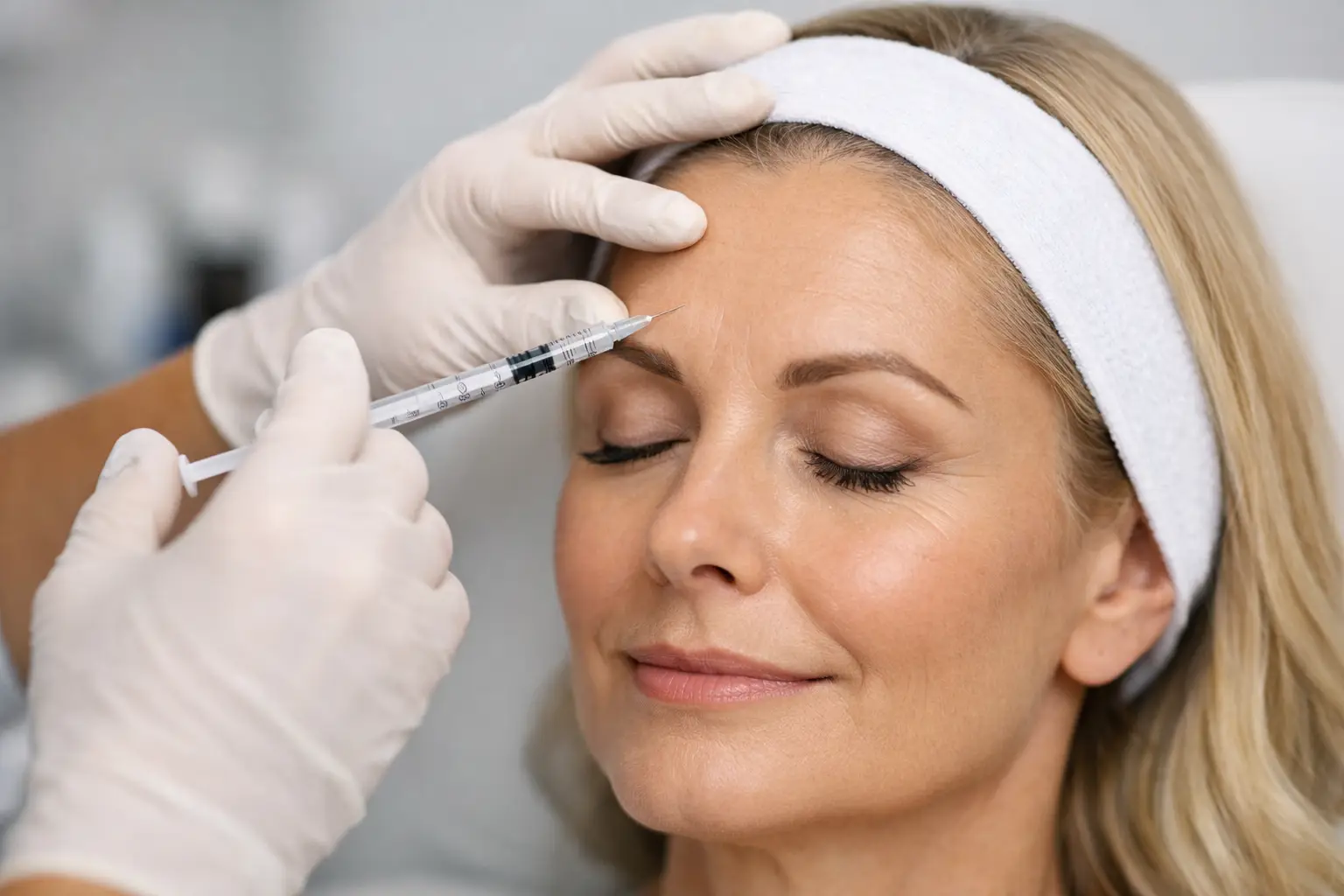
The treatment involves a series of small injections placed across the forehead in carefully selected points. Most clients describe the sensation as brief and very tolerable. The appointment is usually completed in minutes, not hours.
What matters most is not speed. It is precision. Proper placement and conservative dosing are what help create a smooth result that still looks like you. In a professionally run medspa environment, that process should be guided by sanitation standards, clear instructions, and a provider who can explain why they are recommending a specific approach.
When you will see results
Botox does not work instantly. Most clients begin to notice a change within a few days, with fuller results developing around 10 to 14 days after treatment. This waiting period can be frustrating if you are used to treatments that give immediate visible changes, but it is normal.
The forehead should look progressively smoother as the muscle activity reduces. If your lines are dynamic, meaning they mainly appear when you raise your brows, the improvement is often dramatic. If the lines are static and visible even at rest, you should still expect softening, though the skin may need time and ongoing treatment to look more refined.
This is one reason follow-up matters. Sometimes a first treatment reveals how your muscles respond and allows your provider to fine-tune future visits. A good long-term result is rarely about chasing the strongest possible dose. It is about consistent maintenance and careful adjustment.
How long botox for forehead lines lasts
Results typically last around three to four months, although some people metabolize it faster and some maintain results a bit longer. Your activity level, muscle strength, dose, and treatment history can all influence duration.
Clients who stay on a regular schedule often find that their lines become easier to manage over time because the skin is not being repeatedly folded as aggressively. That does not mean treatment becomes permanent. It means ongoing care can help maintain a smoother appearance more efficiently.
Waiting until all movement fully returns before rebooking is not always ideal if your goal is prevention. On the other hand, over-treating too frequently is not the goal either. The right schedule should be based on your anatomy, your results, and your provider’s clinical judgment.
The most common concern: Will I look frozen?
This is the question almost everyone asks, and it is a fair one. Poorly planned Botox can create a stiff forehead or a heavy-looking brow. Well-executed treatment should soften lines while preserving a natural level of expression.
The fear usually comes from seeing overdone work, not from what Botox is designed to do. A polished result still allows your face to look animated and refreshed. It simply reduces the excessive movement that creates unwanted lines.
If you prefer a very natural look, say so clearly. Some clients want maximum smoothing. Others want to keep more movement. Neither goal is wrong, but they require different dosing strategies. A provider who listens and evaluates your muscle pattern carefully can build around that preference.
Cost, maintenance, and value
Pricing varies based on how many units are needed, not just the treatment area name. A forehead with strong muscle activity may require more product than a lighter, more conservative correction. That is why bargain shopping for injectables often leads to inconsistent outcomes.
Value comes from accurate assessment, quality product, proper injection technique, and follow-through. If treatment is underdosed or placed poorly, you may end up paying again sooner or correcting a result that never looked quite right. For clients in markets like Naples, where expectations for refinement and professionalism are high, expertise tends to matter more than chasing the lowest price.
Maintenance should also be viewed realistically. Botox is not a one-time fix. It is part of an ongoing aesthetic plan. For many people, that is exactly what makes it worthwhile – it is a controlled, repeatable treatment with a well-understood timeline.
Aftercare and what to avoid
After treatment, your provider will give specific instructions, and those instructions should be followed closely. In general, clients are advised to avoid rubbing the area, strenuous exercise for several hours, and unnecessary pressure on the treated forehead immediately after the appointment.
Mild redness or small bumps at the injection sites can happen and typically resolve quickly. Bruising is possible, though not everyone experiences it. Major social downtime is uncommon, which is one reason this treatment fits well into a busy maintenance schedule.
If something feels off, ask questions. Professional aftercare is part of the service, not an afterthought. A quality medspa should make room for follow-up guidance and set clear expectations about timing, healing, and when to evaluate the final result.
When Botox may not be enough on its own
There are cases where forehead lines are only part of the issue. If the skin has significant sun damage, crepey texture, or deeply etched lines, muscle relaxation may improve the appearance without completely resolving it. In those situations, combining Botox with skin-focused treatments can produce a more complete result.
That does not mean everyone needs a multi-treatment plan. It means honest assessment matters. Sometimes the best recommendation is simple Botox maintenance. Other times, a more comprehensive strategy gives better value and a more polished finish.
At Vintage Lashes and Beauty Services, that kind of treatment planning matters because clients are often balancing prevention, correction, and maintenance across more than one concern. The right plan should always reflect your anatomy, your goals, and your tolerance for upkeep.
Forehead lines tend to tell the world you are stressed, tired, or aging faster than you feel. Thoughtful Botox treatment can change that story in a subtle, believable way. The best place to start is not with the most dramatic promise – it is with a qualified provider who treats precision, safety, and natural results as non-negotiable.