
PRP Hair Restoration for Women Explained
When your part starts looking wider, your ponytail feels thinner, or you notice more shedding than usual in the shower, hair loss stops feeling cosmetic and starts feeling personal. PRP hair restoration for women has become a serious option for clients who want a medically informed treatment that supports healthier, fuller-looking hair without surgery.
For many women, the first challenge is figuring out whether thinning is temporary, hormonal, genetic, stress-related, or tied to scalp health. That matters because PRP is not a one-size-fits-all fix. It can be very effective in the right candidate, but the best results come from a careful plan, proper timing, and realistic expectations.
What prp hair restoration for women actually is
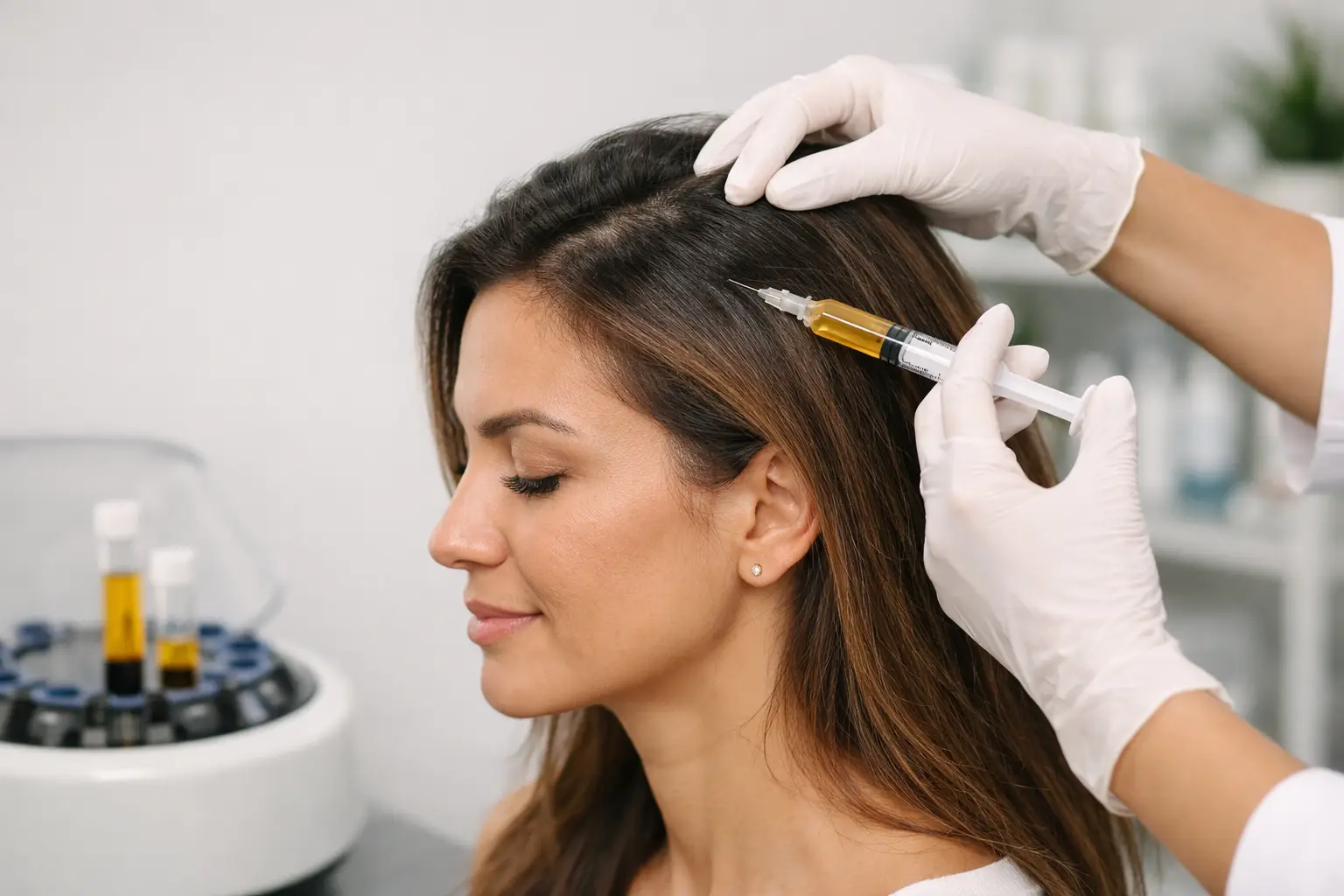
PRP stands for platelet-rich plasma. The treatment uses a small sample of your own blood, which is processed to concentrate the platelets and growth factors. That platelet-rich plasma is then placed into targeted areas of the scalp where hair is thinning.
The goal is to support the hair follicle environment. In practical terms, that means helping weakened follicles function better, improving scalp circulation, and encouraging stronger, healthier growth over time. PRP does not create miracles overnight, and it does not replace follicles that are no longer viable. What it can do is help stimulate follicles that are still active but underperforming.
For women, this distinction is important. Many cases of female hair thinning involve follicles that are miniaturizing rather than completely gone. When treatment starts early enough, there is often more opportunity to improve density, reduce shedding, and enhance the overall quality of the hair.
Who is a good candidate for PRP hair restoration for women
The strongest candidates are usually women in the earlier stages of thinning who still have active follicles. You may be a good fit if you have diffuse thinning through the crown, widening of the part line, increased shedding, or hair that seems noticeably finer than it used to be.
PRP can be especially appealing for women who want to avoid surgery or who are not ready for more aggressive interventions. It is also a useful option for clients who value treatments that work with the body’s own natural healing response.
That said, candidacy depends on more than just seeing extra hair in your brush. If thinning is driven by untreated thyroid imbalance, severe nutritional deficiency, sudden hormonal changes, inflammatory scalp issues, or active medical conditions, those factors need to be addressed too. PRP can be part of the plan, but it may not be the only part.
Women with long-standing areas of complete follicle loss may see less improvement than someone who begins treatment when thinning is first becoming noticeable. Timing matters.
What the treatment process looks like
A proper PRP appointment should feel precise and methodical. After reviewing your history, scalp concerns, and treatment goals, a small blood sample is drawn. That blood is placed in a centrifuge to separate and concentrate the platelet-rich plasma.
Once the PRP is prepared, the scalp is cleansed and the treatment area is mapped out. The PRP is then delivered into the areas of thinning using a series of small, controlled placements. Some clients describe the sensation as pressure or quick pinching. Discomfort is usually manageable, and the appointment itself is relatively straightforward.
Because this is a technique-driven service, precision matters. Placement depth, spacing, preparation quality, sanitation standards, and provider experience all affect the treatment experience and the consistency of your results. This is not a service where shortcuts make sense.
How many sessions most women need
One of the most common misunderstandings about PRP is the idea that a single session should fully correct thinning. In reality, hair restoration is a process.
Most women need an initial series of treatments spaced over several weeks, followed by maintenance sessions. The exact schedule depends on the severity of hair loss, your response to treatment, and whether PRP is being combined with other forms of hair restoration support.
Hair grows slowly, and follicles cycle in phases. That means visible change tends to happen gradually. Some women first notice less shedding before they notice improved density. Others begin to see baby hairs, better texture, or more fullness around the part line after a few months.
A provider who promises dramatic regrowth after one session is oversimplifying the process. A more credible approach is to explain the treatment timeline clearly and build a realistic maintenance strategy.
When to expect results
Patience is part of the treatment. Most women do not walk out of their appointment with instantly fuller hair, because PRP works by supporting biological activity over time.
In the early phase, the first positive sign may be a reduction in shedding. After that, you may begin seeing improved hair caliber, better coverage in thinning areas, and more visible density as growth cycles progress. Results vary from person to person based on age, hormonal status, genetics, overall health, and how advanced the thinning is at the start.
The women who tend to be happiest with PRP are the ones who understand that improvement is often progressive rather than dramatic. Better hair density, healthier strands, and slower progression of thinning can be meaningful wins.
Benefits and limits of PRP for female hair thinning
PRP is popular for a reason. It is minimally invasive, uses your own biological material, requires little downtime, and can fit well into a broader aesthetic and wellness plan. For women who want a non-surgical option with a medically grounded rationale, it checks a lot of boxes.
It also has limits. PRP is not the right answer for every type of hair loss. It may not restore areas where follicles are no longer functioning. It also works best when clients follow the recommended treatment schedule rather than stopping after the first visit and assuming the process failed.
Another important trade-off is consistency. PRP is not a random beauty trend or a one-time self-care appointment. It is a treatment plan. If you want the best chance of visible improvement, you need to commit to timing, maintenance, and proper scalp support.
How to prepare and care for your scalp after treatment
A qualified provider will give you detailed aftercare instructions, and those instructions matter. In general, clients are advised to arrive well hydrated and with a clean scalp unless told otherwise. Certain medications or supplements that affect bleeding may need to be reviewed in advance.
After treatment, mild tenderness, tightness, or temporary redness can happen. Most women return to normal activity quickly, but the scalp should be treated carefully in the immediate post-treatment window. Following aftercare precisely helps protect the treatment area and supports the healing response PRP is designed to stimulate.
Good hair restoration outcomes also depend on what happens between appointments. Scalp health, product choice, stress levels, internal health factors, and consistency with your plan all play a role.
Why provider selection matters
Hair restoration is one of those categories where experience shows. A polished treatment room is not enough. You want a provider who understands scalp anatomy, patient selection, treatment spacing, sterile technique, and how to set expectations honestly.
That matters even more for women because female hair loss is often more complex than people assume. Diffuse thinning can have multiple causes, and the right provider will take the time to evaluate what you are seeing instead of rushing straight to treatment.
In a professional medspa setting, treatment should feel organized, sanitary, and customized. Clients investing in PRP hair restoration for women are not just paying for a vial and a procedure. They are paying for assessment, precision, safety, and a strategy.
For clients in Naples and surrounding areas, this is why choosing an established beauty and medspa practice with advanced treatment experience can make a real difference. The goal is not simply to offer PRP, but to deliver it with the level of technical discipline that supports better outcomes.
Is PRP worth it?
For the right woman, yes. If your thinning is caught early, your follicles are still active, and you are willing to stay consistent with treatment, PRP can be a valuable way to improve hair quality and support fuller-looking growth. It is especially attractive for clients who want a non-surgical option that fits into a comprehensive appearance and wellness routine.
If your expectations are that one appointment will reverse years of advanced hair loss, the answer is more complicated. PRP works best when viewed as part of an ongoing restoration strategy, not a quick fix.
The best next step is not guessing from the mirror. It is getting your scalp and hair loss pattern assessed by an experienced provider who can tell you whether PRP makes sense, whether another cause needs attention first, and what kind of timeline is realistic for your situation.
Hair thinning can affect confidence quietly, but it does not have to be ignored while it gets worse. The earlier you address it with a clear treatment plan, the more options you usually have.