
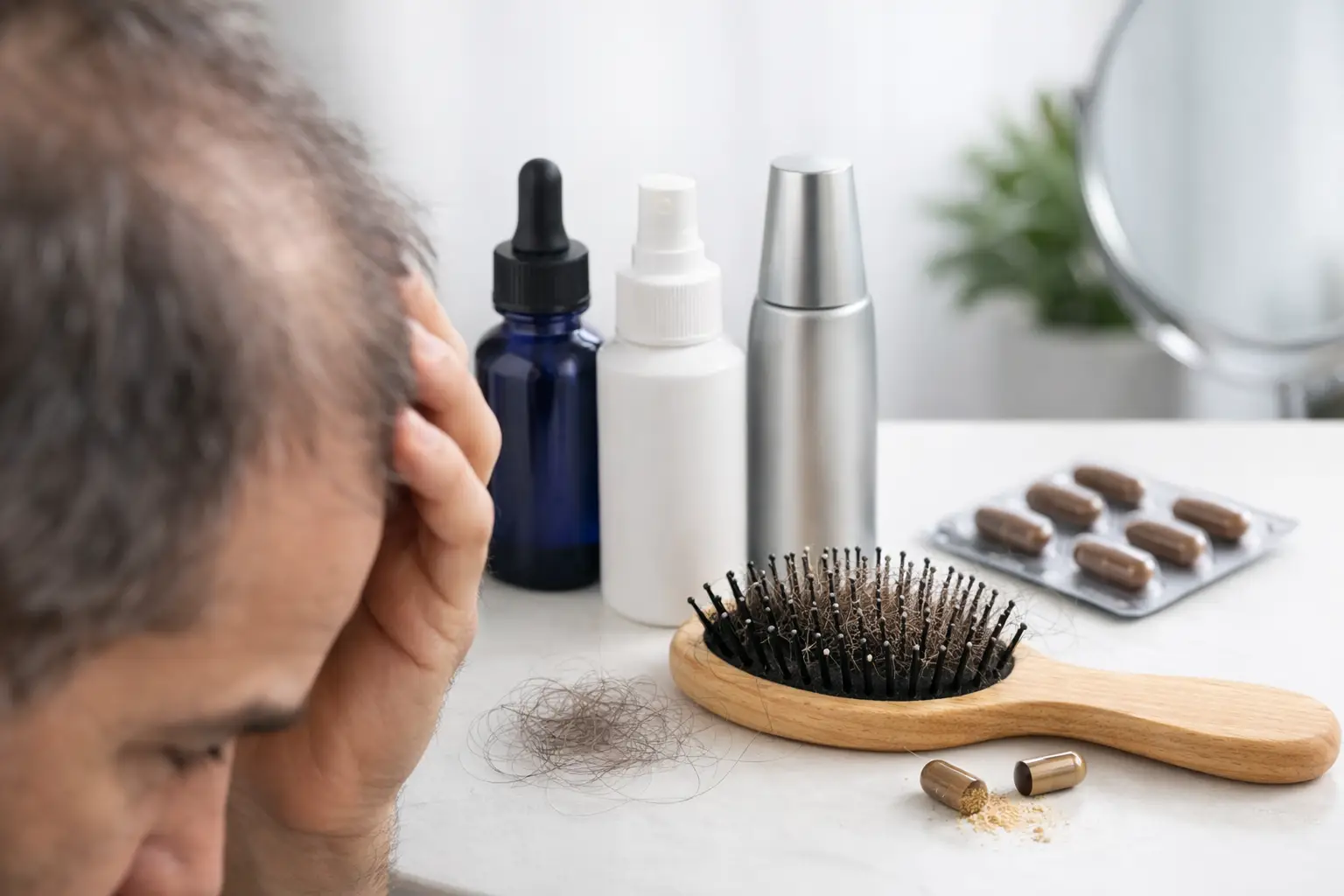
Best Options for Thinning Hair That Work
You usually notice thinning hair in the mirror long before anyone else says a word. The part looks wider, the ponytail feels smaller, or the hairline starts to read differently in bright light. When that shift happens, most people are not looking for hype. They want the best options for thinning hair based on cause, timing, maintenance, and visible results.
That is the right way to approach it. Thinning hair is not one problem with one fix. It can be tied to hormones, genetics, stress, aging, nutritional deficiencies, medical conditions, medication changes, or scalp health. The most effective plan starts with identifying whether you need to stimulate growth, protect what you still have, create the look of density, or combine all three.
What actually helps with thinning hair
The best results usually come from matching the treatment to the type of hair loss. Diffuse thinning across the top of the scalp is different from recession at the temples. Postpartum shedding is different from long-term genetic thinning. Hair breakage from heat or chemical damage can also look like hair loss, even though the follicle itself may still be healthy.
That is why treatment selection matters. Some options are restorative and aim to improve follicle performance. Others are cosmetic and create the appearance of fuller hair immediately. Neither approach is wrong. It depends on how advanced the thinning is, how quickly you want to see a change, and how committed you are to upkeep.
Best options for thinning hair by treatment type
PRP hair restoration
For many clients, PRP hair restoration is one of the most compelling in-office options because it uses your body’s own platelet-rich plasma to support the scalp environment and encourage healthier follicle activity. The treatment involves drawing a small amount of blood, processing it to isolate concentrated platelets, and applying or injecting that plasma into targeted areas of the scalp.
This option tends to appeal to clients who want a medically informed, non-surgical approach. It is especially worth discussing when thinning is still in the earlier stages and follicles may be weakened but not inactive. Results are not instant. Hair grows slowly, and improvement usually appears over a series of treatments followed by maintenance.
The trade-off is patience and consistency. PRP is not a one-time appointment if you want sustained improvement. It also works best when timing is on your side, which means starting before thinning becomes severe.
Scalp micropigmentation
Scalp micropigmentation does not regrow hair, but it can make an enormous visual difference. This treatment places detailed pigment impressions in the scalp to reduce contrast between the hair and the skin. When done with precision, it creates the look of greater density in thinning areas or the appearance of a closely shaved hairline.
This is often one of the best options for thinning hair when the priority is immediate cosmetic improvement. It can be especially useful for men with visible scalp show-through and for women with widening parts or sparse zones that are difficult to camouflage with styling alone.
Its biggest strength is predictability. You are not waiting months to find out whether follicles respond. The main consideration is choosing an experienced provider with strong technical control, conservative placement, and a realistic approach to color and pattern. Poorly executed scalp work is obvious, while skilled work should blend naturally.
Medical evaluation and lab-based guidance
Not every thinning hair case should begin with a cosmetic service. If hair loss is sudden, dramatic, patchy, or accompanied by scalp irritation, a medical evaluation matters. Hormonal shifts, thyroid changes, iron deficiency, autoimmune issues, and medication-related shedding can all affect hair density.
For some clients, the most effective first step is getting clear answers before spending time and money on treatment. If the underlying cause is left unaddressed, even a well-chosen aesthetic service may underperform. This does not mean you need to delay all support, but it does mean your treatment plan should be informed rather than reactive.
Topical and at-home support
At-home care plays a supporting role, not a magic one. High-quality scalp care, gentle cleansing, and ingredients intended to support the follicle environment can help protect progress. That might include growth-supportive topicals, professional-grade scalp serums, or routines that reduce inflammation and buildup.
What matters most here is consistency and realism. At-home products can support healthier conditions for growth, but they rarely produce dramatic change by themselves when thinning is moderate or advanced. They are best used as part of a broader plan, especially after in-office treatment.
Hair styling and density camouflage
A strategic haircut, color placement, and styling routine can make thinning look significantly less noticeable. Layers can add movement, root lift can improve shape, and color dimension can soften scalp contrast. Hair fibers, tinted scalp products, and volumizing support can also help between treatments.
This category is often underestimated because it sounds simple. In reality, cosmetic camouflage can be one of the most useful options when you want to look better right away while pursuing longer-term restoration. It is not a replacement for treatment when active thinning is progressing, but it can absolutely improve confidence.
How to choose the best option for your stage of thinning hair
Early thinning usually gives you more choices. If the follicles are still active, regenerative support such as PRP may help strengthen the growth cycle before density loss becomes more obvious. This is the stage where waiting often costs you time.
Moderate thinning often benefits from combination treatment. You may need restorative support to address the scalp and a cosmetic solution to make the hair look fuller now. For example, someone with diffuse thinning may pursue PRP while also using scalp camouflage or considering scalp micropigmentation for visible part-line improvement.
Advanced thinning requires a more honest discussion. If the scalp has significant bare areas and follicles have been inactive for a long time, growth-focused treatments may offer limited change. In those cases, appearance-driven options can deliver more satisfying results than chasing regrowth that may never become substantial.
The role of maintenance
Hair restoration is rarely set-and-forget. Even effective treatment plans need upkeep because the factors behind thinning hair do not simply disappear. Genetics, aging, and hormones continue to influence the scalp over time.
That is why maintenance should be part of the decision from the start. If you are considering PRP, ask about treatment frequency and the expected schedule for follow-up. If you are considering scalp micropigmentation, understand how the pigment may soften over time and when refresh appointments may be appropriate. The best treatment is not just the one that sounds impressive. It is the one you can maintain properly.
What to avoid when comparing thinning hair solutions
Be careful with anything marketed as a universal answer. Hair loss is too individualized for that. If a provider skips consultation, does not ask about timing or health history, or promises dramatic regrowth without discussing limitations, that is a sign to slow down.
It is also worth being cautious about aggressive treatment stacking. More is not always better, especially on the scalp. Precision matters. A thoughtful provider should explain why a treatment is appropriate, what level of improvement is realistic, and what responsibilities fall on you in aftercare and maintenance.
When a combination approach makes the most sense
Some of the strongest outcomes come from combining restorative and cosmetic strategies. A client may use PRP to support the scalp while also choosing scalp micropigmentation to reduce visible scalp contrast. Another may improve daily appearance with styling support and scalp products while monitoring whether shedding stabilizes after a medical workup.
This layered approach tends to be practical because it addresses both timeline and expectation. You do not have to choose between wanting real improvement and wanting to feel confident now. In a professional setting, the right plan should account for both.
At Vintage Lashes and Beauty Services, this is often where expertise matters most. Hair concerns are deeply personal, and clients deserve a treatment plan built around scalp condition, visible goals, safety, and long-term maintenance rather than a one-size-fits-all pitch.
A better question than “what is the best treatment?”
The better question is, “What is the best treatment for my type of thinning hair, at my stage, with my goals?” That shift leads to better decisions. It keeps you focused on outcomes, not trends.
If your thinning is new, do not wait too long to get it evaluated. If it has been progressing for years, be open to solutions that improve appearance even if they do not regrow every lost strand. The right next step is the one that is honest, technically sound, and realistic enough to keep working for you over time.