
What Is Scalp Micropigmentation?
Hair loss changes more than your reflection. It changes how you style your hair, where your eyes go in the mirror, and in many cases, how confident you feel walking into work or social events. If you have been researching solutions and asking, what is scalp micropigmentation, the short answer is this: it is a non-surgical cosmetic treatment that creates the appearance of fuller hair by placing detailed pigment impressions into the scalp.
For the right client, scalp micropigmentation can make thinning areas look denser, reduce the contrast between hair and scalp, and recreate the look of a closely shaved hairline. It is precise work, and the quality of the result depends heavily on the provider’s technique, pigment selection, sanitation standards, and understanding of natural hair patterns.
What is scalp micropigmentation and how does it work?
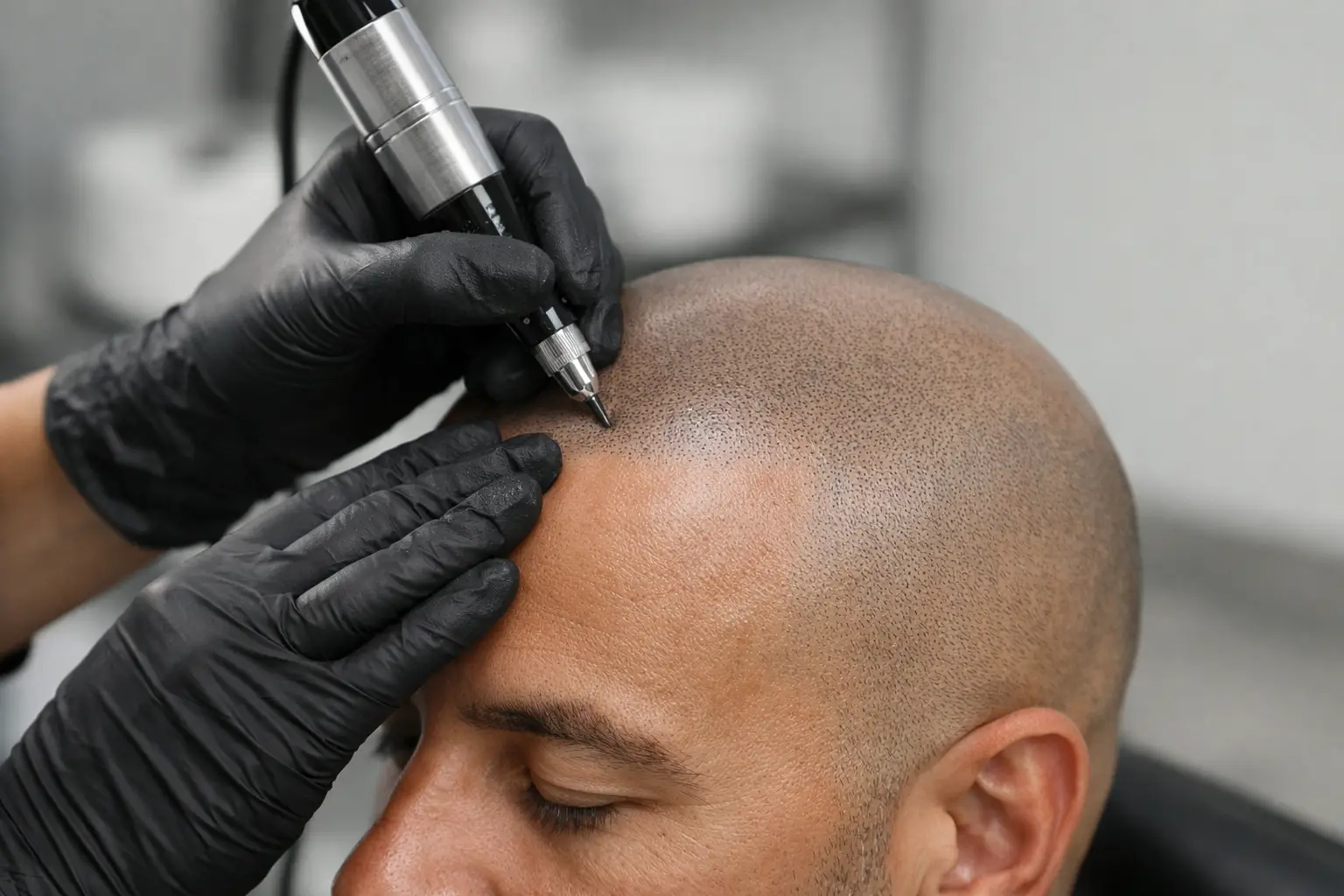
Scalp micropigmentation, often called SMP, is a specialized treatment that uses tiny deposits of pigment to mimic the look of hair follicles. These pigment impressions are placed strategically across areas of thinning, recession, or complete hair loss to create visual density.
The treatment is not the same as a standard tattoo. The equipment, depth, pigment formulation, and pattern design are different. A skilled provider is not trying to create solid color. The goal is to replicate the soft, scattered appearance of natural follicle points so the scalp reads as fuller and more balanced.
On a shaved head, SMP can create the effect of a fresh buzz cut. On longer hair, it can reduce the show-through that happens when the scalp becomes too visible under bright light or at the crown. In both cases, the illusion works because it lowers the contrast between the skin and the hair that remains.
Who scalp micropigmentation is best for
This treatment works for a wide range of clients, but the ideal result depends on the type of hair loss and the look you want to maintain. Men with receding hairlines, thinning crowns, or advanced pattern baldness are common candidates. Women with diffuse thinning often use scalp micropigmentation to make part lines appear softer and overall density look stronger.
It can also be a strong option for clients with visible scalp scarring from prior procedures or injuries. In some cases, it is used alongside other hair restoration services rather than instead of them.
That said, not every client is an automatic fit. If you are not comfortable with the maintenance of a shaved or very short hairstyle, the buzz-cut look may not be right for you. If your hair loss pattern is still changing quickly, your provider should discuss how future loss could affect the long-term balance of the design.
What scalp micropigmentation can improve
The biggest benefit of SMP is visual correction. It does not regrow hair, but it can change how much hair loss is noticed. That difference matters.
For many clients, scalp micropigmentation improves the look of a receding hairline, adds depth to the crown, camouflages patchy thinning, and creates a stronger frame around the face. It can also help blend transplant scars or make transplanted areas look fuller once healed.
What it cannot do is give you actual strand length, movement, or texture. If you want to run your fingers through a full head of hair again, SMP will not deliver that. If your priority is to look more polished, more youthful, and less visibly affected by hair loss without surgery, it may be a very practical solution.
What the procedure feels like
Most clients describe scalp micropigmentation as tolerable. Sensitivity varies by area, with the hairline and temples sometimes feeling more noticeable than other parts of the scalp. The sensation is often compared to light scratching or repeated pinpoints rather than deep discomfort.
A proper consultation should come first. This is where your provider evaluates scalp condition, reviews medical history, discusses your goals, and maps out a realistic treatment plan. Hairline design is especially important. A natural-looking hairline should suit your facial structure, age, and likely long-term hair loss pattern. Overly sharp or aggressively low designs tend to age poorly.
Treatment is usually completed over multiple sessions rather than one appointment. This layered approach allows the provider to build density gradually, adjust tone, and keep the result soft and believable. Rushing the process is one of the easiest ways to end up with a harsh or unnatural finish.
How many sessions are usually needed?
Most clients need two to four sessions, depending on the level of hair loss, the treatment area, skin type, and the desired density. The first session establishes the foundation. Later sessions refine shape, add depth, and strengthen the overall realism.
Spacing between appointments matters because the scalp needs time to heal and settle. Pigment can soften slightly during the healing phase, and that is normal. A trained provider plans for that and builds the result in stages rather than overworking the skin in one visit.
What results look like over time
Immediately after treatment, the pigment often appears darker and more defined. As the scalp heals, the impressions soften and settle into a more natural appearance. This is part of the process, not a sign that the treatment failed.
Long-term results depend on skin type, sun exposure, lifestyle, aftercare, and the quality of the original work. Scalp micropigmentation does fade gradually, which is why periodic touch-ups are often recommended. The benefit of this fading pattern is that it allows adjustments over time as your face, hair, and preferences evolve.
Done well, SMP should look clean and believable at conversational distance and in direct lighting. It should not read as a flat helmet effect or obvious ink. Precision in size, spacing, color, and placement is what separates advanced work from poor work.
What to know about aftercare
Aftercare is straightforward but not optional. The scalp needs time to recover without excess irritation, sweat, sun exposure, or product buildup. Your provider will give you specific instructions, and following them closely helps protect both healing and pigment retention.
In the first days after treatment, clients are generally advised to avoid heavy workouts, swimming, and prolonged sun exposure. Picking, scratching, or over-cleansing the scalp can interfere with the finish. Once healed, daily sun protection becomes one of the best ways to preserve the appearance of the treatment.
This is one area where disciplined providers stand out. The procedure is important, but so is the guidance that comes after it. Strong aftercare support protects your investment and helps maintain a more consistent result.
Is scalp micropigmentation safe?
When performed in a clean, professional setting by a trained specialist, scalp micropigmentation is considered a low-risk cosmetic procedure. Safety depends on proper sanitation, high-quality pigments, correct needle use, and careful client screening.
Clients with certain scalp conditions, active infections, or medical concerns may need clearance or may need to postpone treatment. This is why consultation matters. A reputable provider should ask direct questions, explain realistic outcomes, and never treat you like a one-size-fits-all case.
If you are comparing providers, pay attention to more than before-and-after photos. Ask about training, infection control, healing expectations, and how they approach hairline design for different ages and skin types. Technical precision is not a luxury in SMP. It is the entire treatment.
Is it worth it?
For many clients, yes. Scalp micropigmentation offers a way to improve the appearance of hair loss without surgery, daily fibers, or constant camouflage routines. It can simplify grooming, restore a more defined look, and reduce the self-consciousness that often comes with visible thinning.
Still, it is not magic, and it is not for everyone. The best candidates understand what the treatment is designed to do and what it is not. They want a realistic, polished improvement and are willing to maintain it properly.
At an established beauty and medspa practice, the value of scalp micropigmentation comes from more than the machine or pigment. It comes from clinical cleanliness, design judgment, procedural control, and clear aftercare standards. Those details shape whether the result looks refined for years or starts to look questionable far too soon.
If hair loss has been pulling focus every time you look in the mirror, scalp micropigmentation may be worth discussing with a qualified specialist. The right plan should feel informed, personalized, and grounded in results you can actually live with.