
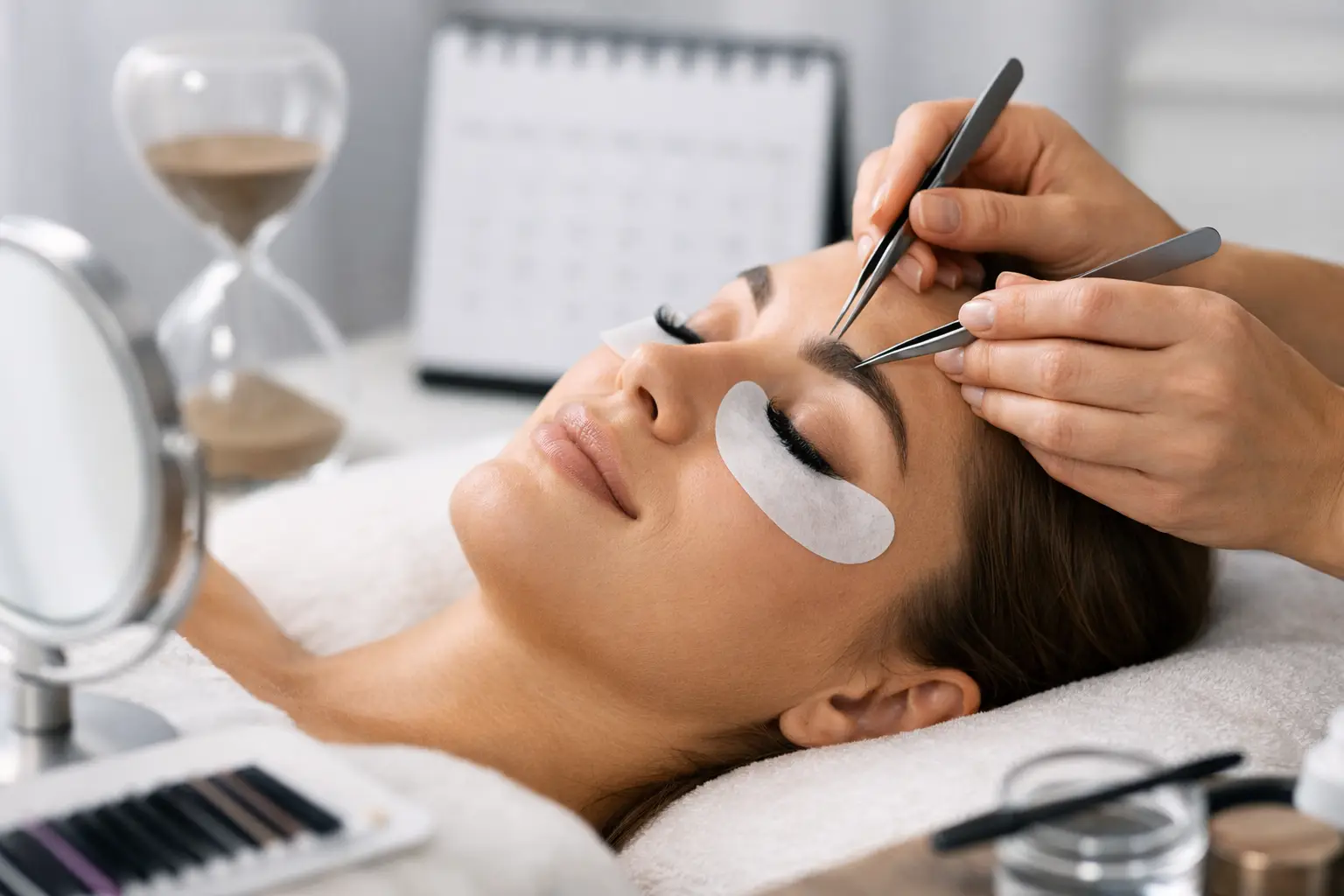
Best Lash Refill Schedule for Retention
If your lashes look noticeably lighter by day 10, your refill timing is probably off. A proper lash refill schedule for retention is not just about keeping your set looking full. It protects the health of your natural lashes, keeps styling balanced, and helps you get consistent results from every appointment.
Clients often assume refills should happen on a fixed calendar, but retention does not work that way. Natural lash shedding, your extension style, daily habits, skin type, and even travel can change how quickly your set breaks down. The goal is not to stretch appointments as long as possible. The goal is to maintain a clean, wearable set without letting too much fallout build up between visits.
What a lash refill schedule for retention really means
A refill schedule is the interval that allows enough extensions to remain in place so your artist can maintain your look efficiently. In most cases, that means booking every 2 to 3 weeks. For some clients, 2 weeks is the right cadence. Others can comfortably return closer to 3 weeks and still have strong retention.
This matters because lash extensions are attached to natural lashes, and natural lashes shed continuously. Most people lose a few natural lashes every day as part of the normal growth cycle. When those lashes shed, the extensions attached to them shed too. Even perfect application cannot stop biology.
A good refill schedule accounts for this normal turnover. It also gives your lash artist a chance to remove outgrown extensions, correct twisting, rebalance density, and keep the set safe and polished. Waiting too long usually means the appointment turns into a heavier correction or a full set instead of a true refill.
The most common refill timing
Every 2 weeks
A 2-week refill is often ideal for clients who want a consistently full look. It is especially common with volume lashes, fuller styling, oily skin, active lifestyles, frequent workouts, or clients who sleep on their side or stomach. If you wear makeup regularly around the eyes or spend a lot of time outdoors in heat and humidity, a shorter cycle may also make sense.
This schedule tends to give the cleanest appearance because the set is being maintained before gaps become obvious. It also allows your artist to work with better existing coverage, which can support more predictable results.
Every 3 weeks
A 3-week refill can work well if your retention is strong and your aftercare is consistent. Classic sets often tolerate this interval better than dramatic volume sets because the styling is lighter and the visual change can feel less abrupt as lashes shed.
That said, 3 weeks is usually the upper end for a standard refill. Once you move past that point, many clients no longer have enough extensions left for the appointment to be considered a refill. Policies vary by provider, but the principle is the same – the more loss and overgrowth present, the more time and correction the service requires.
Why retention differs from one client to another
The best lash refill schedule for retention depends on more than your calendar. It depends on what your natural lashes are doing and how you care for them between visits.
Your lash growth cycle is a major factor. Some clients naturally cycle through lashes faster than others, which means more frequent shedding. Hormonal shifts, stress, certain medications, and seasonal changes can also affect lash turnover. If your retention suddenly changes, the cause is not always the adhesive or application.
Skin chemistry plays a role too. Oilier skin can break down the bond faster, particularly if oil-based skincare migrates toward the lash line. Clients who use heavy eye creams, facial oils, or sunscreen close to the eyes may notice earlier separation.
Then there is lifestyle. Swimming, sauna use, hot yoga, frequent sweating, rubbing the eyes, sleeping face-down, and inconsistent cleansing all impact retention. None of this means lash extensions are not a fit. It simply means your maintenance plan should match your real habits.
Style affects your schedule
Not every set sheds the same way. The style you wear influences how quickly gaps become visible.
Classic lashes can sometimes look presentable a little longer because the overall effect is softer. As they shed, the change may appear more gradual. Volume sets, especially fuller 4D-6D looks, often need tighter maintenance because symmetry matters more and empty spaces are easier to spot.
Longer lengths and denser maps can also make retention feel worse even when it is technically normal. A missing extension stands out more in a dramatic set than in a natural one. If you prefer a bold lash line, expect to keep refills closer together.
This is where experienced application matters. Proper isolation, weight selection, fan balance, placement, and styling all influence wear. Retention is never just about the glue. It is about technique, lash health, and matching the set to what your natural lashes can safely support.
Signs you need a shorter refill cycle
If you are not sure whether your schedule is working, your lashes will usually tell you. A shorter cycle may be necessary if you notice visible gaps before two weeks, your outer corners look sparse early, or your lashes lose their shape and direction long before your next appointment.
You may also need more frequent refills if a large number of extensions are growing out and twisting rather than shedding naturally. Overgrown extensions can put stress on natural lashes and make the set look messy, even if there is still decent coverage.
For clients preparing for events, travel, or busy workweeks, booking slightly earlier can also make sense. A refill should support your appearance standards, not leave you trying to time fallout around your schedule.
How to improve retention between appointments
A lash refill schedule for retention works best when home care supports the service. Even excellent application will not compensate for poor aftercare.
Clean lashes last better. Lash extensions should be washed regularly with a lash-safe cleanser to remove oil, debris, makeup residue, and environmental buildup. Dirty lashes do not just affect retention. They can create sanitation concerns and make proper refilling more difficult.
Be careful with products around the eye area. Oil-based removers, thick creams, and some sunscreens can weaken the bond. If you wear eyeliner or shadow, choose formulas that remove cleanly without excessive rubbing.
Avoid pulling, picking, or twisting extensions. Mechanical stress is one of the fastest ways to ruin retention and damage natural lashes. Brushing them gently helps keep them aligned, but overhandling is not helpful.
Sleep habits matter more than many clients realize. Friction from pillows can bend, loosen, and prematurely shed extensions, especially on one side. If one eye consistently loses lashes faster, sleeping position is often part of the story.
When a refill should really be a full set
There is a practical point where a refill stops being efficient. If too many extensions are missing, the set may no longer have enough structure to rebuild evenly. In that situation, forcing a refill can leave the final result inconsistent.
A full set may be the better option if you have gone too long between appointments, had significant shedding, or arrived with heavy buildup and multiple grown-out extensions. This is not about upselling. It is about preserving quality, timing, and lash health.
A seasoned lash provider will assess what remains, how clean the lashes are, and whether the set can be safely rebalanced. Professional standards matter here. Precision application and proper maintenance should always take priority over trying to make an overdue set last one more round.
The best schedule is the one that keeps your lashes stable
For most clients, the best lash refill schedule for retention falls every 2 to 3 weeks, with 2 weeks being the better choice for fuller styles, active routines, oily skin, or anyone who wants their lashes to stay consistently camera-ready. If your retention is excellent and your styling is lighter, 3 weeks may be reasonable.
What matters most is consistency. Waiting until your set looks nearly gone usually costs more time, more correction, and sometimes a full new application. Staying on schedule protects the investment you made in the first place and gives your artist the best chance to maintain clean, balanced results.
At Vintage Lashes and Beauty Services, that maintenance mindset is part of getting premium results, not an extra step. When your refill timing matches your lashes, your lifestyle, and your styling goals, your extensions stop feeling unpredictable and start looking reliably polished every day.
If you are unsure whether your current timing is helping or hurting your retention, the smartest move is to have your set evaluated at your next visit and adjust from there. Good lashes are not just about how they are applied. They are about how well they are maintained.