
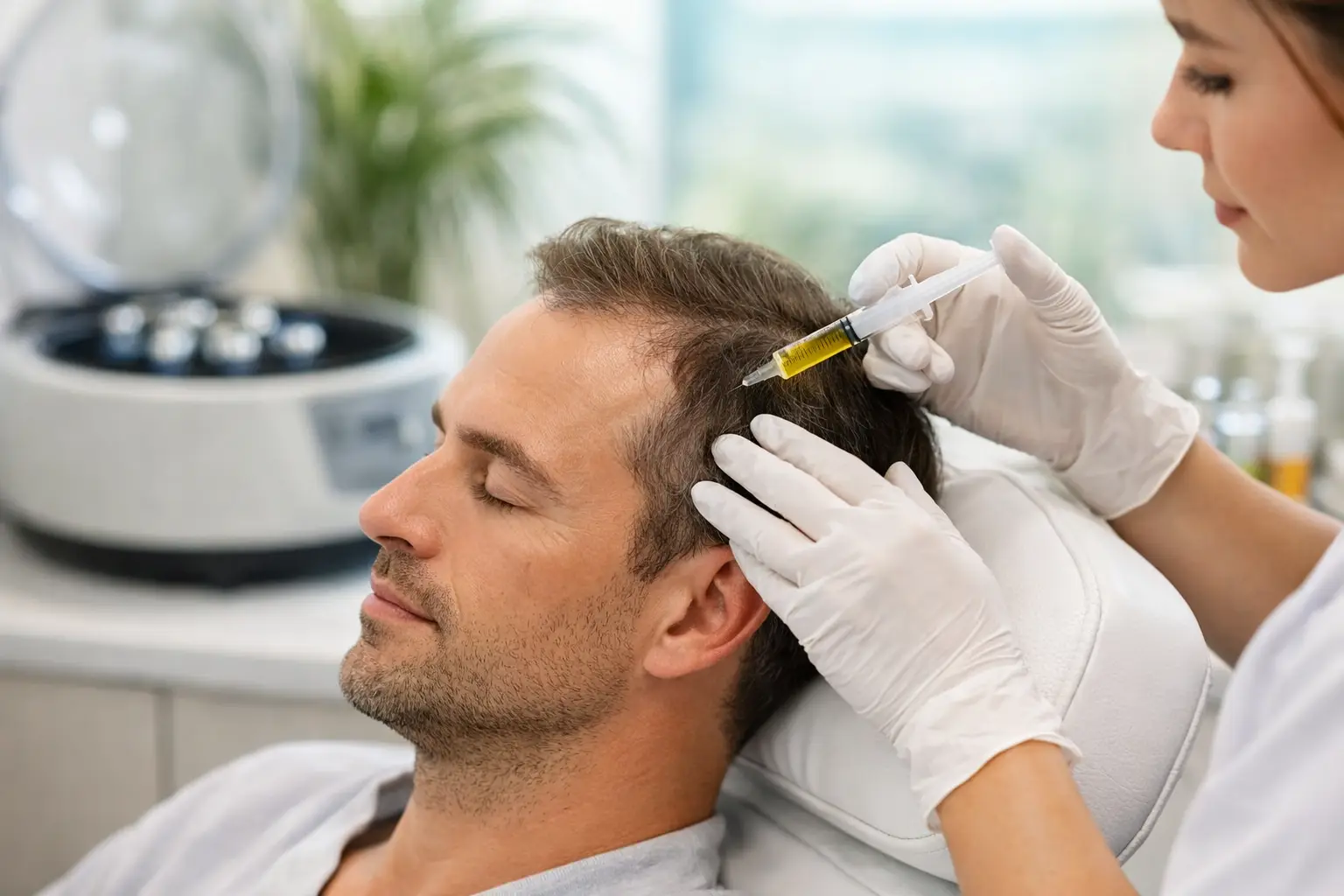
PRP Hair Restoration Naples: What to Expect
Thinning hair usually does not happen all at once. It shows up in the drain, at the part line, under bright bathroom lighting, or in photos where the scalp is suddenly more visible than it used to be. For clients considering prp hair restoration Naples, the first question is rarely just whether it works. It is whether the treatment makes sense for their stage of hair loss, their goals, and the level of maintenance they are willing to commit to.
PRP hair restoration is a regenerative treatment designed to support healthier hair growth by using your own platelet-rich plasma. In the right candidate, it can help improve hair density, strengthen weak follicles, and slow ongoing shedding. It is not a shortcut, and it is not a one-size-fits-all answer. The value is in proper evaluation, precise treatment technique, and a realistic plan for follow-up.
What PRP hair restoration does
PRP stands for platelet-rich plasma. The treatment begins with a blood draw, followed by processing the sample to concentrate the platelets. That platelet-rich portion is then placed into areas of the scalp where hair is thinning. Platelets contain growth factors that may help support the hair follicle environment and encourage stronger, healthier growth cycles.
For many clients, the goal is not dramatic overnight change. The goal is to improve what is still active. That means helping miniaturized follicles perform better, reducing excessive shedding, and supporting thicker-looking hair over time. When clients understand that distinction early, they tend to be much happier with the process.
Who is a good candidate for PRP hair restoration in Naples
PRP tends to work best when there are still functioning follicles present. If the scalp has smooth, shiny areas with long-term loss and little follicular activity, PRP may have limited benefit on its own. On the other hand, clients with early thinning, increased shedding, widening parts, postpartum changes, stress-related loss, or mild to moderate androgenetic hair loss often have more to work with.
Men and women can both be strong candidates. Women often seek treatment when they notice diffuse thinning through the crown or part line. Men may come in after seeing recession at the temples or thinning at the crown. In both cases, timing matters. Starting earlier generally provides more opportunity to preserve and strengthen existing hair.
It also depends on the underlying cause. Hair loss can be influenced by hormones, genetics, stress, inflammation, nutrition, medical conditions, or recent illness. That is why a medically informed consultation matters. Good treatment planning looks at the scalp, the pattern of loss, the timeline, and whether PRP should stand alone or be part of a broader hair restoration plan.
What to expect at a PRP hair restoration Naples appointment
A professional PRP appointment should feel organized, sanitary, and deliberate from start to finish. The process usually begins with consultation, scalp assessment, and treatment photography so progress can be tracked accurately. If you are a candidate, the blood draw is completed, the sample is prepared, and the scalp is cleansed before treatment.
The PRP is then delivered into targeted areas of the scalp with careful injection technique. Some clients describe the treatment as very tolerable, while others feel sensitivity in certain zones, especially near the hairline. Comfort measures can help, but expectations should stay practical. This is a medical-aesthetic procedure, not a spa facial.
Appointments are typically efficient, but the quality of the process matters more than speed. Precision placement, strict sanitation, and clear aftercare instructions all affect the overall experience. Clients investing in hair restoration should expect the same level of professionalism they would want from any advanced medspa service.
Results take time, and that is normal
One of the biggest mistakes clients make with hair restoration is judging the treatment too early. Hair grows in cycles, so visible change takes patience. Some clients notice reduced shedding first. Others begin to see improvement in texture, strength, or density after a few months. More meaningful changes often develop gradually with a series of treatments.
That timeline is not a flaw in the service. It is the biology of hair. PRP works with your body’s regenerative response, which means progress is usually subtle at first and cumulative over time. If you want an instant cosmetic effect, scalp micropigmentation may create the appearance of density faster. If your goal is to support actual follicle performance, PRP is a different type of investment.
Why treatment plans matter more than one appointment
PRP is often most effective as a series rather than a single session. Initial treatment plans commonly involve multiple appointments spaced over several months, followed by maintenance sessions based on how the scalp responds. The exact schedule depends on the degree of thinning, how long it has been progressing, and whether other support measures are included.
This is where expert guidance matters. Some clients need a more aggressive early plan because active shedding is still ongoing. Others are in a maintenance phase and simply want to preserve improvement. Hair restoration is rarely a set-it-and-forget-it service. Like skin rejuvenation, injectables, or advanced body contouring, results typically hold best when the treatment plan is maintained consistently.
PRP works best with the right support
A strong PRP outcome often depends on what happens between appointments. Scalp health, aftercare, home products, and overall wellness can all influence results. A client with inflammation, significant stress, poor scalp hygiene, or inconsistent follow-through may not respond the same way as someone who treats hair restoration like a long-term protocol.
That does not mean every client needs an overly complicated routine. It means the basics matter. Gentle scalp care, appropriate hair products, sun protection for the scalp, and following post-treatment instructions are all part of protecting your investment. In some cases, broader wellness support also becomes relevant when hormonal changes or systemic issues are contributing to hair thinning.
PRP vs. other hair restoration options
PRP occupies a useful middle ground in hair restoration. It is more advanced than relying on topical products alone, but less invasive than hair transplant surgery. For clients who are not ready for surgery, are not candidates for surgery, or want to support existing hair before considering more invasive options, PRP can be a smart step.
That said, it is not always enough by itself. Some clients benefit from combining PRP with other hair restoration support strategies. Others may be better served by cosmetic density solutions if follicle activity is too limited. The right plan depends on the extent of loss and the end goal. Fuller-looking hair can be approached in different ways, and a trustworthy provider should explain those differences clearly instead of promising the same outcome to everyone.
Choosing a provider for PRP hair restoration in Naples
When evaluating PRP hair restoration in Naples, credentials and clinical standards matter. This is not a trend service to book based on convenience alone. You want a provider who understands scalp anatomy, patient selection, sterile technique, treatment spacing, and realistic result planning.
Look for a business that communicates clearly about the procedure, expected downtime, aftercare, and maintenance. Professionalism matters before the appointment as much as during it. Consistent policies, thorough consultation, treatment documentation, and a clean medically informed setting all signal that the service is being handled with the level of discipline advanced aesthetic treatments require.
In a market like Southwest Florida, clients have options. The difference is often in how carefully the treatment is evaluated and delivered. A polished environment is important, but technical precision and honest guidance are what protect outcomes.
Questions worth asking before you book
If you are considering PRP, ask how your candidacy will be assessed, how many sessions are typically recommended, what kind of changes you should realistically expect, and what maintenance may look like after the initial series. Ask how progress is tracked. Ask what factors could limit your results.
Those questions do more than help you compare providers. They help you step into treatment with the right expectations. Hair restoration is a commitment to improvement, not a promise of perfection.
At Vintage Lashes and Beauty Services, that standard matters because clients are not just purchasing a procedure. They are trusting a provider to guide them through a treatment plan with precision, safety, and honest communication. If your hair has started to thin, the best next step is not waiting for it to get worse. It is getting a clear assessment while there is still more to preserve.