
Best Lash Extension Cleanser: What Works
If your lash extensions start looking twisted, dusty, or less fluffy within a few days, the problem is often not the set itself. It is usually the cleansing routine. The best lash extension cleanser is not the one with the prettiest packaging or the strongest foam. It is the one that removes oil, makeup residue, skincare buildup, and debris without interfering with the adhesive bond or irritating the eye area.
Clients who invest in professional lash extensions usually understand that retention depends on application skill. That is true, but aftercare carries just as much weight. A clean lash line supports better retention, healthier natural lashes, and a fresher overall appearance between fills. If you wear extensions regularly, choosing the right cleanser is part of protecting your investment.
What makes the best lash extension cleanser
A proper lash cleanser should be specifically formulated for extensions or clearly safe for use around the eyes without oils, heavy emollients, or harsh surfactants. The goal is simple – remove buildup thoroughly while keeping the adhesive area as undisturbed as possible.
Oil-free matters, but that is only the starting point. Some products are technically oil-free yet still leave behind conditioning agents or film-forming ingredients that can collect around the lash base. That buildup attracts debris and can make lashes feel heavy. The best lash extension cleanser rinses clean, feels lightweight, and does not leave a residue.
Texture also matters more than many clients realize. A gentle foam is often the easiest option because it spreads evenly through the lash line without requiring aggressive rubbing. Gel cleansers can work well too, but only if they rinse completely and do not contain added oils or creamy moisturizers. Micellar products are more mixed. Some are extension-safe, while others leave residue or encourage too much wiping with pads or cotton, which can tug at the extensions.
The best formulas are balanced. They clean effectively, stay gentle around sensitive eyes, and support the daily maintenance needed for strong retention.
Ingredients to look for – and what to avoid
When choosing the best lash extension cleanser, ingredient quality should come before brand hype. A well-formulated cleanser often includes mild cleansing agents that break down dirt and residue without stripping the skin. It may also include soothing ingredients such as chamomile, aloe, or similar calming agents, especially for clients with sensitivity.
What you want to avoid is just as important. Oils are the obvious concern, especially if they sit on the lash line and interfere with adhesive performance over time. Heavy glycols, thick creams, and rich botanical butters are also poor choices around extensions. Fragrance can be an issue for sensitive clients, particularly if the eye area is already reactive. Alcohol-heavy formulas may feel clean at first, but they can dry the skin and create irritation that leads to rubbing.
This is where nuance matters. Not every ingredient list needs to be stripped down to five items, and not every cleanser with a longer ingredient deck is unsafe. What matters is how the formula behaves during use. Does it rinse away fully? Does it sting? Does it leave lashes squeaky in a bad way or coated in a film? Performance tells you a lot.
Best lash extension cleanser formats for different clients
There is no single format that works for every lifestyle. The best lash extension cleanser for a daily makeup wearer may not be the same one that suits someone with dry, sensitive skin or someone who works out every day.
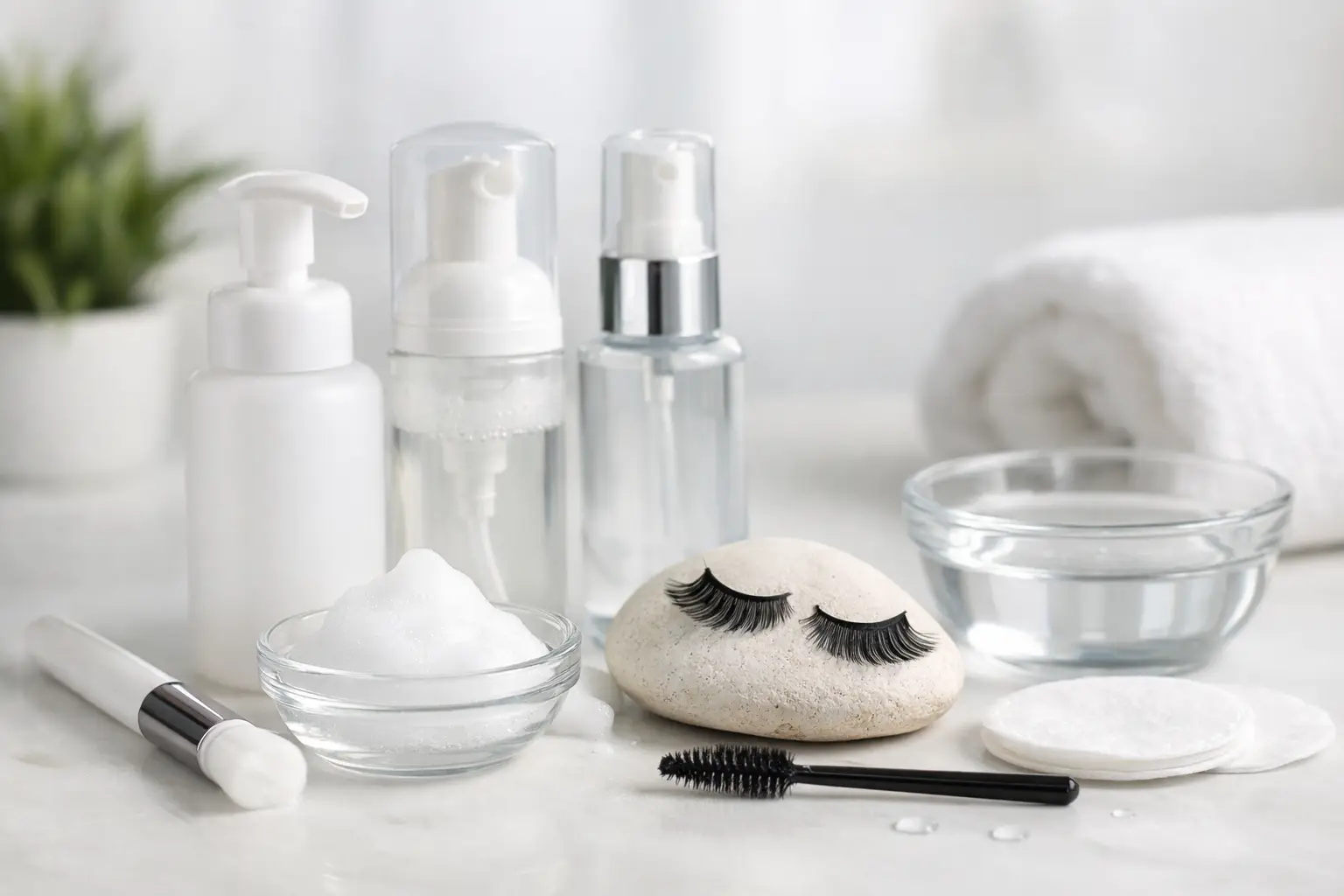
Foam cleansers are usually the safest recommendation for most extension clients. They are easy to dispense, simple to control, and less likely to overload the lash line. If you wear eye makeup, sunscreen, or fuller skincare layers, a foam cleanser used consistently can keep buildup from accumulating at the base of the lashes.
For sensitive clients, a lightweight gel cleanser can sometimes feel more comfortable, especially if the formula is ophthalmologist-tested and free from fragrance. The trade-off is that some gels require more rinsing and can be harder to work through dense volume sets.
Travel cleansers and pre-soaked cleansing products can be convenient, but convenience is not always the same as performance. If the product encourages wiping instead of washing, it may not be the best long-term option for extension maintenance. Lash hygiene should be thorough, not rushed.
Why baby shampoo is no longer the standard
For years, baby shampoo was commonly suggested for lash cleansing. That advice still circulates, but it is outdated. Baby shampoo was designed for scalp and hair cleansing, not for protecting a professional lash adhesive bond or maintaining the structure of handmade fans and precision placement.
It can also be more drying than clients expect. A product being marketed as gentle does not automatically make it ideal for extensions. In many cases, dedicated lash cleansers are better balanced for pH, eye-area comfort, and residue-free rinsing.
If you are serious about retention, cleanliness, and natural lash health, using a cleanser specifically selected for lash extensions is the more professional choice.
How to use the best lash extension cleanser correctly
Even the best lash extension cleanser can underperform if the technique is wrong. Application should be gentle but thorough. Start with clean hands. Apply the cleanser to a lash cleansing brush or fingertip, depending on the formula, and work it through the lashes in a downward and outward motion. Focus on the lash line where oils, dust, and makeup residue tend to collect.
Avoid scrubbing side to side or using your nails. That creates unnecessary friction and can weaken retention. Rinse completely with lukewarm water. After cleansing, pat the area dry carefully and use a clean spoolie to brush the lashes back into place once they are no longer soaked.
Frequency depends on your skin type and daily routine. Many clients do best with once-daily cleansing. If you wear eye makeup, exercise heavily, live in humidity, or naturally produce more oil, more frequent cleansing may be appropriate. Cleaner lashes usually retain better than lashes cleaned too infrequently.
Signs your cleanser is not working
A poor cleanser does not always cause immediate fallout, so clients often miss the signs. If your extensions look dull, clumped, or coated near the base, the cleanser may not be removing buildup effectively. If the eye area feels itchy or you notice visible debris between fills, something in the routine needs to change.
On the other hand, if your eyes burn during cleansing, the skin around the lids feels tight, or your lashes seem dry and brittle, the cleanser may be too harsh. Good lash aftercare should leave the area feeling clean, comfortable, and light.
Retention issues are not always caused by home care alone. Application, humidity exposure, skincare products, and sleep habits all play a role. Still, cleanser choice is one of the most controllable factors, and one of the easiest to correct.
The professional standard behind lash aftercare
At a service-focused lash practice, aftercare is not an afterthought. It is part of the result. The best artists do not just apply lashes well. They educate clients on exactly how to maintain them, what products to avoid, and how to support retention between appointments.
That standard matters because lash extensions sit close to the eye in a delicate area where sanitation and product compatibility are non-negotiable. A cleanser should support both hygiene and wear. It should not compromise comfort in the process.
For clients in Naples and nearby Southwest Florida communities, climate can also affect maintenance. Heat, humidity, sunscreen use, and active outdoor routines can increase buildup on the lashes faster than many people expect. That makes proper cleansing even more important, especially for volume sets where debris can hide more easily.
How to choose the best lash extension cleanser for your routine
Start by being honest about your habits. If you wear concealer, powder, SPF, and eye makeup most days, choose a cleanser that can handle real residue without requiring repeated washing. If your eyes are sensitive, prioritize a gentle, fragrance-free formula with a clean rinse. If you are inconsistent with aftercare, choose the easiest format you will actually use every day.
This is one area where professional guidance helps. Your lash artist sees your retention pattern, the condition of your natural lashes, and the amount of buildup present at fill appointments. That gives them a better basis for recommending a cleanser than online reviews alone.
The best lash extension cleanser is the one that matches your skin, your lifestyle, and your extension type while supporting consistent daily use. Fancy branding does not replace proper formulation, and a cheap shortcut usually shows up at your next fill.
Well-maintained lashes look better, feel better, and last longer. If you want your extensions to stay clean, fluffy, and retention-friendly, treat your cleanser like part of the service, not an optional extra.