
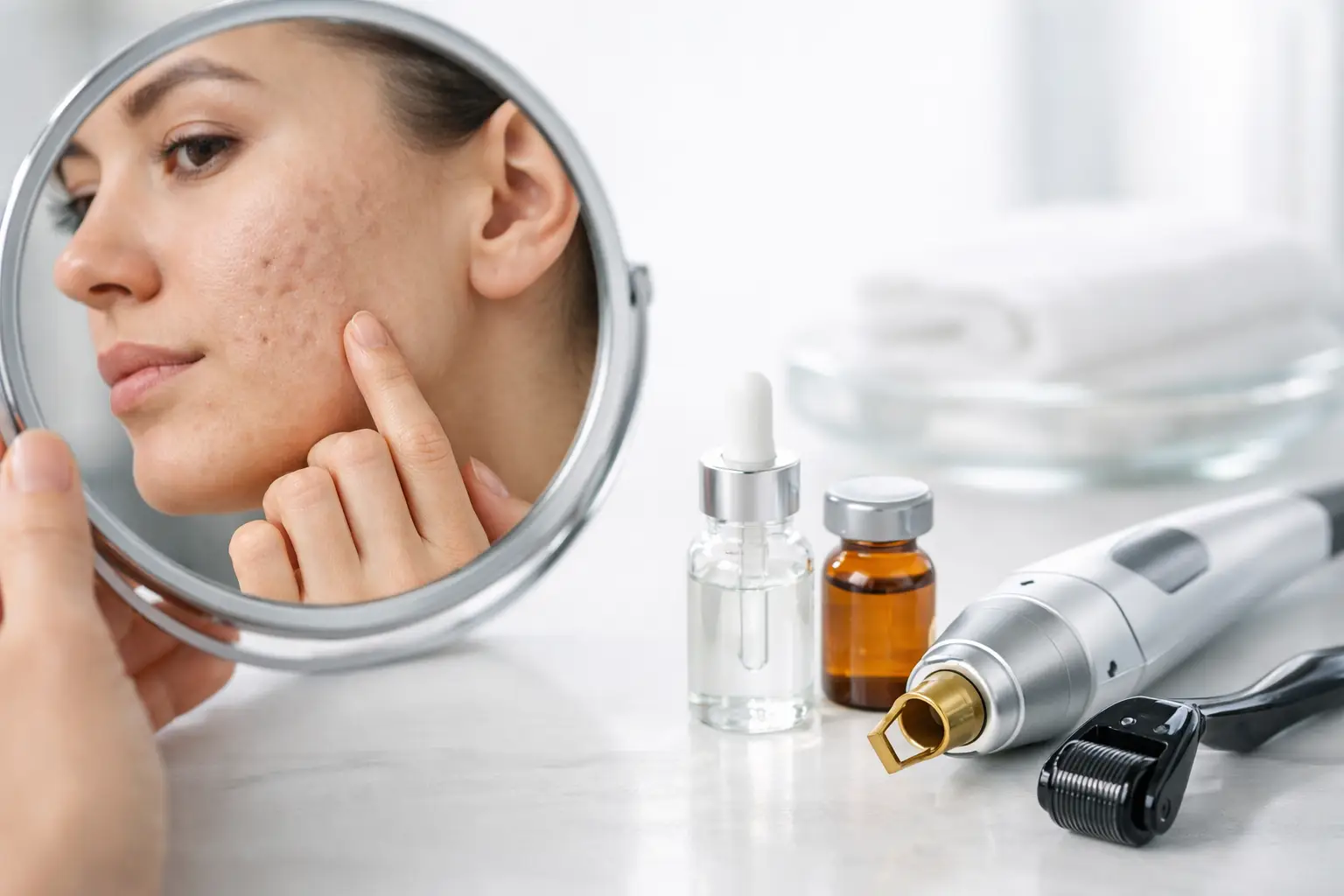
Best Treatments for Acne Scarring
Acne may be long gone, but the texture it leaves behind can keep showing up in every mirror, photo, and patch of natural light. When clients ask about the best treatments for acne scarring, the real answer is not one miracle procedure. It is choosing the right treatment for the type of scar, the depth of damage, your skin tone, and how much downtime you are willing to accept.
That distinction matters. Acne scarring is not a single condition. Some scars are shallow and diffuse. Others are tethered deep in the skin and create rolling shadows. Some are narrow ice pick scars, while others are broader boxcar scars. Post-acne marks can also be confused with scarring, even though discoloration and textural damage are treated differently. If you want visible improvement, the plan has to be precise.
What actually counts as acne scarring?
True acne scars are structural changes in the skin. They happen when inflammation disrupts collagen during healing, leaving depressions, uneven texture, or in some cases raised tissue. The most common concern in a medspa setting is atrophic scarring, which includes ice pick, boxcar, and rolling scars.
Post-inflammatory hyperpigmentation and post-inflammatory erythema are different. These are flat dark or red marks left after breakouts. They can make skin look scarred, but they are not the same as collagen loss. This matters because a chemical peel may help discoloration significantly, while deeper textural scars often need collagen-stimulating treatments.
Best treatments for acne scarring by scar type
The best outcomes usually come from matching the treatment to the pattern of scarring rather than picking the most aggressive option on the menu.
Microneedling for mild to moderate texture
Microneedling is one of the most versatile treatments for acne scarring, especially when the skin has generalized uneven texture or shallow boxcar scars. By creating controlled micro-injuries, microneedling stimulates collagen remodeling over time. It can improve skin texture, soften superficial scars, and support overall skin quality without the heat component that can be more complicated for some skin tones.
For many clients, this is the starting point because it is effective, well tolerated, and works well in a treatment series. Results are gradual, not overnight. Most people need multiple sessions, and realistic expectations matter. You should think in terms of improvement, not perfection.
When paired with PRP, microneedling may also support healing and enhance the skin-rejuvenation response. This combination can be a strong option for clients who want collagen stimulation with a recovery plan that is manageable.
RF microneedling for deeper scars and stronger remodeling
When acne scars are more established, RF microneedling often becomes a better fit than standard microneedling alone. It combines mechanical needling with radiofrequency energy delivered into the skin, which increases collagen stimulation at deeper levels.
This can be especially useful for rolling scars and moderate textural irregularities. It is often chosen by clients who want more correction than a basic resurfacing treatment but still want a controlled, medically informed approach. Downtime is typically greater than a light facial treatment, but for the right candidate, the trade-off can be worth it.
It is also one of the treatments that benefits most from a provider who understands settings, depth, skin response, and treatment spacing. Precision matters here. More energy is not always better, and overly aggressive treatment can create irritation without improving results.
Chemical peels for discoloration and surface refinement
Not every acne aftermath needs a device-based treatment. Chemical peels, including medical-grade options such as VI Peel, can be highly effective for post-acne pigmentation, dullness, and mild superficial textural issues.
A peel will not replace collagen-building procedures for deeper scars, but it can improve the overall appearance of the skin, brighten uneven tone, and make textural concerns look less obvious. In some cases, peels are used between collagen-stimulating sessions to address lingering pigment and maintain progress.
The key is understanding the limit of the treatment. If the scar is physically indented, a peel alone is rarely the complete answer. But if your main concern is discoloration left behind after breakouts, peels may offer meaningful improvement with less complexity.
Why combination treatment often works best
The best treatments for acne scarring are often layered over time. A client may begin with acne control and skin prep, move into a series of microneedling or RF microneedling sessions, and use selected peels to improve tone and clarity between appointments.
This approach is more strategic than chasing quick fixes. Acne scars develop at different depths, and one treatment rarely addresses every part of the problem. Surface pigment, collagen loss, enlarged pores, and rough texture often need separate but coordinated solutions.
That is one reason experienced patients tend to value a full-service aesthetic practice. When your provider can assess the skin comprehensively and adjust the treatment plan as your skin responds, the results are usually more consistent and more natural-looking.
What to expect from treatment
One of the biggest mistakes people make is expecting acne scar treatment to erase every trace of previous breakouts. A good provider will be direct about this from the start. Acne scarring can often be improved significantly, but complete removal is uncommon.
Improvement typically shows up in stages. Skin may first look smoother, brighter, and more even. Then deeper texture begins to soften as collagen remodels over several weeks and months. Most clients need a series, not a single appointment. That is not a sales tactic. It is how collagen-based treatment works.
You should also expect treatment plans to change based on response. Some skin tolerates intensive treatment well. Other skin needs a slower cadence to protect barrier function and reduce the risk of irritation or post-inflammatory pigment changes.
Who is a good candidate?
The ideal candidate has acne that is mostly under control and is ready to focus on correction. Treating scars while active breakouts continue can be frustrating because new inflammation may create new marks and slow progress.
Skin tone also plays a role in treatment selection. This does not mean darker skin cannot be treated. It means treatment has to be selected thoughtfully, with attention to settings, prep, aftercare, and pigment risk. This is where technical experience matters.
A strong candidate also understands maintenance. Sun exposure, inconsistent aftercare, picking at the skin, or stopping treatment too early can all limit results. If you are investing in advanced skin rejuvenation, protecting that investment is part of the process.
Aftercare is part of the result
Post-treatment care is not optional. It directly affects healing, comfort, and outcome. After microneedling, RF microneedling, or a medium-depth peel, the skin needs support, not overhandling.
That usually means following provider instructions carefully, avoiding unnecessary heat and sun exposure, keeping the skin clean, and using only approved products during the recovery window. Clients who treat aftercare casually often end up with more irritation and less consistent results.
This is where a disciplined practice stands out. Clean technique, proper treatment spacing, clear preparation instructions, and detailed aftercare all contribute to better outcomes. In a results-driven setting, the procedure and the protocol carry equal weight.
When to book a consultation
If your skin looks uneven in makeup, scar shadows show up in certain lighting, or old breakout areas still feel rough months later, a consultation is worth it. The goal is not just to name a treatment. It is to determine whether you are dealing with pigment, textural scarring, ongoing acne, or a mix of all three.
At an established aesthetic practice such as Vintage Lashes and Beauty Services in Naples, that evaluation can help narrow down whether your skin is better suited for microneedling, RF microneedling, chemical peels, or a staged combination plan. For clients in Naples, Bonita Springs, Marco Island, and nearby areas, that kind of treatment planning can save time, money, and unnecessary frustration.
Acne scars respond best to patience, precision, and a provider who is honest about what your skin needs. The right plan does not promise flawless skin by next week. It gives you a realistic path toward smoother texture, stronger skin quality, and results that keep improving long after the appointment ends.