
Does Microneedling Help Crepey Skin Over Time?
Crepey skin can make an area look thinner, looser, and less refined even when there are few deep wrinkles. It often shows up first on the neck, chest, upper arms, hands, knees, and around the eyes, where skin is naturally delicate and repeated sun exposure can accelerate visible change. So, does microneedling help crepey skin? For the right candidate, it can improve texture, fine lines, and overall skin quality by encouraging the skin’s own collagen-building response. The best results come from a thoughtful treatment plan, not a one-time appointment.
Why Crepey Skin Develops
Crepey skin is not simply dry skin. While dehydration can make it look more pronounced, the underlying concern is usually a combination of collagen loss, elastin decline, sun damage, thinning skin, and changes in the skin’s supportive structure. Age, genetics, weight changes, hormone shifts, and ultraviolet exposure all play a role.
This is why a rich moisturizer alone may make skin feel better without creating a meaningful change in firmness. Topical care remains valuable, particularly for hydration and barrier support, but it cannot fully address deeper changes in collagen and elastin.
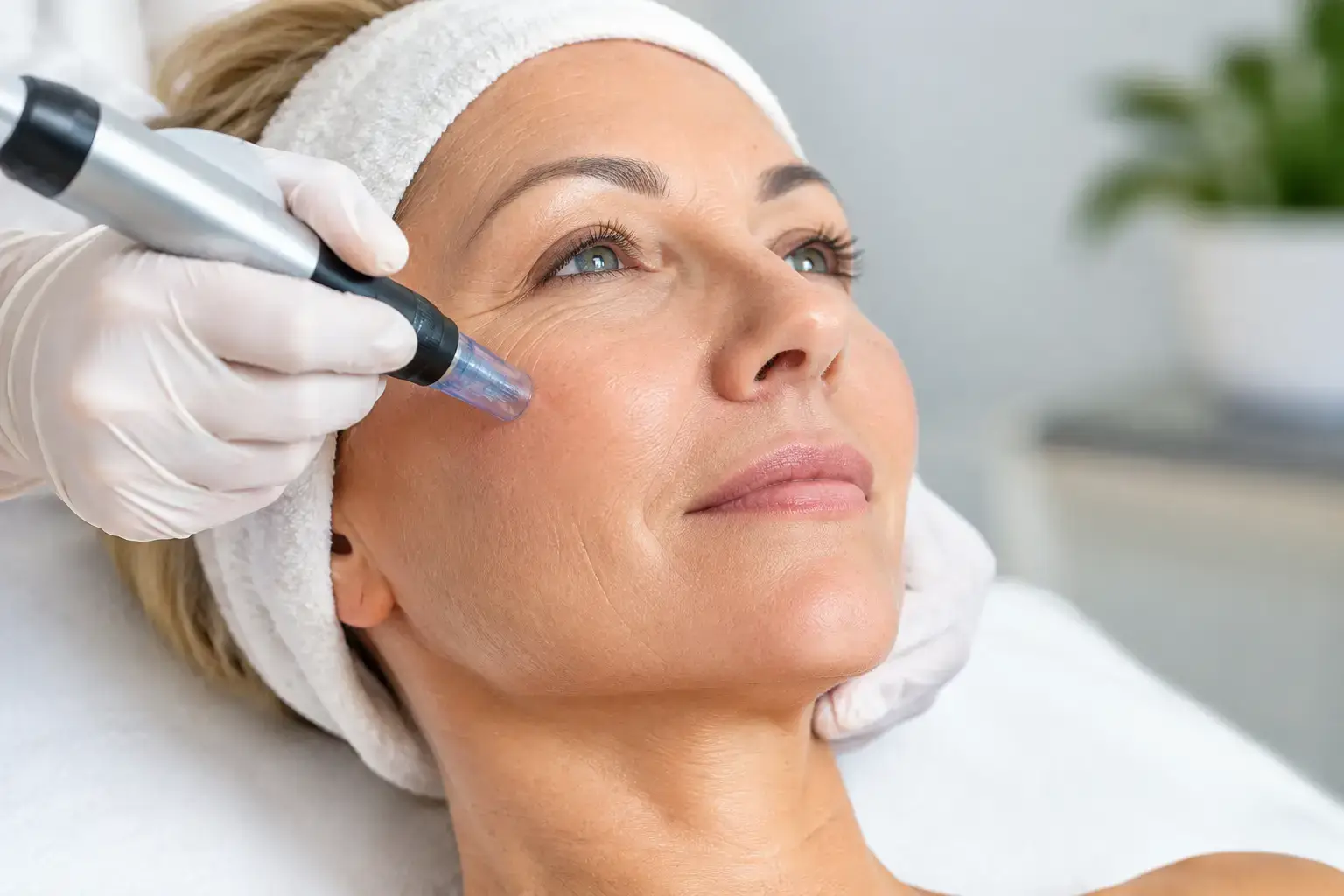
Microneedling is designed to target those deeper structural concerns. It creates controlled microchannels in the skin using precisely selected needle depths. That controlled stimulation signals the body to begin a repair process that can support collagen and elastin production over time.
Does Microneedling Help Crepey Skin? What It Can Improve
Microneedling can be a strong option for mild to moderate crepey texture, especially when the concern is accompanied by fine lines, roughness, enlarged pores, or uneven skin quality. As new collagen develops, treated skin may appear smoother, denser, and more resilient. The goal is healthier-looking skin with improved texture, not an artificially tight or overfilled appearance.
Results vary based on the treatment area and the condition of the skin. Crepey skin on the face or chest may respond differently than skin on the arms, knees, or hands. Areas with significant laxity, severe sun damage, or very thin skin may require a combination plan rather than microneedling alone.
Clients should also have realistic expectations about timing. Microneedling initiates a biological remodeling process. You may notice a refreshed appearance after initial healing, but collagen renewal develops gradually over several weeks. A series of treatments is commonly recommended for visible, lasting improvement.
Why collagen stimulation matters
Collagen gives skin much of its structure, while elastin helps it rebound. As these supportive fibers decline, skin can take on the thin, finely wrinkled appearance associated with crepiness. Microneedling does not replace missing volume or remove excess skin. What it can do is encourage healthier collagen organization within the treated area, helping improve the quality of skin that remains.
That distinction matters. A client with early texture changes may be an excellent microneedling candidate. Someone with more advanced skin laxity may benefit from pairing microneedling with other professionally selected aesthetic treatments.
Advanced Microneedling PRP and RF Microneedling
At Vintage Lashes and Beauty Services, treatment selection is based on the concern, the area being treated, skin condition, and your desired level of correction. Advanced Microneedling PRP combines microneedling with platelet-rich plasma derived from your own blood. PRP contains growth factors that may support the skin’s natural recovery process and is often selected by clients seeking a regenerative approach to texture and skin quality.
RF microneedling adds radiofrequency energy beneath the surface through insulated microneedles. The micro-injuries and controlled heat work together to stimulate collagen remodeling at deeper levels. For some clients with crepey texture and mild laxity, RF microneedling may offer a more intensive option than traditional microneedling.
Neither approach is automatically right for everyone. RF microneedling may be appropriate when laxity is a stronger part of the concern, while Advanced Microneedling PRP may be selected for clients focused on texture, radiance, and overall skin renewal. A professional consultation is the right place to determine which method, needle depth, treatment area, and schedule are appropriate.
What a Crepey Skin Treatment Plan May Look Like
A quality plan begins with an assessment of your skin rather than a standard protocol. Your provider should consider sun damage, current skincare products, past procedures, healing history, pigmentation concerns, and whether you are prone to cold sores or post-inflammatory discoloration.
For many clients, a series of three treatments spaced several weeks apart is a reasonable starting point. The exact number depends on the severity of crepey skin, the technology used, and how your skin responds. Maintenance treatments may be recommended after the initial series, particularly for areas that receive regular sun exposure.
The treatment itself is controlled and precise. A topical numbing agent may be used to improve comfort. After treatment, the skin can be red, warm, and mildly swollen, similar to a moderate sunburn. Downtime differs between traditional microneedling and RF microneedling, as well as by treatment depth and area.
Your provider should give clear aftercare instructions. In general, skin needs time to recover. Avoid heat, strenuous workouts, direct sun exposure, tanning, exfoliating acids, retinoids, and unapproved products for the recommended period. Use gentle skincare and broad-spectrum sunscreen exactly as directed. Florida sun can quickly undermine a skin-rejuvenation investment when proper protection is not part of the plan.
When Microneedling May Not Be the Best First Choice
Microneedling is not a substitute for surgery when there is substantial loose skin. It also may not be appropriate during an active skin infection, acne flare, open wound, or certain medical conditions. Clients who are pregnant, taking blood-thinning medications, using certain prescription acne medications, or managing a history of abnormal scarring should disclose this during consultation.
Darker skin tones can absolutely be candidates for microneedling, but technique, needle depth, device selection, and aftercare must be carefully managed to reduce unnecessary inflammation and pigmentation risk. This is one reason experience and proper treatment protocols matter.
Crepey skin can also be worsened by severe dryness, irritation from aggressive skincare, or ongoing sun exposure. If the skin barrier is compromised, your provider may recommend calming and conditioning the skin before performing a more active treatment. Treating inflamed skin aggressively is not a results-driven strategy.
Support Your Results Between Appointments
Professional treatment works best when home care protects the progress. Daily broad-spectrum SPF, protective clothing, and intentional sun avoidance are essential for preserving collagen. Consistent hydration and a gentle moisturizer can improve the surface appearance of crepey skin, while provider-approved active ingredients may support longer-term skin quality when introduced at the right time.
Avoid overusing exfoliants or trying multiple strong products at once. Crepey skin is often fragile skin. A disciplined routine usually delivers more value than chasing every trend.
If you are concerned about thin, crinkled texture on the face, neck, chest, arms, hands, or body, schedule a professional consultation to discuss whether microneedling, PRP, RF microneedling, or a customized combination approach fits your goals. The most satisfying result is skin that looks smoother and healthier while still looking like you.