
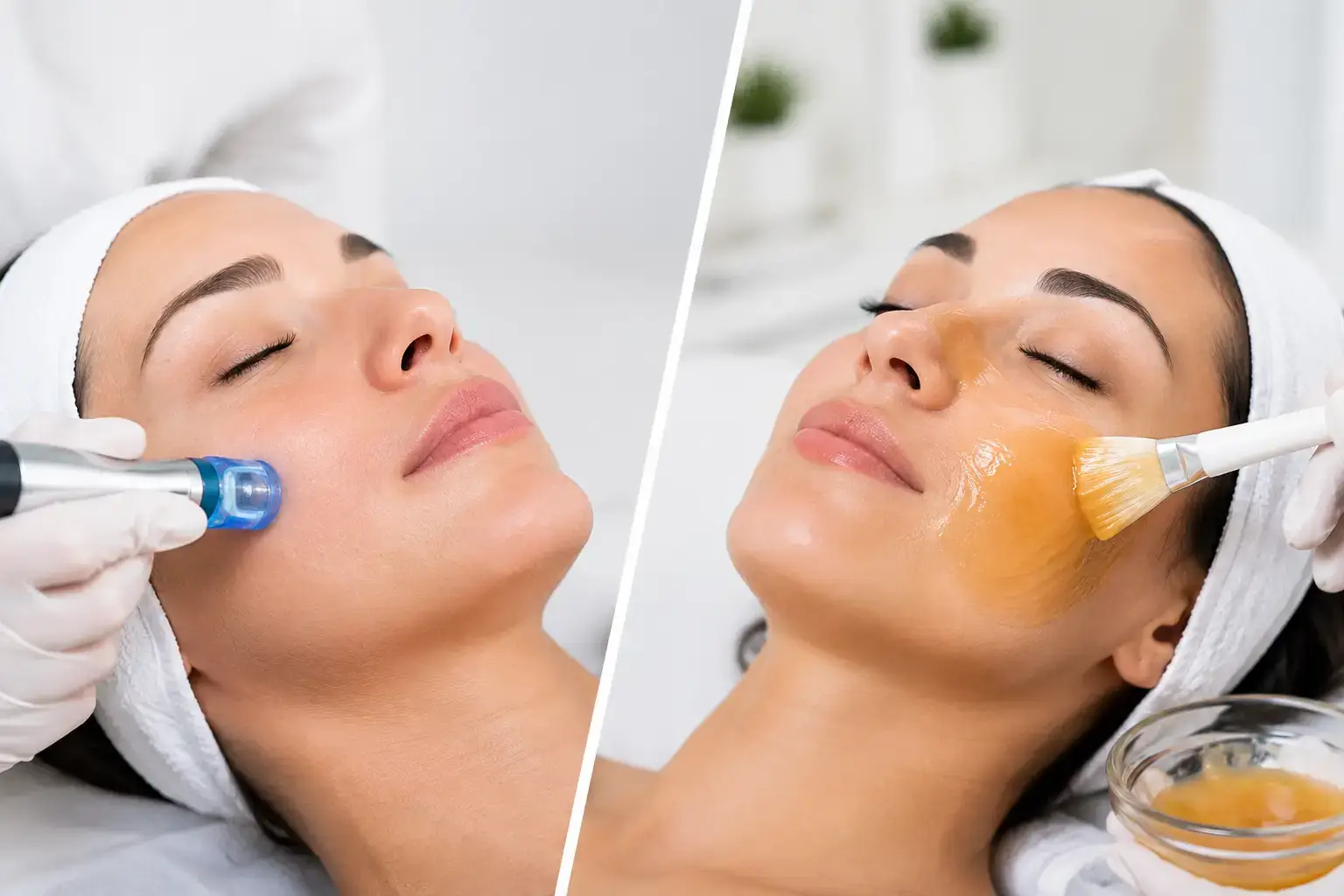
Hydra Dermabrasion Versus Chemical Peel?
A glowing complexion before a Naples dinner reservation is one goal. Treating stubborn sun damage, acne marks, or fine lines is another. Hydra dermabrasion versus chemical peel is not a matter of which treatment is universally better. The right choice depends on your skin condition, how much downtime you can accept, your event schedule, and the level of correction you want.
Both treatments exfoliate and improve skin clarity, but they do it in distinctly different ways. Hydra dermabrasion is typically a comfortable, no-downtime facial focused on cleansing, hydration, and surface renewal. A professional chemical peel uses carefully selected acids to create controlled exfoliation at a deeper level. One may be ideal for regular maintenance; the other may be better when your skin needs more significant correction.
What Is Hydra Dermabrasion?
Hydra dermabrasion is an advanced facial treatment that combines cleansing, exfoliation, extractions, hydration, and antioxidant or peptide infusion. Rather than using harsh crystals or aggressive abrasion, the treatment uses a specialized handpiece and solution delivery system to lift dead skin cells, clear congested pores, and replenish the skin with targeted serums.
The immediate appeal is visible: skin often looks cleaner, smoother, and more hydrated as soon as the appointment is complete. Makeup tends to apply more evenly, pores can appear less noticeable, and the complexion has a fresh, polished finish. For clients maintaining lash extensions, brows, injectables, or other aesthetic services, it can fit neatly into an ongoing beauty routine without requiring a lengthy recovery period.
Hydra dermabrasion is especially useful for dullness, dehydration, mild congestion, uneven texture, and a temporary loss of radiance. It is also a practical option before a special event, provided it is scheduled with enough time to account for any individual sensitivity.
What the appointment feels like
Most clients describe the process as a gentle suction sensation combined with cool, wet serums moving across the skin. Extractions may feel slightly more intense in congested areas, but the treatment is generally well tolerated. A trained provider adjusts the approach based on your skin sensitivity, active breakouts, dehydration, and treatment goals.
Some temporary pinkness is possible, particularly after extractions, but many clients return to normal activities immediately. That makes hydra dermabrasion a strong choice for busy professionals, seasonal residents, and anyone who wants refreshed skin without planning around peeling or visible recovery.
What Is a Chemical Peel?
A chemical peel uses a solution to loosen and remove damaged outer skin cells. Depending on the formula and strength, a peel may work very superficially or penetrate more deeply to address more established concerns. Professional options can include alpha hydroxy acids, beta hydroxy acids, trichloroacetic acid, retinoic acid blends, or combination formulations such as a VI Peel.
The purpose is controlled skin renewal. As treated cells shed, the skin’s surface can become smoother and clearer. Over a series of properly selected treatments, chemical peels may improve the appearance of discoloration, acne, enlarged pores, fine lines, rough texture, and certain types of acne-related marks.
A peel is not simply a stronger facial. It is a treatment that requires thoughtful selection, proper skin preparation, and disciplined aftercare. The wrong formula, timing, or home-care routine can increase the risk of excessive irritation, prolonged redness, post-inflammatory hyperpigmentation, or uneven results.
Peel depth changes the experience
Superficial peels often cause mild flaking or tightness and may have limited downtime. Medium-depth peels typically produce more visible peeling and require more recovery. The stronger the corrective goal, the more important it becomes to plan treatment around travel, work presentations, weddings, beach days, and sun exposure.
Florida sun exposure deserves special attention. Freshly treated skin is more vulnerable to pigmentation changes, so consistent broad-spectrum sunscreen, shade, and strict adherence to your provider’s instructions are part of the treatment itself, not optional extras.
Hydra Dermabrasion Versus Chemical Peel: Key Differences
The most significant difference is how each treatment exfoliates. Hydra dermabrasion mechanically and chemically clears surface buildup while delivering hydration. A chemical peel relies on acids to stimulate controlled shedding and renewal. Hydra dermabrasion generally offers an immediate glow with little interruption to daily life. A chemical peel may require visible peeling, but it can offer more meaningful improvement for specific concerns.
Hydration is another dividing line. Hydra dermabrasion is designed to replenish the skin during treatment, making it a valuable option for skin that looks tired, dry, or temporarily congested. A chemical peel can leave skin feeling dry, tight, or sensitive during the recovery phase. That does not make a peel harmful when professionally selected, but it does mean aftercare is more demanding.
The pace of results differs as well. Hydra dermabrasion provides instant cosmetic improvement, though results are best maintained through regular appointments and proper home care. Chemical peel results develop over days and weeks as the skin recovers and renews. For concerns such as stubborn discoloration or recurring acne, a series may be recommended.
Which Treatment Is Better for Your Skin Goals?
Choose hydra dermabrasion when your priority is hydration, brightness, light exfoliation, and a clean, refined complexion with minimal downtime. It is often a smart maintenance treatment for clients who want their skin to look consistently cared for between more intensive services. It can also be useful when the skin feels congested but is not appropriate for aggressive exfoliation.
A chemical peel may be the more effective choice when you are targeting noticeable pigment irregularities, persistent acne, rough texture, fine lines, or more established signs of photoaging. The appropriate peel depends on your Fitzpatrick skin type, history of hyperpigmentation, current skincare products, medications, acne activity, and prior treatment response.
Neither treatment should be selected based on a social media before-and-after alone. A client with sensitive, reactive skin may benefit from a gentle hydra dermabrasion approach even if they initially request a peel. Conversely, someone who has maintained a consistent skincare routine but still struggles with discoloration may need the controlled correction a professional peel can provide.
Can You Combine Hydra Dermabrasion and Chemical Peels?
Yes, but not in the same casual, back-to-back way that some treatment menus imply. In a properly planned skincare program, hydra dermabrasion and chemical peels can complement each other. Hydra dermabrasion may support regular cleansing and hydration between peels, while peels can be scheduled at appropriate intervals for a more corrective objective.
Timing matters. Skin should not be over-exfoliated, especially if you use retinoids, prescription acne medication, exfoliating acids, or benzoyl peroxide at home. Your provider should review your current products and tell you exactly what to pause before and after treatment. Do not add scrubs, at-home peels, or new active products simply because your skin is flaking or feels congested.
Safety, Preparation, and Aftercare Matter
Both treatments are safest when performed after a thorough consultation. Active infection, open skin, a sunburn, certain medications, a history of abnormal scarring, recent waxing, or a compromised skin barrier may require treatment to be postponed or modified. Clients prone to melasma or post-inflammatory hyperpigmentation need especially careful planning.
Before either appointment, arrive with an honest understanding of your home routine and recent procedures. Tell your provider about retinoids, antibiotics, anticoagulants, allergies, pregnancy or nursing status, recent injectables, laser treatments, and any history of cold sores. These details help determine whether treatment is appropriate and how it should be performed.
After hydra dermabrasion, keep the routine gentle, hydrated, and protected with sunscreen. After a chemical peel, follow every aftercare instruction precisely. Do not pick peeling skin, use exfoliating products before you are cleared, or schedule additional heat-based treatments without professional guidance. Results depend on technical precision in the treatment room and responsible care afterward.
At Vintage Lashes and Beauty Services, skin treatments are selected with the same attention to technique, sanitation, and individualized care expected from every advanced aesthetic service. The most flattering option is not always the strongest one. It is the treatment that respects your skin, fits your schedule, and moves you steadily toward healthier-looking skin.