
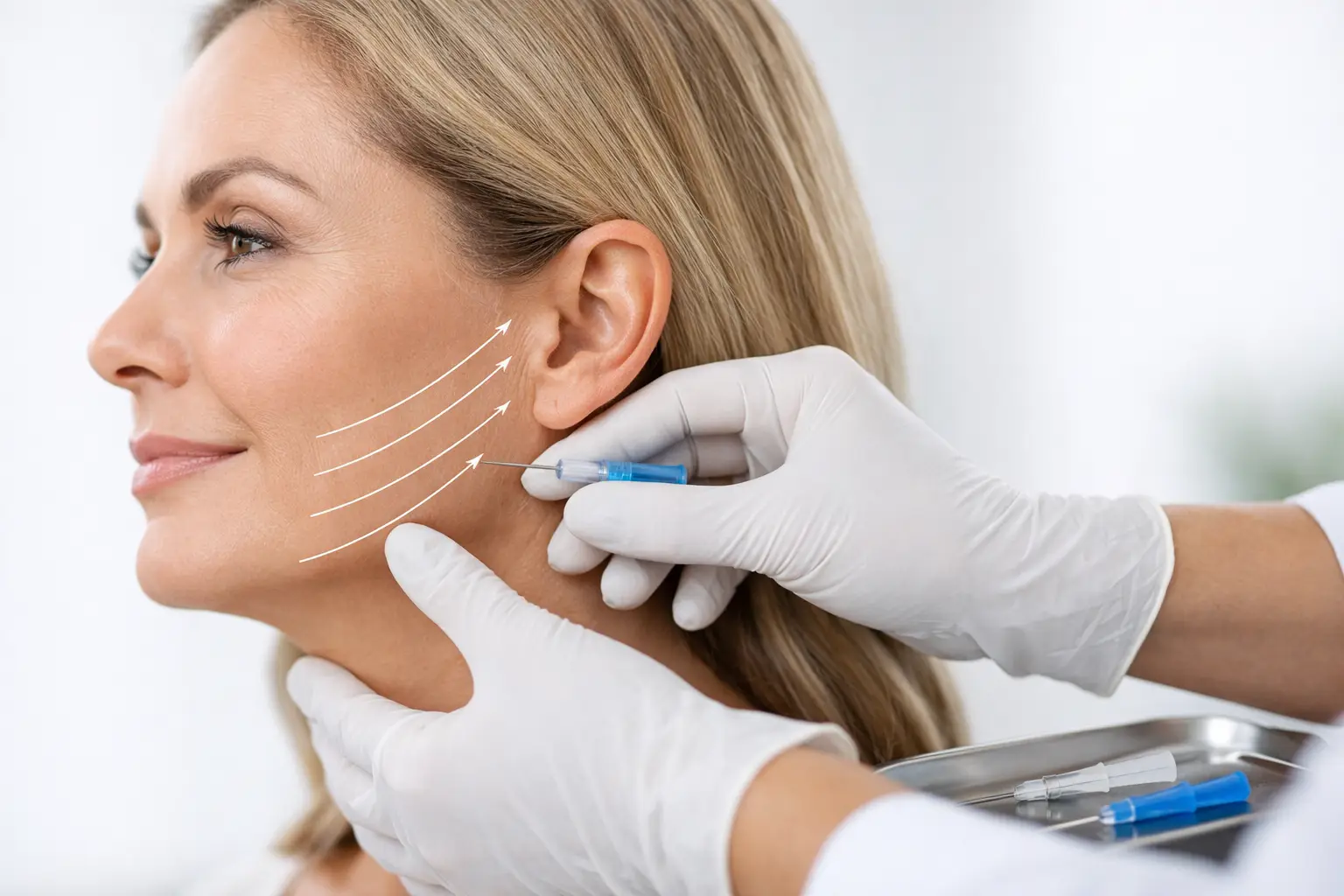
Can PDO Threads Lift Jowls?
Jowls tend to sneak up on people. One day your jawline looks crisp in photos, and then suddenly the lower face feels heavier, softer, and harder to define. If you have been wondering, can PDO threads lift jowls, the short answer is yes, in the right candidate. The better answer is that PDO threads can improve mild to moderate jowling, but they are not a substitute for surgery when skin laxity and lower-face descent are more advanced.
That distinction matters because thread lifting works best when the treatment plan matches the anatomy. A skilled provider is not just placing threads and hoping for lift. They are evaluating skin thickness, tissue weight, collagen quality, facial symmetry, and how much support the lower face has already lost.
Can PDO threads lift jowls effectively?
They can, but expectations need to be realistic. PDO threads are dissolvable sutures placed under the skin to create support and reposition tissue. In the jowl area, they are typically used to improve early sagging along the jawline and soften the transition between the lower cheek and chin.
The immediate improvement comes from mechanical lift. Over time, the threads also stimulate collagen production, which can help the skin look firmer and more supported. That said, the amount of visible lift depends on how heavy the jowls are to begin with. If the lower face has significant laxity, deep folds, or a lot of tissue descent, threads may improve the area but will not create a sharply sculpted surgical result.
For many patients, that is still worthwhile. They are not trying to look pulled tight. They want a cleaner jawline, a more rested profile, and better support without the downtime of a facelift.
How PDO threads lift the jowl area
Jowls form for more than one reason. Skin loses elasticity with age, collagen breaks down, fat pads shift, and the retaining structures that once held the face higher begin to weaken. Bone support also changes over time, especially around the jaw and chin. The result is a softer lower face and less definition where the jawline used to read clearly.
PDO threads address part of that process. Barbed or lifting threads are placed strategically to anchor and elevate tissue. In the right pattern, they can improve the lower cheek, reduce the appearance of jowling, and create a tighter visual line from the chin toward the ear.
This is where experience matters. Jowls are not lifted by simply placing threads directly into the sagging area. The lift usually comes from repositioning adjacent tissue and creating a better vector of support. Precision affects both the cosmetic outcome and the longevity of the result.
What kind of result should you expect?
Most patients should expect improvement, not perfection. A good PDO thread result for jowls often means the jawline looks more refined, the lower face appears less heavy, and makeup or photos catch less shadowing along the jaw. It may also create a subtle improvement in marionette lines and lower-face contour.
What it usually does not mean is a dramatic reset of advanced aging. If your skin is very loose or your jowls are pronounced at rest from every angle, a thread lift may be too conservative on its own.
Who is a good candidate for jowl threads?
The best candidates usually have mild to moderate sagging, decent skin quality, and enough collagen reserve to respond well. Patients in their late 30s to 50s often do well, but age alone is not the deciding factor. Some patients in their 60s are still excellent candidates if the tissue is not too heavy and the goals are appropriate.
You may be a strong candidate if your jowls are early, your jawline has started to blur, and you want a less invasive option with less downtime than surgery. Threads also make sense for patients who are already maintaining their appearance with neurotoxins, biostimulators, skin tightening, or filler and want another tool to support the lower face.
You may be a weaker candidate if you have very thin skin, significant skin laxity, substantial heaviness in the lower face, or expectations that lean toward a facelift result. Certain medical conditions, active skin issues, or poor healing history may also make threads a less suitable option.
When PDO threads alone are not enough
This is the part many patients appreciate hearing clearly. Jowls are often a combination problem, not a single-treatment problem. Threads can lift tissue, but they do not replace lost bone support, erase all volume loss, or tighten severely lax skin the way surgery can.
Sometimes the best result comes from combining treatments. A patient may need filler in the chin or jawline to improve structure, biostimulators to support collagen, or skin tightening treatments to address laxity and texture. In other cases, surgery is simply the better recommendation.
An honest provider should tell you when threads are likely to help, when they need support from other treatments, and when they are not the best investment for your anatomy. That kind of guidance protects both your results and your budget.
Threads vs filler for jowls
These treatments do different jobs. PDO threads reposition and support tissue. Filler restores volume or enhances contour. If the jowl area looks heavy because the cheeks have descended, threads may help more than filler alone. If the jawline lacks structure or the chin is retrusive, filler may be part of the answer.
In some patients, placing filler directly near a jowl can make the lower face look heavier if it is not done with restraint and strategic placement. That is why a full-face assessment matters. Good lower-face rejuvenation is rarely about chasing one fold or one pocket of sagging.
How long do PDO thread results last?
Most patients can expect visible lifting effects to last around 9 to 18 months, depending on the type of threads used, the quality of the tissue, facial movement, lifestyle factors, and whether the treatment is supported by a broader maintenance plan. The threads themselves dissolve over time, but collagen stimulation can continue after the material breaks down.
Longevity is not identical for everyone. A patient with heavier tissue and more movement in the lower face may metabolize the result faster than someone with lighter tissue and strong skin quality. Smoking, sun exposure, major weight fluctuations, and poor skin maintenance can also shorten the life of the outcome.
For patients who want consistent improvement, threads often work best as part of ongoing aesthetic maintenance rather than a one-time fix.
What treatment and recovery are really like
PDO thread placement is typically done in-office after numbing. Most patients tolerate it well, especially when the provider is experienced and works with precise technique. You may feel pressure, pulling, or brief discomfort, but it is generally manageable.
After treatment, some swelling, bruising, tenderness, puckering, or a tight sensation is normal for the first several days. Some patients recover quickly enough to return to normal social activity within a few days, while others prefer a week or so before events or photos. The lower face can feel strange at first, especially when chewing or making exaggerated expressions.
Following aftercare matters. Patients are usually advised to avoid aggressive facial movement, strenuous exercise, facial massage, and sleeping with pressure on the treated area for a period of time. These instructions are not optional details. They help protect thread position while the tissue settles.
Why provider skill matters with jowl lifting
This is not a treatment to bargain-shop. The lower face is dynamic, and thread placement requires a solid understanding of vectors, anatomy, tissue behavior, and patient selection. Poor technique can lead to asymmetry, irregularity, limited lift, or results that fade faster than expected.
A qualified provider should be able to explain exactly why you are or are not a candidate, what level of improvement is realistic, and what other treatments may need to be part of the plan. They should also set clear expectations around downtime, aftercare, and follow-up.
For patients in Naples and surrounding areas who want a polished but medically informed approach, that level of evaluation matters more than trendy marketing photos.
So, can PDO threads lift jowls for you?
They might be an excellent option if your jowls are in the early to moderate stage and your goal is meaningful improvement without surgery. They are less likely to satisfy you if you want major tightening or if the lower face has advanced laxity.
The right question is not only can PDO threads lift jowls. It is whether they can lift your jowls enough to justify the treatment. That answer comes from a careful consultation, honest treatment planning, and a provider who values precision over overselling.
If your jawline has started to soften and you want a treatment that respects both your time and your standards, PDO threads can be a smart next step when chosen for the right face, at the right time, for the right reason.