
Guide to Exosome Skin Treatments Before You Book
A guide to exosome skin treatments should begin with a clear distinction: this is an emerging category of regenerative aesthetics, not a guaranteed shortcut to younger-looking skin. Exosomes are frequently promoted for glow, smoother texture, improved recovery, and a more refreshed appearance. Those goals may sound appealing, especially when paired with advanced treatments such as microneedling, but the quality of the product, the delivery method, and the provider’s standards matter as much as the treatment itself.
For clients who already invest in professional skin care, the right question is not simply, “Do exosomes work?” It is, “Is this specific treatment appropriate for my skin, goals, health history, and tolerance for uncertainty?” A qualified consultation should answer that directly.
What are exosomes in skin treatments?
Exosomes are tiny extracellular vesicles released by cells. They carry signaling materials such as proteins, lipids, and genetic material that help cells communicate. In aesthetic medicine, exosome-based topical products are often used after procedures that create controlled microchannels in the skin, including microneedling. The theory is that these signaling particles may support the skin’s recovery processes and help create a healthier-looking environment for repair.
That description deserves some restraint. Exosomes are not stem cells, and they do not “turn back the clock.” They are also not interchangeable with platelet-rich plasma, or PRP. PRP is made from a sample of your own blood, while exosome products are generally manufactured from donor-derived cell cultures or other sources. Their source, processing, concentration, sterility testing, storage requirements, and intended use can vary significantly from one product to another.
This variation is why a branded label alone is not a quality standard. A responsible provider should be able to explain what is being applied, how it is handled, and why it is being recommended for your particular treatment plan.
How exosome skin treatments are typically performed
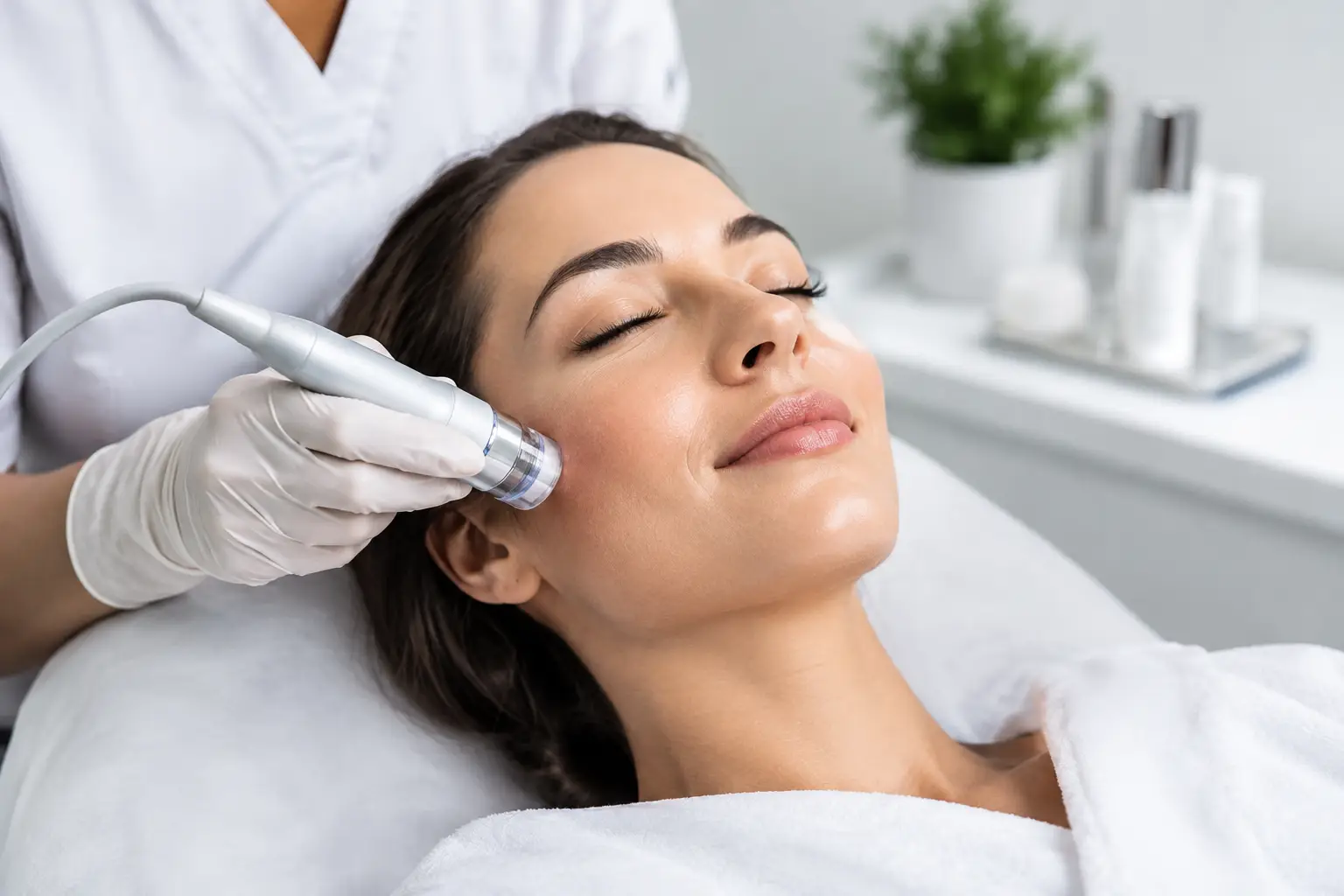
Most aesthetic exosome protocols are not standalone facial services. More commonly, an exosome serum or solution is applied after a procedure intended to stimulate collagen or renew the skin’s surface. Microneedling is a common pairing because it creates controlled channels that can temporarily increase product contact with the skin.
A typical appointment begins with a skin assessment and health review. Your provider should discuss concerns such as discoloration, acne scarring, fine lines, texture, sensitivity, prior cosmetic procedures, active breakouts, and current skin care products. The skin is cleansed thoroughly, and a numbing agent may be used when appropriate for the primary procedure.
After microneedling or another selected service, the provider applies the designated post-procedure product according to its protocol. You may leave with temporary redness, warmth, mild swelling, or a tight feeling similar to a sunburn. The intensity of recovery depends more on the treatment performed than on the exosome product itself.
Exosome application should never be treated as a reason to push the skin harder than it can safely tolerate. Depth settings, treatment passes, and the choice of procedure must be customized to skin type, condition, and recovery capacity.
Potential benefits – and realistic expectations
Clients often seek exosome skin treatments for a more hydrated, luminous appearance and support during post-procedure recovery. Some people report that their skin feels calmer or looks more polished after treatment. When used alongside a well-chosen professional procedure and a consistent home regimen, exosome products may be one component of an overall skin-quality plan.
However, visible improvement is not automatic, and research in cosmetic use is still developing. Results can be affected by the underlying issue being treated. Fine dehydration lines, for example, respond differently than deep acne scars, sun damage, laxity, or significant hyperpigmentation. One facial treatment will not replace the collagen-building course that may be needed for more established texture concerns.
Be cautious with before-and-after images that show dramatic changes immediately after a procedure. Post-treatment swelling and hydration can temporarily make the skin look smoother. A better assessment comes after the skin has fully recovered and over a series of properly spaced appointments, when appropriate.
Safety questions to ask before an exosome treatment
This is the section that should never be skipped. The U.S. Food and Drug Administration has stated that there are no FDA-approved exosome products for treating diseases or other medical conditions. Marketing language can be aggressive in this category, so do not confuse an aesthetic trend with established medical approval.
Ask your provider where the product comes from, whether it is intended for topical use after a procedure, and how it is stored and prepared. You should also ask whether the product will be injected. Injectable exosome claims require a much higher level of caution and discussion, particularly when a product’s safety and regulatory status are unclear.
Before booking, request straightforward answers to these questions:
- What is the source and manufacturer of the product being used?
- Is it being applied topically or introduced into the skin in another way?
- What sanitation, storage, and single-use handling standards are followed?
- What are the known risks, expected downtime, and signs that require follow-up?
A professional consultation does not dismiss questions as negativity. It welcomes them. If a provider promises dramatic regeneration, claims to treat medical conditions, or cannot explain the product and protocol in plain language, that is a reason to pause.
Who may be a good candidate?
The best candidates are typically healthy adults with realistic expectations who are pursuing skin-quality improvements rather than a miracle result. They may be considering a treatment plan for dullness, uneven texture, early fine lines, or recovery support after a professionally selected procedure.
Treatment may need to be postponed if you have an active skin infection, open lesions, a significant inflammatory flare, a history of poor wound healing, or a recent sunburn. Pregnancy, breastfeeding, autoimmune conditions, immune-suppressing medications, anticoagulants, prescription retinoids, and a history of abnormal scarring all warrant an individualized conversation with an appropriate medical professional.
For clients prone to melasma or post-inflammatory hyperpigmentation, conservative treatment settings and disciplined sun protection are especially important. More aggressive is not always better. In Southwest Florida, where UV exposure is a year-round issue, a planned recovery window and daily broad-spectrum sunscreen are part of protecting your investment.
Aftercare protects the result
Your aftercare plan should match the procedure, not a generic social media routine. For the first 24 to 72 hours after microneedling or similar treatments, most clients are advised to keep the skin clean, avoid touching it unnecessarily, and use only the products approved by their provider. Makeup, active exfoliants, retinoids, fragranced products, intense exercise, heat exposure, and direct sun are commonly restricted for a period of time.
Do not add new serums because they are trending or because a friend had a different protocol. Recently treated skin is more vulnerable to irritation. Follow the instructions you receive, use sunscreen as directed once appropriate, and contact your provider if you experience increasing pain, pronounced swelling, blistering, drainage, fever, or a reaction that seems outside the expected recovery pattern.
Your long-term result also depends on the basics: consistent sun protection, appropriate medical-grade or professional skin care, hydration, and maintenance treatments selected for your actual concerns. Exosomes, if chosen, are an adjunct – not a substitute for those fundamentals.
Choose precision over hype
The most valuable guide to exosome skin treatments is one that keeps expectations grounded and standards high. Look for a provider who assesses your skin carefully, follows strict sanitation and aftercare protocols, and is willing to recommend a different treatment when exosomes are not the best fit.
A thoughtful aesthetic plan should make you feel informed rather than rushed. The right next step is a consultation where your goals, skin history, recovery time, and comfort level are given the same attention as the treatment itself.