
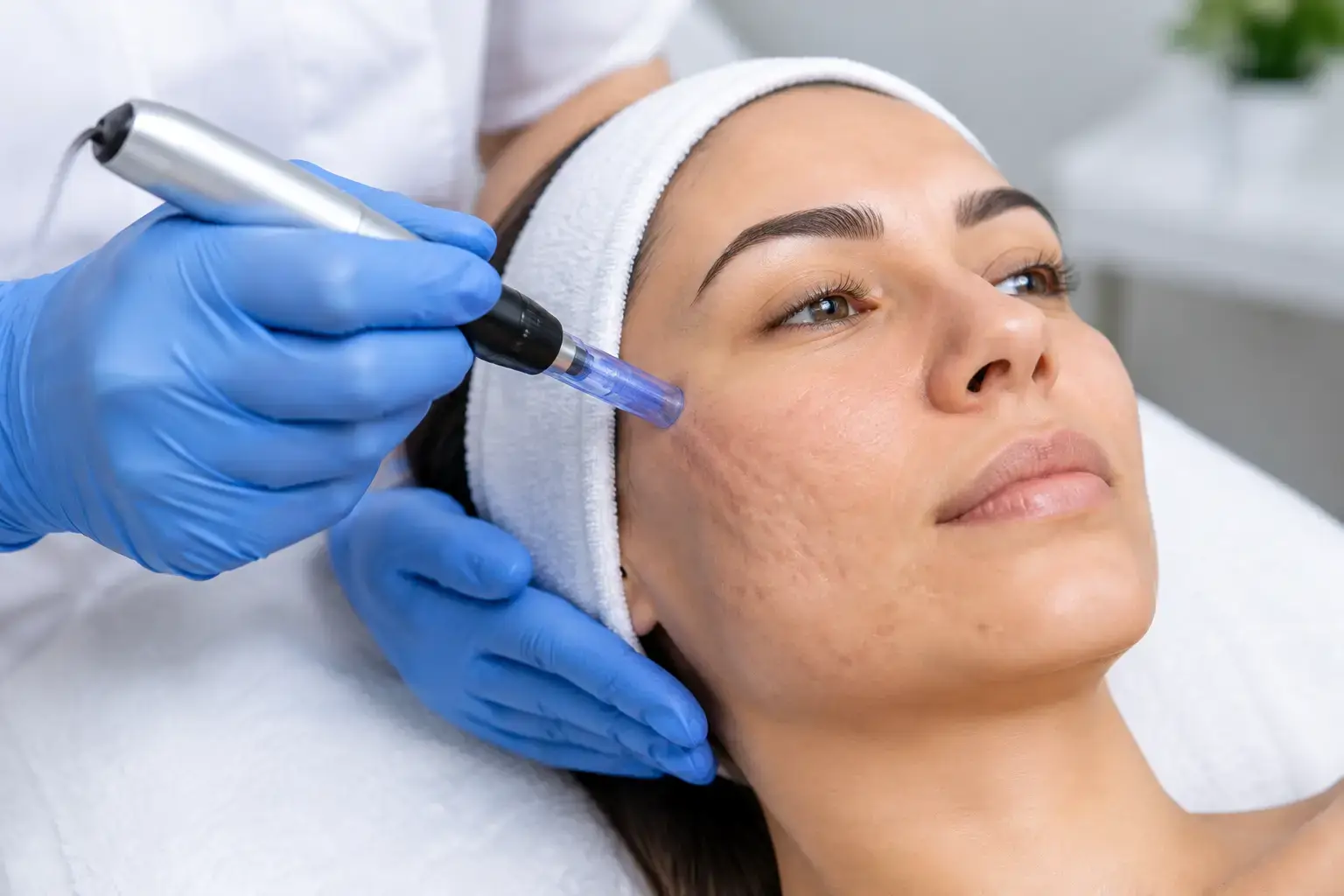
A Microneedling Acne Scar Treatment Example
Acne may be long gone, but the texture it leaves behind can remain visible in bathroom lighting, on video calls, and under makeup. A microneedling acne scar treatment example is helpful because it sets realistic expectations: meaningful improvement is usually a series of carefully timed treatments, not a one-visit fix. The goal is to support healthier collagen remodeling while protecting the skin barrier and respecting the unique pattern of each client’s scars.
At Vintage Lashes and Beauty Services, advanced skin treatments are approached with the same priorities that guide every service: proper technique, sanitation, individualized planning, and clear aftercare. For acne scarring, the details matter. Scar type, active breakouts, skin tone, past treatments, and downtime tolerance all influence whether traditional advanced microneedling, PRP-supported microneedling, or RF microneedling may be the appropriate conversation.
A Microneedling Acne Scar Treatment Example
Consider a hypothetical client in her late 30s with shallow rolling scars and a few boxcar scars across the cheeks and temples. Her acne has been controlled for more than a year, but the texture is more noticeable when she wears foundation or is photographed in bright Florida sun. She has tried exfoliating facials and professional peels, which helped brightness but did not substantially change the indentations.
During consultation, the provider evaluates more than the scars themselves. The discussion includes recent acne activity, history of cold sores, use of prescription skin medications, tendency toward pigmentation changes, sun exposure, and prior procedures. The provider also assesses whether the scars are primarily rolling, boxcar, or ice-pick scars. This distinction is essential because microneedling can be very useful for some scar patterns, but deeply narrow ice-pick scars often need a different or combined approach.
For this example, the client is a reasonable candidate for a series of microneedling sessions because her acne is stable, her scars are primarily shallow to moderate, and she can follow a strict post-treatment care plan. Her initial plan may include three sessions spaced roughly four to six weeks apart. The spacing gives the skin time to recover and begin its collagen response before the next treatment.
The first appointment
After cleansing and preparing the skin according to protocol, a topical numbing product may be used when appropriate. The treatment depth and technique are selected based on the treatment area, scar depth, skin condition, and provider assessment. A skilled provider does not use one setting across every part of the face simply for speed. Cheeks with rolling scars may require a different approach from the forehead, nose, or more delicate areas around the mouth.
Microneedling creates controlled microchannels in the skin. This process is designed to trigger a repair response that supports collagen and elastin production over time. It does not erase scars instantly, and it should never be presented as a guaranteed cure. Instead, it can improve the overall look of textural irregularities, help soften scar edges, and create a smoother surface that reflects light more evenly.
Some clients may be candidates for PRP-supported microneedling. PRP, or platelet-rich plasma, is prepared from the client’s own blood and may be incorporated into an advanced treatment plan. Others may benefit from RF microneedling, which combines microneedling with radiofrequency energy and can be considered for clients seeking a more intensive collagen-focused option. The best choice depends on the skin, the scars, the client’s goals, and the provider’s evaluation rather than a trend or a one-size-fits-all package.
What healing looks like after treatment
Immediately after the first session, the client in this example can expect redness similar to a moderate sunburn. Mild warmth, tightness, pinpoint bleeding during the procedure, and temporary swelling can be normal. Redness often settles significantly within 24 to 72 hours, although recovery varies by skin sensitivity, treatment intensity, and the areas treated.
The first few days are not the time to test new products or return immediately to a full active skincare routine. The skin barrier needs calm, uncomplicated support. Clients are typically instructed to use only approved gentle products, avoid heat exposure and strenuous exercise for the recommended period, skip makeup until advised, and stay diligent with broad-spectrum sunscreen once the skin is ready for it. In Southwest Florida, sun protection is not optional after collagen-induction treatments. Unprotected UV exposure can increase the risk of unwanted discoloration and compromise the investment in treatment.
A client should also avoid picking, scrubbing, exfoliating acids, retinoids, and harsh cleansers until cleared to resume them. Aftercare is part of the treatment, not an extra step. The quality of the result depends not only on what happens in the treatment room but also on how consistently the skin is protected afterward.
When changes become noticeable
At two weeks, the client may notice that her skin looks fresher or more even, but the scar change is often still subtle. That early glow should not be mistaken for the full result. Collagen remodeling is gradual, and the more meaningful textural improvement usually becomes clearer over the following weeks and months.
After the second session, she may begin to see that foundation sits more smoothly on the cheeks and that some rolling scars look less shadowed in side lighting. By the third treatment and the healing period that follows, the improvement may be more noticeable in overall texture and skin quality. A realistic outcome is softer-looking scars and a more refined surface, not poreless skin or complete removal of every indentation.
Photography can be useful when it is standardized. Before-and-after images should be taken with comparable lighting, angle, distance, and facial expression. A dramatic change in overhead lighting can make scars appear much better or worse than they are. Consistent images offer a more honest record of progress than a quick mirror check after each appointment.
Why treatment plans differ for acne scars
Microneedling is not the right first treatment for every person with acne scarring. Active, inflamed acne may need to be stabilized before a needling procedure is considered. Clients with certain skin infections, open lesions, poor wound healing, or medical factors that affect recovery may need to postpone treatment or receive medical clearance.
Scar anatomy also matters. Rolling scars may respond well because they often involve broader textural depressions. Boxcar scars can improve, especially when they are shallower, but deeper, sharply edged scars may require combination care. Ice-pick scars are narrow and deep, so they may not respond as strongly to microneedling alone. An experienced provider should be direct about those limits rather than promise that one modality can solve every type of scar.
Pigmentation risk deserves the same level of attention. Clients prone to post-inflammatory hyperpigmentation need a careful plan, conservative technique where appropriate, meticulous sun protection, and suitable pre- and post-treatment skincare guidance. More aggressive is not always better. The right treatment is the one that balances visible improvement with responsible healing.
The value of maintenance and reassessment
Once an initial series is complete, some clients choose periodic maintenance based on their skin goals, scar severity, age-related collagen changes, and response to treatment. Others may decide that they are satisfied after a focused series. There is no universal schedule that fits every face.
A good reassessment looks at objective progress, not pressure to continue. If results have plateaued, the provider can discuss whether another modality, a complementary facial treatment, or a referral for medical dermatology support would be more appropriate. Clear recommendations protect both the client and the integrity of the treatment plan.
The most useful question is not, “How fast can my scars disappear?” It is, “What is the safest, most technically appropriate path to smoother-looking skin?” When that answer is built around your scar type, healing profile, and ability to follow aftercare, microneedling becomes a thoughtful investment in long-term skin quality rather than a rushed promise.