
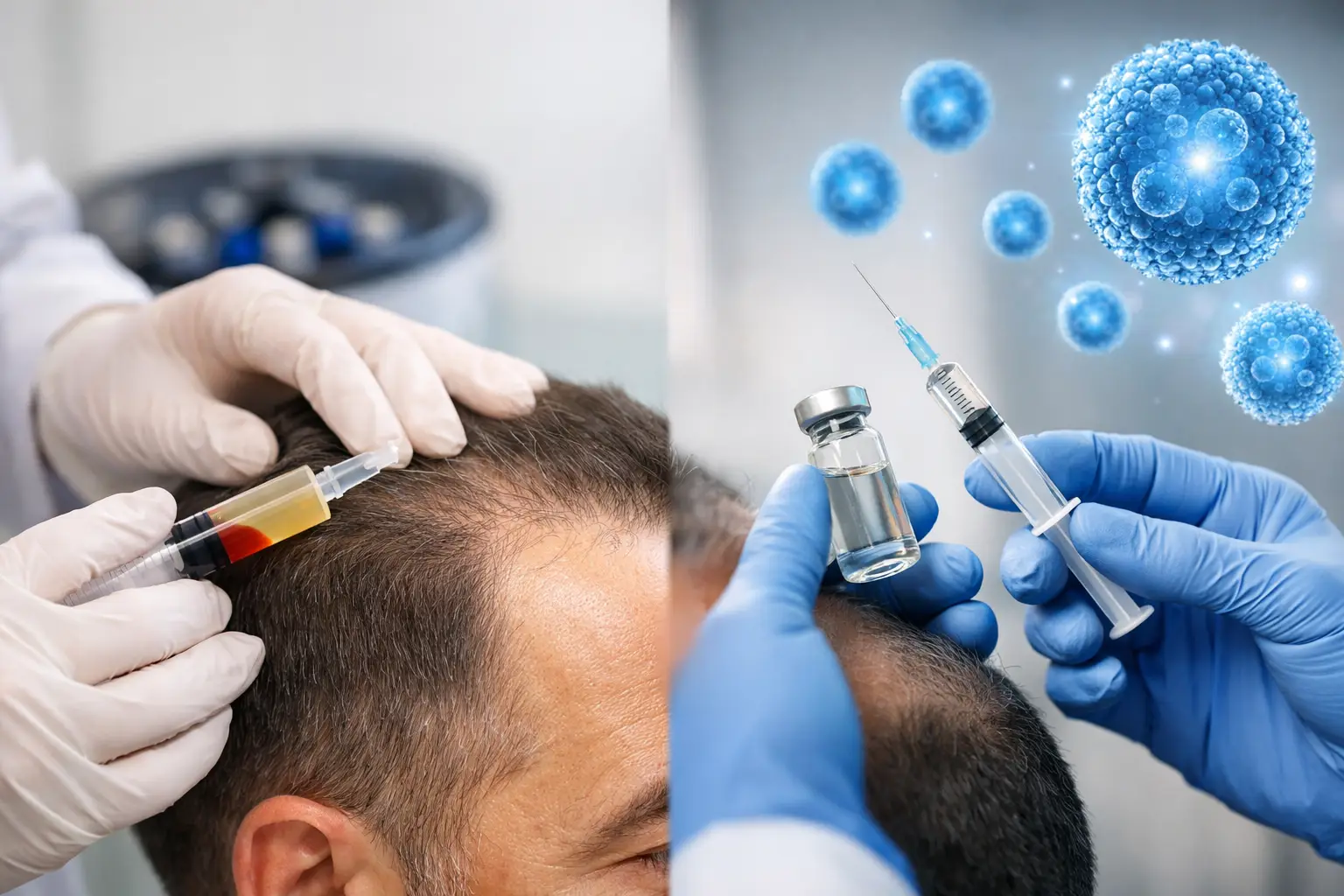
PRP vs Exosomes Hair Restoration
Hair thinning rarely shows up all at once. It usually starts with a wider part, more scalp visibility under bright light, or a ponytail that feels a little smaller than it used to. When clients begin comparing prp vs exosomes hair restoration, they are usually not looking for hype. They want a treatment that makes sense for their stage of hair loss, their schedule, and the level of results they can realistically expect.
This comparison matters because PRP and exosome-based treatments are often discussed as if they are interchangeable. They are not. Both are used to support the scalp environment and encourage healthier hair growth, but they differ in source, treatment philosophy, cost, and how much long-term clinical standardization currently exists.
PRP vs exosomes hair restoration: the core difference
PRP stands for platelet-rich plasma. This treatment uses your own blood, processed to concentrate platelets and growth factors, then injected into areas of thinning hair. The logic is straightforward – your body already contains repair signals, and PRP concentrates them where support is needed.
Exosomes are much smaller extracellular vesicles that carry signaling molecules such as proteins, lipids, and growth-related messengers. In hair restoration, they are used with the goal of improving cellular communication within the scalp and follicle environment. Rather than coming from your own blood, exosome products are derived through laboratory processing from specific cell sources.
That distinction is one of the biggest practical differences. PRP is autologous, meaning it comes from you. Exosomes are not. For many clients, that affects comfort level, pricing, regulatory questions, and treatment planning.
How PRP works for thinning hair
PRP has become a familiar option in medical aesthetics because it is grounded in a simple concept and has been used in multiple areas of regenerative medicine. For hair restoration, a provider draws a small amount of blood, spins it in a centrifuge to separate the platelet-rich portion, and injects it into targeted scalp areas.
The goal is to support weakened follicles, improve scalp circulation, and help extend the growth phase of the hair cycle. PRP tends to be best suited for early to moderate thinning, especially when follicles are still active but underperforming. It is not a substitute for hair transplant surgery in advanced baldness where follicles are no longer viable.
One reason PRP remains popular is that it uses your own biology. For clients who prefer a more established treatment pathway and want to avoid donor-derived materials, that can be a strong advantage. It also fits well into ongoing maintenance plans because sessions can be repeated at intervals based on shedding pattern, hormonal influences, and response.
How exosomes work in hair restoration
Exosome-based hair restoration is newer and often marketed as a next-generation regenerative option. The treatment is generally performed by applying or injecting exosome products into the scalp, sometimes alongside microneedling depending on provider protocol.
The appeal is that exosomes may deliver highly active signaling molecules that support regeneration and reduce inflammatory stress around the follicle. In theory, that could make them useful for clients with thinning related to miniaturization, inflammation, or a scalp environment that is no longer supporting strong hair growth.
The challenge is that exosome hair treatments are not as standardized as many clients assume. Product quality, sourcing, processing methods, storage, and treatment protocols can vary. That does not automatically make the treatment ineffective, but it does mean provider selection and product transparency matter even more.
Which treatment has stronger evidence?
If the question is which option currently has the more established track record, PRP generally leads. It has been studied more extensively for androgenetic alopecia and other hair-thinning concerns, and more providers have long-term practical experience with it.
That does not mean PRP works for everyone, or that exosomes cannot be promising. It means the evidence base for PRP is more mature. With exosomes, interest is growing quickly, but clinical protocols are still evolving, and the market has moved faster than standardization in some areas.
For clients who value a treatment with a longer history of real-world use, PRP often feels like the more grounded place to start. For clients who are comfortable with emerging regenerative therapies and understand that data is still catching up, exosomes may still be part of the conversation.
PRP vs exosomes hair restoration: results and timing
Neither treatment produces overnight density. Hair grows slowly, and follicles need time to respond. With PRP, many clients notice reduced shedding first, followed by improved thickness, texture, or growth over several months. A series of treatments is usually recommended before judging results.
Exosome treatments are also not instant. Some providers position them as more powerful or faster, but that claim should be handled carefully. Response varies by cause of hair loss, age, hormone status, scalp health, and whether follicles are still active. In practice, both treatments require patience, follow-up, and realistic expectations.
The better question is not which one sounds more advanced. It is which one is appropriate for your pattern of loss and supported by a provider who uses a careful protocol.
Downtime, comfort, and treatment experience
PRP involves a blood draw plus scalp injections, so the appointment is a little more involved. Most clients describe it as manageable, especially with topical numbing, but it is still an injection-based treatment and scalp sensitivity afterward is normal.
Exosome treatments may also involve injections or microneedling, depending on the method used. Downtime is usually mild for both approaches, often limited to tenderness, redness, or slight pinpoint irritation. Most people return to normal activity quickly, but they still need to follow aftercare closely.
Comfort alone usually should not decide the treatment. The more important issue is whether the technique, scalp preparation, and aftercare are being handled with medical-grade consistency.
Cost and value are not the same thing
Exosome treatments are often priced higher than PRP. That higher price point is sometimes tied to product cost, positioning, or the perception of newer technology. But higher price does not automatically mean better outcome.
PRP can offer strong value because it is repeatable, widely used, and often easier to integrate into a long-term maintenance plan. Exosomes may appeal to clients who want to explore advanced regenerative options, but they should understand exactly what product is being used, why it was selected, and how success will be measured.
In a well-run practice, the recommendation should not be based on what sounds premium. It should be based on candidacy, scalp condition, degree of hair miniaturization, and treatment goals.
Who is a better candidate for PRP?
PRP is often a good fit for men and women with early to moderate thinning, increased shedding, or loss of density where follicles are still present. It can also make sense for clients who want a treatment that uses their own blood product and has a more established place in aesthetic medicine.
It may be especially appropriate for clients who are comfortable with a series-based plan and understand that maintenance matters. Hair restoration is rarely one appointment and done. Consistency is part of the result.
Who may consider exosomes?
Exosomes may appeal to clients who are specifically interested in regenerative aesthetics and who have already explored standard options or want to discuss newer therapies with their provider. They can also attract clients looking for a non-surgical approach that may complement broader scalp restoration strategies.
That said, candidacy should be evaluated carefully. If someone has advanced hair loss with smooth, inactive areas, neither PRP nor exosomes is likely to create dramatic density where follicles no longer exist. In those cases, honest consultation matters more than marketing language.
Why provider standards matter more than trends
Hair restoration is not just about what is injected. It is about assessment, diagnosis, scalp mapping, sterile technique, dosing, spacing between sessions, photography, and follow-through. A polished website or a trending treatment name does not replace technical precision.
This is where an experienced medspa environment makes a real difference. Clients deserve clear treatment planning, realistic timelines, proper sanitation, and direct aftercare instructions. In Naples and throughout Southwest Florida, many clients are not looking for experimentation. They are looking for a provider who understands aesthetic outcomes and takes scalp health seriously.
If you are weighing PRP against exosomes, ask practical questions. What type of thinning do you have? How active are the follicles? How many sessions are recommended? What maintenance is expected? What does the provider consider a reasonable result for your case?
The best hair restoration plan is not the newest option on the menu. It is the one that fits your biology, your level of hair loss, and your willingness to maintain the process with expert guidance and realistic expectations. A thoughtful consultation should leave you more informed, not more pressured.