
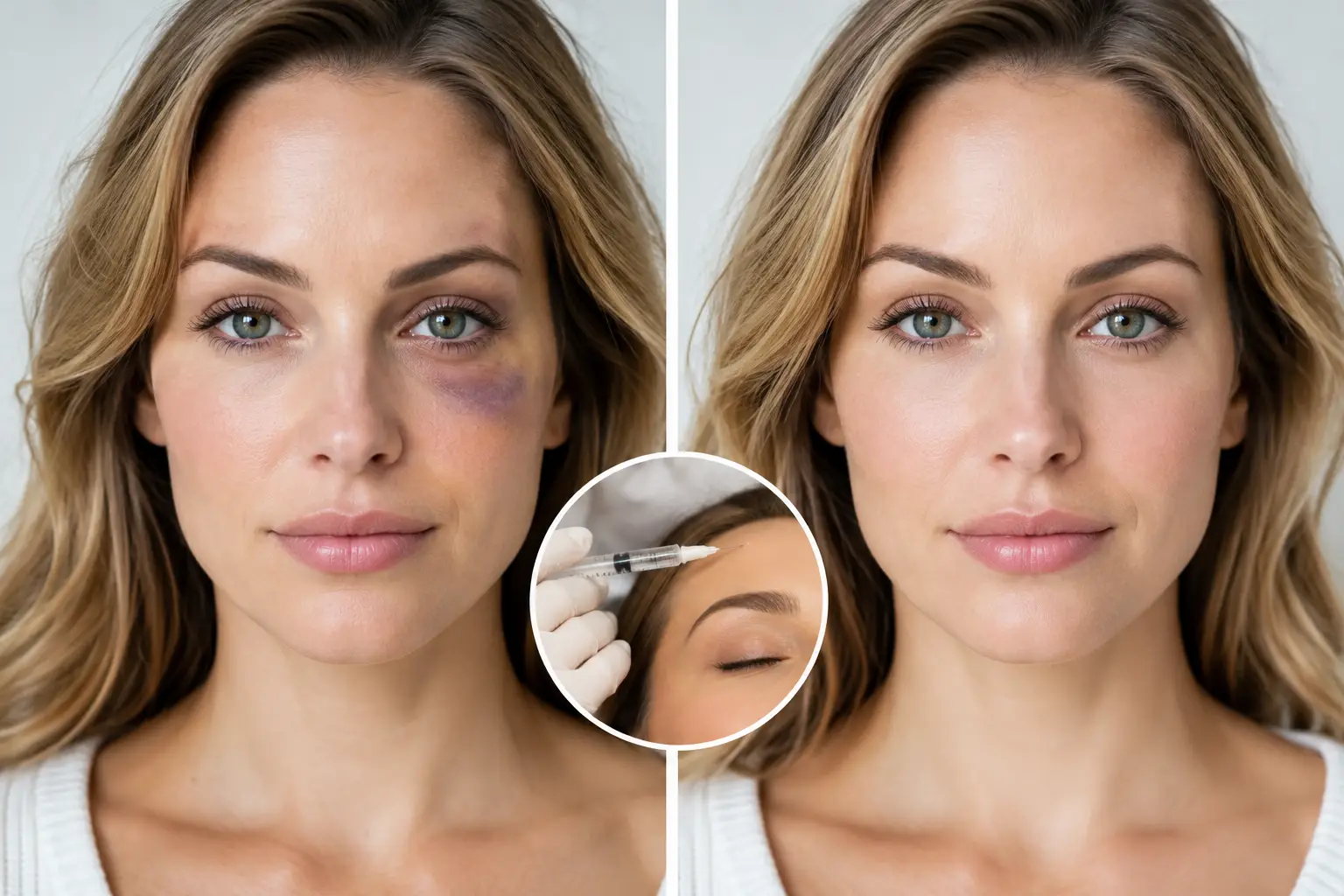
How to Reduce Botox Bruising Before and After
A tiny bruise can feel disproportionately frustrating when you scheduled Botox to look refreshed for a dinner, photo, work event, or weekend in Naples. While no injector can promise zero bruising, there are thoughtful ways to reduce Botox bruising before your appointment and support clean, comfortable healing afterward. The key is realistic planning, honest health history, and treatment performed with precise technique.
Bruising is usually a temporary cosmetic side effect, not a sign that Botox itself has gone wrong. It happens when a needle passes near a small blood vessel and a small amount of blood collects under the skin. The face has an extensive network of tiny vessels, especially around the forehead, eyes, and lower face, so even an expertly placed injection may occasionally leave a mark.
Why Botox Bruising Happens
Botox is injected with a very fine needle, but fine does not mean invisible to every capillary. Your individual anatomy matters. Some clients have more visible surface vessels, thinner skin, or naturally fragile capillaries. Others are more prone to bruising because of medications, supplements, alcohol intake, recent illness, or a history of easy bruising.
Injection location also plays a role. Areas with more vascular tissue can be more prone to a small bruise than others. A qualified injector evaluates facial movement, muscle strength, anatomy, skin quality, and prior treatment history before recommending a treatment plan. That technical assessment is part of responsible aesthetic care, not an unnecessary extra step.
A bruise may appear immediately, or it may become noticeable the following day as trapped blood moves closer to the surface. It can look purple, blue, green, or yellow as it resolves. Most mild bruises improve over several days and fade within one to two weeks, though timing varies by person.
How to Reduce Botox Bruising Before Your Appointment
Preparation starts with a complete conversation. Tell your injector about every prescription medication, over-the-counter pain reliever, vitamin, supplement, and herbal product you take. This includes aspirin, ibuprofen, naproxen, fish oil, vitamin E, ginkgo, garlic supplements, and other products that may affect bleeding or bruising for some people.
Do not stop a prescribed blood thinner, aspirin regimen, or any medication without approval from the clinician who manages it. For some clients, the medical reason for staying on medication is far more important than reducing a temporary bruise. Your injector can help set expectations and determine whether treatment timing should be adjusted, but medication decisions belong to your prescribing medical provider.
If your medical provider says it is appropriate, you may be advised to avoid nonessential blood-thinning supplements and certain over-the-counter anti-inflammatory medications before treatment. The exact timeline is individualized. Avoid making last-minute changes based on social media advice or a friend’s routine.
Alcohol is another practical consideration. Drinking can increase facial flushing and may make bruising more likely for some people. Avoid alcohol for at least 24 hours before your appointment unless your provider gives you different guidance. Arrive hydrated, well fed, and without rushing in from an intense workout. This supports a calmer appointment and helps prevent lightheadedness.
If you have an important occasion, schedule strategically. Botox results develop gradually, typically becoming more apparent over the following days rather than instantly. Booking at least two weeks ahead gives you room for the treatment to settle and for an unexpected bruise to fade. That buffer is especially worthwhile before weddings, reunions, vacations, and professional photos.
What to disclose at your consultation
A thorough consultation protects both your safety and your result. Mention a history of frequent bruising, bleeding disorders, prior reactions to injectables, active skin irritation, cold sores in relevant areas, recent facial treatments, pregnancy or breastfeeding, and any medical condition that may affect your care. Clear disclosure allows your provider to make a proper recommendation instead of guessing.
Aftercare That Can Help Reduce Botox Bruising
Follow the aftercare instructions from your injector, even if you have had Botox elsewhere in the past. Protocols can vary based on your treatment areas, health history, and the provider’s clinical judgment.
Immediately after treatment, a brief, gentle cold compress may help with minor swelling and discomfort. Use light contact only. Do not press hard, rub, or massage the injection sites in an attempt to make a mark disappear. Pressure and friction can irritate the skin, and massage is not an appropriate response to a fresh injection site unless your injector specifically directs it.
For the first several hours, remain upright and avoid putting sustained pressure on the treated areas. Many providers also recommend postponing strenuous exercise, excessive heat exposure, saunas, hot yoga, and heavy alcohol intake for the rest of the day or about 24 hours. These precautions are designed to minimize redness, swelling, and unnecessary irritation while the skin settles.
If you need pain relief, ask your provider what is appropriate for you. Acetaminophen may be an option for some clients, while aspirin and anti-inflammatory medications can be less desirable around injectable appointments because they may contribute to bruising. Your medical history always comes first.
Skip aggressive facials, facial massage, gua sha, and device-based treatments until your injector clears them. A polished aesthetic plan requires timing. Botox, dermal filler, microneedling, and other skin services may all be valuable treatments, but stacking procedures too closely without professional direction can complicate healing and make it harder to identify the cause of irritation or swelling.
Can Arnica or Topical Products Make a Difference?
Arnica is frequently discussed for bruising, but results are mixed and it should not be treated as a guarantee. Some clients choose an arnica gel or oral product after discussing it with their provider, while others simply allow the bruise to resolve naturally. If you use a topical product, keep it away from broken skin and apply it gently around, not aggressively over, fresh injection points.
Avoid strong exfoliating acids, retinoids, scrubs, and irritating active ingredients directly over tender injection sites until the skin is calm. The goal is not to throw every product at a bruise. It is to protect the skin barrier and avoid turning a minor cosmetic issue into prolonged irritation.
Once the skin is closed and comfortable, makeup can usually camouflage discoloration. A peach or yellow-toned corrector can soften blue-purple bruising, followed by a lightweight concealer applied with a clean brush or tapping motion. Do not drag the skin or use a dirty sponge over fresh treatment areas.
What a Skilled Injector Does Differently
Clients often focus on aftercare, but prevention begins before the needle touches the skin. A trained injector uses detailed knowledge of facial anatomy, assesses visible vessels and tissue quality, selects appropriate injection points, and works with a controlled, deliberate technique. Precision can reduce unnecessary trauma to the skin, though it cannot eliminate normal biological variation.
At Vintage Lashes and Beauty Services, Botox care is approached as a professional treatment, not a rushed add-on. Your appointment should include a review of your goals, relevant health information, treatment history, and aftercare responsibilities. A conservative, well-planned approach is often more valuable than chasing a dramatic result in one visit.
Be cautious about treating price as the only deciding factor. Injectable services require appropriate training, sanitation standards, product handling, facial assessment, and the judgment to know when treatment should be postponed. Those details matter long after a promotional price is forgotten.
When a Bruise Needs a Call to Your Provider
A small, stable bruise is usually manageable with patience and gentle care. Contact your injector promptly if you have worsening or severe pain, rapidly expanding swelling, significant redness or warmth, drainage, a rash, fever, changes in vision, difficulty breathing, trouble swallowing, marked facial weakness outside the expected treatment effect, or any symptom that feels unusual or concerning.
Seek urgent medical attention for severe allergic symptoms, breathing difficulty, chest pain, sudden vision changes, or other emergency concerns. These are not typical bruising symptoms and should never be managed with at-home remedies.
A follow-up is also worthwhile if a bruise is not improving as expected after two weeks, if it keeps recurring after injections, or if you notice unexplained bruising elsewhere on your body. Your primary care clinician may need to evaluate factors beyond the aesthetic treatment.
The most reliable way to reduce Botox bruising is not a miracle cream or an overly strict checklist. It is thoughtful preparation, qualified injection technique, and a little scheduling margin for your body to heal on its own timeline. Give your provider a complete history, follow your personalized aftercare instructions, and plan your appointment early enough that you can enjoy the result without watching a small bruise steal the moment.