
How to Reduce Swelling After Lip Filler Safely
Your lips can look more dramatic the morning after treatment than they did when you left the appointment. That early fullness is usually swelling, not your final result. Knowing how to reduce swelling after lip filler safely helps protect your investment while giving the filler time to settle as intended.
Lip filler is a precise treatment. The lips have a dense blood supply, sensitive tissue, and constant movement from talking, eating, smiling, and sleeping. Even with careful technique, minor trauma from injections can trigger temporary inflammation. A qualified injector should review your individualized aftercare before you leave, since the right guidance can vary with your health history, the product used, and whether you received other treatments at the same appointment.
What Lip Filler Swelling Should Look Like
For most clients, swelling begins soon after treatment and is most noticeable during the first 24 to 48 hours. One side may look a little fuller than the other at first. Small areas can feel firm, uneven, or tender while the product and surrounding tissue settle.
Swelling often improves substantially within three to five days, though mild residual puffiness or unevenness can take up to two weeks to resolve. This is why experienced injectors generally assess final lip filler results after the settling period, not the next morning.
Bruising can occur as well, particularly in clients who bruise easily or take medications and supplements that affect bleeding. A bruise may change from red or purple to greenish or yellow as it heals. That color progression is usually expected. Increasing swelling, worsening pain, or major color changes are different concerns and should never be dismissed as routine.
How to Reduce Swelling After Lip Filler
The goal after lip filler is not to force swelling away overnight. It is to support a calm, uncomplicated recovery without putting added pressure, heat, or irritation on freshly treated tissue.
Use cool compresses with a light touch
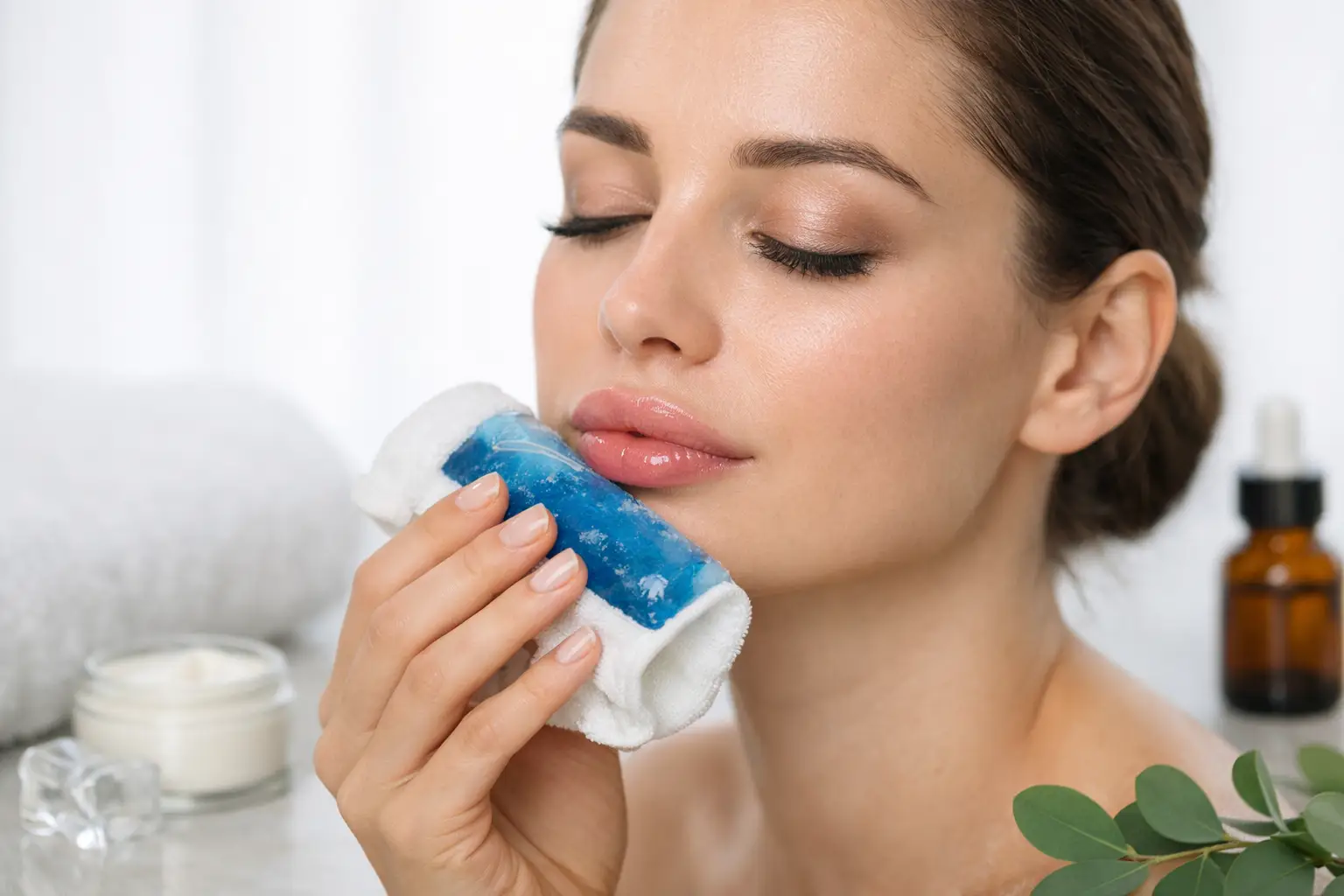
A clean, cool compress can help with tenderness and puffiness during the first day or two. Wrap a cold pack in a soft, clean cloth and rest it gently on the area for short intervals. Do not place ice directly on the lips, and do not press hard. Aggressive pressure can increase discomfort and may alter the area before your injector has advised that it is safe to massage.
Keep your head elevated
Sleeping with your head slightly elevated for the first one or two nights can limit fluid buildup by morning. Use extra pillows or sleep in a comfortable reclined position if that works better for you. Avoid sleeping face-down, which places direct pressure on the lips and can make early swelling appear worse.
Hydrate and keep meals simple
Drink water regularly and choose foods that are easy to eat without excessive lip movement. A very salty dinner, alcohol, and highly processed foods can make some people retain more fluid and look puffier the next day. Hot foods and drinks may also make lips feel more flushed or tender during the first 24 hours, so cooler, softer options are often more comfortable.
Avoid heat, intense exercise, and alcohol briefly
For the first 24 to 48 hours, skip hot yoga, saunas, steam rooms, hot tubs, and strenuous workouts. Heat and increased circulation can intensify swelling and bruising. Alcohol may also contribute to swelling and bruising, so it is best avoided during the immediate recovery period.
Normal light movement, such as an easy walk, is generally fine if you feel well. The distinction is intensity: a calm walk is not the same as a heated fitness class or a long run in Southwest Florida heat.
Follow medication guidance from your provider
Do not start or stop prescription medications without medical guidance. If you need relief from tenderness, ask your injector which option is appropriate for you. Some providers may recommend acetaminophen when medically appropriate, while medications such as aspirin, ibuprofen, and naproxen can increase bruising risk for some clients. Your medical history always comes first.
The same rule applies to supplements. Fish oil, vitamin E, ginkgo, garlic supplements, and certain herbal products may affect bruising. Be honest about everything you take during your consultation, including over-the-counter products and wellness supplements.
What Not to Do While Your Lips Settle
The first few days are not the time to test every social-media remedy. Do not massage, squeeze, roll, or repeatedly inspect the lips unless your injector specifically instructs you to do so. Filler placement is intentional, and unnecessary manipulation can create more irritation or change the way the area feels.
Avoid facials, facial massage, dental work, and other procedures that place pressure around the mouth until your injector clears you. Kissing, drinking through a straw, and applying lip products are often discussed differently by different practices, so follow the instructions you were given rather than relying on a universal timeline.
It is also wise to avoid planning a filler appointment immediately before a wedding, major presentation, professional photo session, or vacation. Most swelling resolves predictably, but no ethical provider can promise that you will have zero swelling or bruising on a specific day. Scheduling at least two weeks ahead gives your lips time to settle and gives your provider time to review the result if needed.
When Swelling Is Not Normal
Most post-treatment swelling is manageable, but lip filler is a medical aesthetic procedure. A serious complication is uncommon, yet prompt action matters. Contact your injector immediately if you develop severe or escalating pain, skin that turns unusually pale, dusky, gray, blue, or blotchy, a cool area of skin, spreading discoloration, or swelling that becomes rapidly worse.
These symptoms can indicate a circulation concern and require urgent assessment. Do not wait to see whether it improves overnight, and do not attempt to treat it at home. If you cannot reach your injector, seek urgent medical care.
You should also contact your provider for significant warmth, spreading redness, pus, fever, a new rash, or symptoms of an allergic reaction such as trouble breathing or swelling beyond the treatment area. Anyone with a history of cold sores should disclose it before treatment. Lip injections can trigger an outbreak in susceptible clients, and your provider may recommend preventive medication when appropriate.
Give the Result Time Before Judging It
A common mistake is deciding the lips are uneven while they are still swollen. The upper lip may hold swelling differently than the lower lip, and one injection point may bruise more than another. Photos taken repeatedly under different lighting can make normal early changes feel more concerning than they are.
Take one clear photo each day in similar lighting if you want to track your recovery. Then give the area time. At around two weeks, you and your injector can evaluate shape, symmetry, and volume with a far more accurate view of the result.
At Vintage Lashes and Beauty Services, treatment planning and aftercare are approached with the same attention to precision. A polished result depends on more than the appointment itself: thoughtful assessment, proper technique, realistic scheduling, and clients who follow their post-treatment instructions all matter.
If your lips are simply puffy and tender in the first couple of days, be gentle, stay cool, and let the healing process do its work. If something feels distinctly wrong, trust that instinct and contact your injector promptly.