
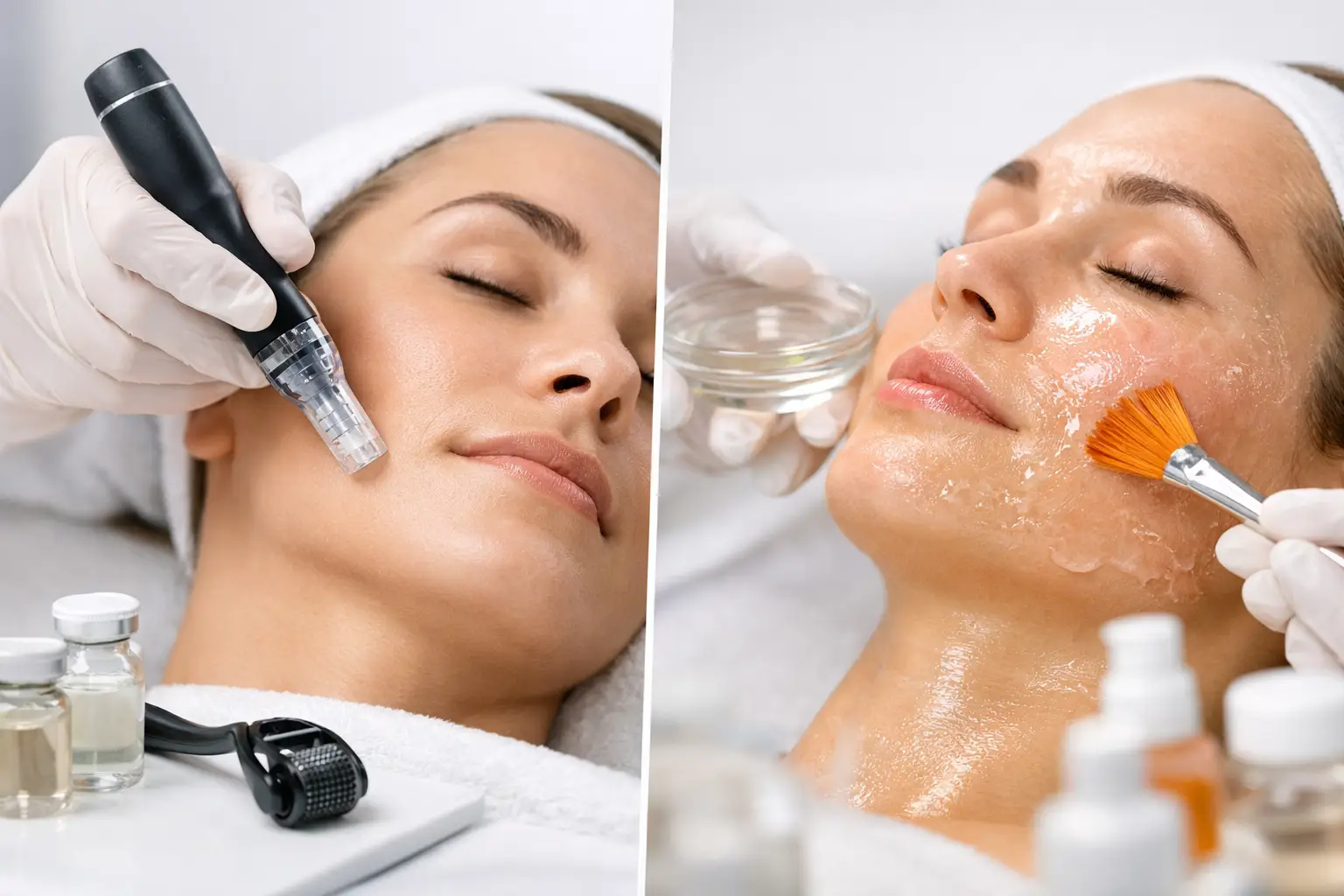
Microneedling vs Chemical Peel
Some skin concerns look similar in the mirror but respond very differently in the treatment room. If you are weighing microneedling vs chemical peel, the right choice depends less on what is trending and more on your skin condition, your tolerance for downtime, and the kind of result you want to build over time.
Both treatments are established, effective, and widely used for skin rejuvenation. They are not interchangeable. One works by creating controlled micro-injuries that stimulate collagen remodeling. The other uses a chemical solution to exfoliate and accelerate skin turnover. For some clients, that difference is everything.
Microneedling vs chemical peel: what is the real difference?
Microneedling is a collagen induction treatment. A specialized device creates tiny, controlled channels in the skin, which triggers the body’s repair response. Over time, that response can improve texture, soften acne scarring, reduce the look of enlarged pores, and support firmer skin quality.
A chemical peel works from the surface down. Depending on the formula and strength, it loosens dead skin cells, improves cell turnover, and helps reveal fresher, smoother skin. Peels are often chosen for dullness, uneven tone, sun damage, acne, and pigment concerns.
That means the first question is not which treatment is better. It is what problem are you trying to correct. If your primary concern is collagen loss, crepey texture, or acne scars, microneedling often makes more sense. If your concern is discoloration, rough surface buildup, or breakouts, a peel may be the more direct approach.
When microneedling is usually the better fit
Microneedling tends to be the stronger option when the goal is structural improvement in the skin. It is often recommended for clients dealing with acne scarring, early laxity, fine lines, and uneven texture that is not just sitting at the surface.
Because the treatment stimulates collagen and elastin production, the results usually develop gradually. This is part of the appeal and part of the trade-off. You are not simply removing damaged outer layers. You are asking the skin to rebuild.
For clients who want firmer-looking skin with a smoother feel, that remodeling process can be worth it. It is especially useful when paired with a professional treatment plan rather than treated like a one-time event.
Microneedling can also be a strong choice for some skin tones that may be more reactive to certain peel formulations. That said, skin type, treatment depth, active conditions, and provider technique all matter. This is not a treatment that should be approached casually.
When a chemical peel is usually the better fit
A chemical peel is often the smarter choice when the concern is visible on the surface. Think sun damage, uneven pigmentation, congestion, active acne, and skin that looks tired or rough.
Peels can range from light and refreshing to more corrective with noticeable peeling afterward. The right formula depends on what needs to be treated and how much downtime fits your schedule. A light peel may brighten and smooth with minimal interruption. A medium-depth peel may target more obvious damage but require stricter aftercare and a few more recovery days.
For clients who want to improve clarity and tone more quickly, a peel often delivers faster visible change than microneedling. The skin can look brighter and more even after a shorter timeline, although deeper correction usually still requires a series.
This is also why peels remain a staple in professional skin treatment plans. They can be customized, repeated strategically, and adjusted seasonally based on your skin’s condition and sun exposure habits.
Downtime, discomfort, and what recovery really looks like
One of the biggest differences in microneedling vs chemical peel is the recovery experience.
After microneedling, the skin often looks pink to red for a day or two, similar to a moderate sunburn. You may feel tightness, mild swelling, or dryness. Most clients return to normal routines quickly, but the skin still needs careful aftercare. Heat, intense exercise, direct sun, and harsh products should be avoided during the initial healing window.
After a chemical peel, recovery can vary widely. A lighter peel may cause mild flaking and temporary tightness. A stronger peel can produce visible peeling, dryness, and sensitivity for several days. Some clients do not mind that process. Others prefer a treatment that is easier to conceal socially.
Discomfort is also different. Microneedling may feel prickly or intense depending on depth and treatment area, though numbing is often used. Peels may sting, feel hot, or create a strong tingling sensation during application. Neither experience should feel uncontrolled in a professional setting, but neither should be presented as completely sensation-free.
Which treatment is better for acne scars, wrinkles, and pigment?
This is where the answer becomes more specific.
For acne scars, microneedling usually has the advantage because it targets deeper textural irregularities and encourages collagen repair. A peel can help with post-acne discoloration and active breakouts, but it generally does less for indented scarring.
For fine lines and early skin aging, both treatments can help. Microneedling is often better for improving skin firmness and texture over time. Chemical peels can brighten aging skin and reduce the look of superficial lines, especially when sun damage is part of the picture.
For hyperpigmentation and uneven tone, chemical peels are often the more direct first-line option. They are designed to exfoliate damaged surface cells and improve clarity. Microneedling may still play a role, but pigment-prone skin needs careful evaluation because too much stimulation or improper technique can worsen discoloration in the wrong candidate.
For enlarged pores and rough texture, either option may work depending on the cause. If the issue is oil, congestion, and dead skin buildup, a peel may help more quickly. If the issue is loss of support in the skin and lingering acne-related texture, microneedling may be the better long-game strategy.
Safety matters more than trends
Neither treatment should be selected from a menu without a proper skin assessment. That is where many disappointing results begin.
A quality provider should review your skin history, active breakouts, sensitivity, medications, recent sun exposure, and any tendency toward post-inflammatory pigmentation. They should also explain what the treatment can realistically improve, how many sessions may be required, and what aftercare is non-negotiable.
This is especially important in Florida, where strong sun exposure can complicate recovery and increase the risk of pigment issues if clients are not diligent. Treatments like microneedling and chemical peels can produce excellent results, but only when timing, skin prep, and post-treatment protection are taken seriously.
Professional standards matter here. Clean technique, proper treatment selection, and clear aftercare are not extras. They are part of the result.
Can you do both?
Yes, but not at the same appointment unless a provider has a very specific protocol and your skin is an appropriate candidate. In many cases, microneedling and chemical peels work best as separate treatments used at different points in a customized plan.
A client may start with peels to address acne, congestion, or discoloration, then move into microneedling to improve residual scarring and texture. Another client may alternate treatments seasonally based on sun exposure, skin tolerance, and treatment goals.
The key is not stacking procedures for the sake of doing more. It is sequencing them correctly so the skin can respond well.
How to choose between microneedling vs chemical peel
If you want to improve acne scars, deeper texture, and early firmness concerns, microneedling is often the better investment. If you want to target discoloration, dullness, acne, and visible surface damage, a chemical peel may be the better place to start.
If you want the shortest path to brighter skin before an event, a light peel may be more practical. If you are thinking beyond immediate glow and focusing on longer-term collagen support, microneedling often earns its place.
At Vintage Lashes and Beauty Services, treatment planning starts with the condition of the skin, not a one-size-fits-all recommendation. That approach matters, because good skin work is technical. It should be based on what your skin can safely tolerate and what will actually move you closer to the result you want.
The best treatment is the one that matches your skin, your timeline, and your willingness to follow aftercare closely. When those pieces line up, results tend to look better, last better, and feel like money well spent.